Selling a House With an In-Law Suite or ADU
Plenty of older Cleveland-area homes have a little extra: a finished space over the garage, a basement apartment, or a back addition where a parent once lived. When you sell, the buyer's lender has to decide what that space is. The answer can affect the loan, and it starts with a few specific features.
An older two-story house seen from the backyard with a detached gambrel-roof garage that has a small apartment above it reached by an outside wooden staircase
For a buyer using a conventional loan sold to Fannie Mae, a second living space counts as an ADU when it has its own entrance, kitchen, sleeping area and bathroom on the same lot as a one-unit home. One ADU is allowed. A space that also has its own meters, mailing address or legal rental status may be treated as a two-family instead, and that changes the loan.
What makes a space an ADU
Fannie Mae's Selling Guide, topic B2-3-04, describes an accessory dwelling unit as a living area that is independent of the main home. It can be added on, built inside the house, or detached. It must have places to live, sleep, cook and use the bathroom, and it must be on the same parcel as a one-unit home.
| Requirement | What it means |
|---|---|
| How many | Only one ADU on the parcel |
| Main home type | One-unit home only; not allowed with a two- to four-unit property |
| Size | Smaller than the main home |
| Separate features | Own entrance, kitchen, sleeping area, bathing area and bathroom |
| Privacy | Not an ADU if you can only reach it through the main home, or it is open to the main home |
| Kitchen | Cabinets, countertop, sink with running water, and a stove or stove hookup |
From Fannie Mae Selling Guide B2-3-04 (11/04/2026). FHA, VA and other loans have their own rules, which we have not covered.
The guide says an independent second kitchen by itself does not make an ADU. Hotplates, microwaves and toaster ovens do not count as a stove. And taking out a stove later does not change a space that is an ADU.
Not sure how a buyer's lender will see your space?
Send us the address. We will give you a written cash offer on the house as it is, without a lender deciding what your extra space counts as.
Common examples
The guide lists examples of ADUs. Many older homes in our area have one of these:
- A living area over a garage.
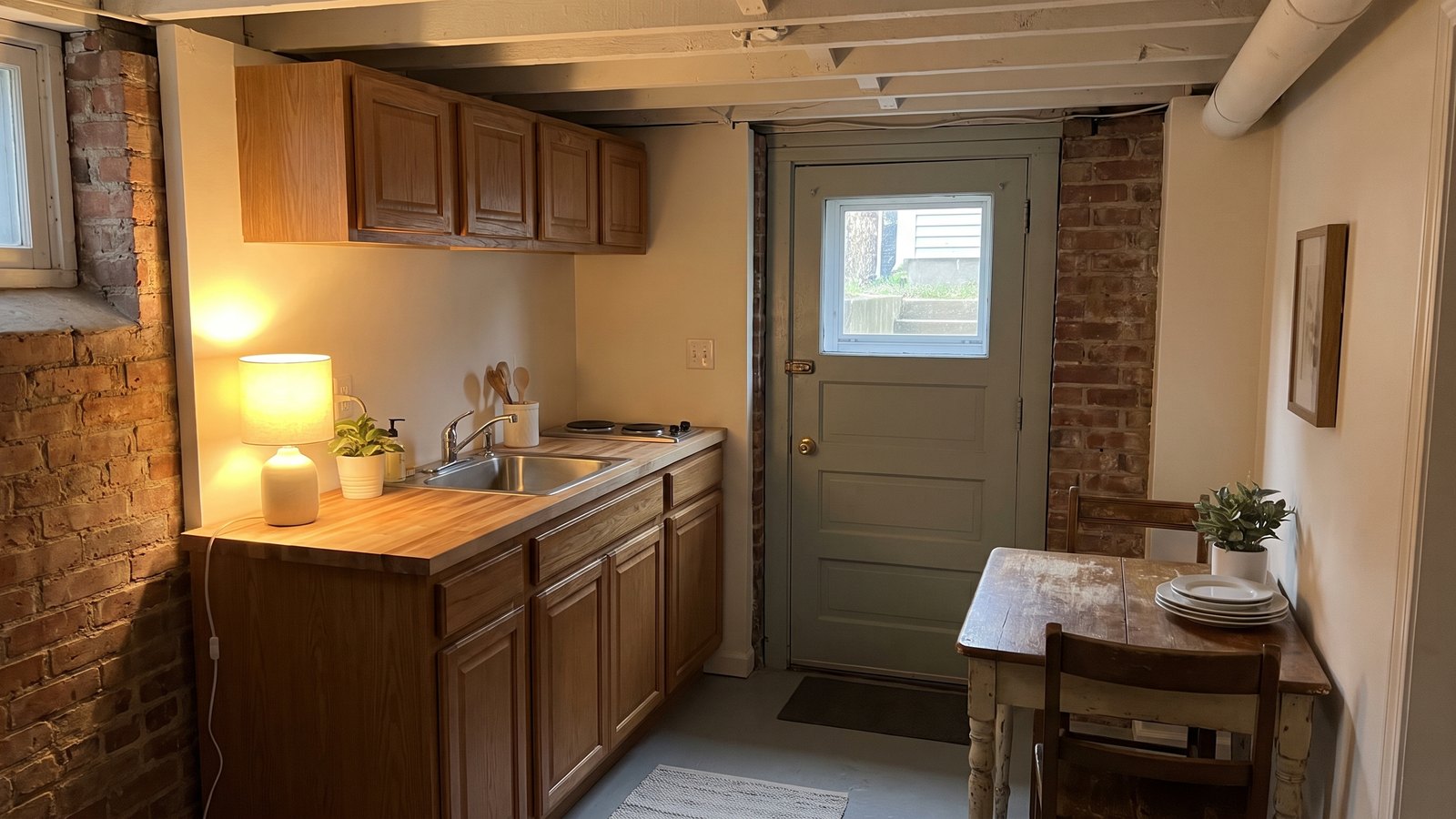
- A living area in a basement.
- A small addition to the main home.
- A manufactured home on the lot that is legally classified as real property.
When the ADU is a manufactured home
Some properties have a manufactured home on the same lot as the main house. The guide says an ADU can be site-built or factory-built, including modular homes and HUD Code manufactured homes that are legally classified as real property.
There are extra rules in that case. If there is an ADU, the main home must be site-built or modular. For a manufactured home ADU, the lender must verify it was built to the federal manufactured home standards, sits on a permanent foundation suited to the soil and local codes, and is covered by the same mortgage as the main home.
The guide says the appraisal must include photos of the HUD Data Plate or HUD Certification Labels for each section. If those cannot be found or replaced with acceptable documentation, the loan is not eligible for sale to Fannie Mae. Our post on selling a manufactured home in Ohio covers title and real property rules.
ADU or two-family?
This is where sales can get complicated. The guide says whether a property is a one-unit home with an ADU or a two- to four-unit property depends on its features. It names separate utility meters, a separate mailing address, and whether the unit can be legally rented as examples. The appraiser makes the call as part of the appraisal.
The difference matters to a buyer because the lender treats one-unit and multi-unit homes differently. If your listing calls it a single-family with an in-law suite, but the space has its own meter and mailbox, expect questions.
Zoning and older suites
The guide says an ADU allowed under current zoning is legal. Some ADUs were built before the local zoning rules and are "legal nonconforming." Even when zoning does not allow an ADU at all, the property can still be eligible if the lender confirms the ADU will not jeopardize a future insurance claim and the appraisal zoning requirements are met.
We have not covered Cleveland or suburban zoning for ADUs, which varies by city. If your space was added without permits, our post on selling a house with unpermitted work covers that side.
Before you list
Describe the space accurately
Check meters and mail
Gather permits if you have them
Tell your agent and buyer
Compare your options
What about a condo with an in-law unit?
The guide allows a condo unit with one ADU if the condo documents expressly allow it, it is on the same parcel, it is under the same loan and mortgage, and it cannot be sold, financed or owned separately. It also cannot make the project ineligible. Our post on selling a condo when the building needs repairs covers project rules.
Common situations
Grandma's old room has a hotplate and a sink
A hotplate does not count as a stove, and the space may not have its own entrance. It is probably part of the main home, not an ADU.
The garage apartment has its own electric meter
A separate meter is one of the features the guide lists. The appraiser may consider whether the property is really a two-unit. Ask the buyer's lender early.
You never rented out the garage apartment
The feature the guide names is whether the unit can be legally rented, not whether you actually rented it. Separate meters or a separate address can still point the appraiser toward a two-unit property. Ask the buyer's lender about it early.
The basement suite is reached only through your kitchen
The guide says a space is not an ADU if it can only be reached through the main home, or if it is open to the main home with no expectation of privacy. Without its own outside entrance, it is part of the house.
Know your net proceeds
Here is a simple example with made-up numbers for a $210,000 house with a $90,000 mortgage.
- Listing: a 6% commission is $12,600, leaving $107,400 after the payoff, before any work to satisfy a lender, holding costs and closing costs.
- Direct cash sale: no commission and no lender classification. The offer minus the $90,000 payoff and closing costs is your net.
- Compare the two nets, not the two prices. A cash offer is often lower than a top listing price.
Your six options
| Option | How the extra space plays in | What to weigh |
|---|---|---|
| Keep it | Use it for family or guests | Upkeep on two spaces |
| Repair it | Finish it to meet the ADU features, or remove features | Permits, cost and time |
| Rent it out | Check zoning and rental rules first | Landlord duties |
| List with an agent | Lender decides ADU or two-family | Commissions often run 5.5% to 6% |
| Sell it yourself (FSBO) | Same lender rules for the buyer | You handle appraisal questions |
| Sell direct for cash | No lender classification | We can close as fast as 7 days, typically around 21 |
These rules apply to loans sold to Fannie Mae. Other loan types have their own rules.
Get a number for the whole property
We buy houses across Cleveland and Northeast Ohio as-is, extra spaces and all. Ask for a written offer and compare it with a listing.
This article summarizes Fannie Mae Selling Guide topic B2-3-04 (11/04/2026) as we read it in November 2026. It is general information, not legal, zoning or lending advice. We did not cover local zoning or permits, FHA or VA rules, rental income rules or how an ADU affects value. Ask your city, the buyer's lender or an attorney.
Questions about selling a house with an extra unit?
Call or send us the address. We will walk you through the sale side, and you decide what comes next.
Frequently asked questions
Fannie Mae describes an ADU as a separate living area on the same parcel as a one-unit home, with its own entrance, kitchen, sleeping area and bathroom. It can be attached, inside the house, or detached.
Not by itself. Fannie Mae says an independent second kitchen alone does not make an ADU. The space also needs its own entrance, sleeping area and bathroom, and some privacy from the main home.
No. The kitchen needs cabinets, a countertop, a sink with running water and a stove or stove hookup. Fannie Mae says hotplates, microwaves and toaster ovens do not count.
Not under Fannie Mae's rules. Only one ADU is allowed on the parcel, and ADUs are not allowed with a two- to four-unit property.
Fannie Mae says the property can still be eligible if the lender confirms it will not jeopardize a future insurance claim and the appraisal zoning requirements are met.
It can. Fannie Mae says the call depends on the property's features, which may include separate utility meters, a separate mailing address and whether the unit can be legally rented. The appraiser decides.
Yes. Fannie Mae says removing a stove does not change the ADU classification.
Find out what we would pay
Free, no obligation, and no pressure. If our number does not work for you, that is a perfectly fine answer.
Keep reading
Why Sell As-Is
Selling an Ohio House With Unpermitted Work
Whether the work needed plans filed at all turns on a question about your address, not a universal rule. And the power a city has to make you undo it is narrower than the internet suggests.
Why Sell As-Is
Will the Buyer's Lender Make You Fix the House?
An appraiser rates a home's condition from C1 to C6. On a conventional loan, that rating can decide whether repairs must be finished before the buyer's loan closes.
Investor vs. Realtor
What Happens When the Appraisal Comes In Low?
Your buyer's appraisal came in under the price. Here is how lenders use the lower number, what FHA and VA buyers can do, and the choices you have as the seller.