Selling a Condo When the Building Needs Repairs
Selling a condo is different from selling a house. A buyer's lender looks at your unit, and in many cases it also looks at the whole building and the association that runs it. Leaks in the garage, an unfunded roof job or a lawsuit against the HOA can stall a sale even when your unit is in great shape.
A four-story red brick condominium building with rows of small balconies on a wet autumn street under a gray sky
When a buyer uses a conventional loan, the lender may review your whole condo project, not just your unit. Fannie Mae will not buy loans on units in projects that need critical repairs, have certain lawsuits involving the HOA, or are under an evacuation order. Smaller projects and detached condos often skip the full review.
Why the building matters to the buyer's loan
Fannie Mae's Selling Guide, topic B4-2.1-03, lists condo and co-op project traits that make a project ineligible. If a project has one of them, Fannie Mae will not purchase or securitize loans on its units. A lender that plans to sell the loan to Fannie Mae has to check for them.
That means a buyer can love your unit and still struggle to get a conventional loan for it. The issue is the building or the association, not the buyer and not your unit.
Is your building holding up your sale?
Send us the address. We will look at your condo and tell you plainly whether we can make a written cash offer that does not depend on a lender's project review.
What counts as a critical repair
The guide defines critical repairs as repairs or replacements that significantly affect the safety, soundness, structure or habitability of the buildings, or the project's financial health or marketability. It lists conditions such as:
- Problems that could lead to a critical system failure within one year if not fixed.
- Any mold, water intrusion or potentially damaging leaks in the buildings.
- Advanced physical deterioration.
- A failed state, county or local mandatory inspection on structural safety or habitability.
- Unfunded repairs costing more than $10,000 per unit that should be done within 12 months. This does not include repairs owners make to their own units, or repairs paid for by a special assessment.
The guide gives examples of building parts to watch: elevators, waterproofing, stairwells, balconies, foundations, electrical systems and parking structures. A building under a full or partial evacuation order for an unsafe condition is ineligible until the problem is fixed and the building is safe again.
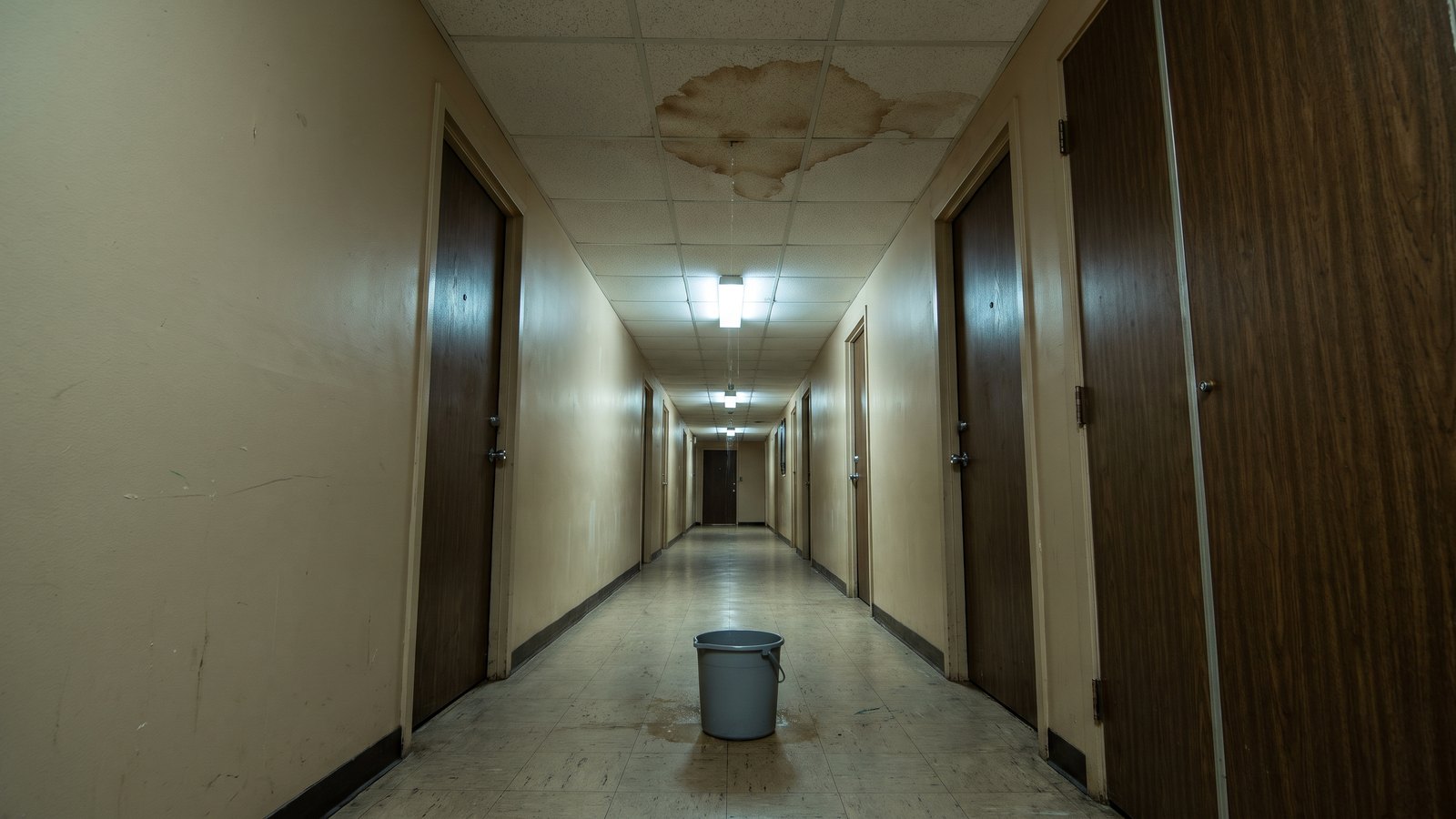
For each current or planned special assessment, the lender must find out its purpose, when it was approved, the original and remaining amount, and when it will be paid off. If it is for a critical repair that has not been fixed, the project is ineligible.
What is not a critical repair
Not every repair is a red flag. The guide says routine repairs are not critical. That includes preventive work and normal capital replacements meant to keep the building working, paid for from the normal operating budget or through special assessments within guidelines.
It also says that if damage or deferred maintenance is isolated to one or a few units, and does not affect the whole project's safety, soundness, structure or habitability, the critical repair rules do not apply.
Lawsuits involving the HOA
A project where the HOA is named in pending litigation is generally ineligible. So is one where the developer is in litigation about the project's safety, structure, habitability or use. Arbitration or mediation that is expected to become a lawsuit is treated the same way.
| Type of case | Usually OK for the loan? |
|---|---|
| Neighbor disputes or other non-money cases | Yes, if minor |
| Insurance company is defending and the amount is covered | Yes, if minor |
| Damages and legal costs expected under 10% of funded reserves | Yes, if minor |
| HOA suing to recover money for repairs already done | Yes, if minor |
| Damage limited to one unit, not the whole project | Yes, if minor |
| HOA is the plaintiff in a foreclosure for unpaid dues | Yes |
| Case about safety, structure or habitability of the project | No |
Summarized from Fannie Mae Selling Guide B4-2.1-03 (11/04/2026). The lender decides whether a matter is minor. Lenders can also ask Fannie Mae for an exception.
When the full review is waived
Topic B4-2.1-02 lists cases where Fannie Mae does not require a thorough project review:
- A detached condo unit that shares no walls, ceilings, floors or attached features like breezeways or garages with another unit. Site condos count.
- A unit in a two- to four-unit condo project.
- A unit in a five- to ten-unit condo project that is not part of a larger development or master association.
- A unit in most PUD (planned unit development) projects.
Common situations
The HOA just approved an assessment for a new roof
The lender will ask what the assessment is for, when it was approved, how much is left to collect and when it will be paid. A routine replacement within guidelines is not a critical repair. If the roof is leaking into units and the work is not done yet, the project may be ineligible until it is.
You live in a three-unit condo
Fannie Mae waives the full project review for units in two- to four-unit condo projects. The lender still reviews your unit and the buyer.
The HOA is suing the builder over leaks
A lawsuit about the project's structure or habitability generally makes the project ineligible. If the leaks were already repaired and the HOA is only trying to recover the money, the guide lists that as a matter that can still be eligible.
Before you list your condo
Ask the HOA about repairs
Ask about lawsuits
Know your project size
Tell your buyer early
Compare your options
What about unpaid HOA dues on my own unit?
That is a different issue. Our post on Ohio HOA and condo association liens explains how unpaid dues can become a lien and how it is cleared at closing.
Know your net proceeds
Here is a simple example with made-up numbers for a $120,000 condo with a $50,000 mortgage.
- Listing: a 6% commission is $7,200, leaving $62,800 after the payoff, before HOA dues while it sits, closing costs and any assessment you agree to pay.
- Direct cash sale: no commission and no lender project review. The offer minus the $50,000 payoff and closing costs is your net.
- Compare the two nets, not the two prices. A cash offer is often lower than a top listing price.
Your six options
| Option | Building issues matter? | What to weigh |
|---|---|---|
| Keep it | You still pay dues and assessments | Wait for the HOA to finish repairs |
| Repair it | Your unit only; building repairs are the HOA's | May not fix a project problem |
| Rent it out | Check HOA rental rules | Landlord duties and dues |
| List with an agent | Yes, for buyers with conventional loans | Commissions often run 5.5% to 6% |
| Sell it yourself (FSBO) | Yes, for buyers with conventional loans | You handle HOA documents and questions |
| Sell direct for cash | No lender project review | We can close as fast as 7 days, typically around 21 |
These rules apply to loans sold to Fannie Mae. FHA, VA and other loans have their own condo rules.
See an offer that does not wait on the HOA
We buy condos and houses across Cleveland and Northeast Ohio as-is. Ask for a written offer and compare it with your listing options.
This article summarizes Fannie Mae Selling Guide topics B4-2.1-03 (11/04/2026) and B4-2.1-02 (08/05/2026) as we read them in November 2026. It is general information, not legal or lending advice. We did not cover FHA or VA condo approval, HOA document fees or Ohio condo law in detail. Ask your HOA, the buyer's lender or an attorney about your project.
Questions about selling your condo?
Call or send us the address. We will walk you through the sale side, and you decide what comes next.
Frequently asked questions
Fannie Mae will not buy loans on units in condo projects with certain problems, such as critical repairs or some lawsuits involving the HOA. A lender that sells loans to Fannie Mae reviews the project for those issues.
Repairs that significantly affect the safety, soundness, structure or habitability of the buildings, or the project's finances or marketability. Examples include water intrusion, mold, failed mandatory inspections, and unfunded repairs over $10,000 per unit due within 12 months.
It can. Projects where the HOA is named in pending litigation are generally ineligible. Some minor matters can still be eligible, such as cases fully covered by insurance or with costs under 10% of the project's funded reserves.
No. Fannie Mae says routine repairs, like preventive work and normal capital replacements paid within the budget or through special assessments within guidelines, are not critical repairs.
No. Fannie Mae waives the project review for detached condo units, units in two- to four-unit projects, and units in five- to ten-unit projects that are not part of a larger development or master association.
If damage or deferred maintenance is limited to one or a few units and does not affect the whole project's safety, soundness, structure or habitability, the critical repair rules do not apply.
We look at condos case by case and buy with our own funds, so lender project rules do not apply to our offer. Send us the address and we will tell you plainly whether we can make one.
Find out what we would pay
Free, no obligation, and no pressure. If our number does not work for you, that is a perfectly fine answer.
Keep reading
Liens, Taxes & Title
Your Condo or HOA Association Has Put a Lien on You
Ten days late is enough. And your payments go to interest and legal fees before they touch the principal — which is why the balance seems never to move.
Why Sell As-Is
Will the Buyer's Lender Make You Fix the House?
An appraiser rates a home's condition from C1 to C6. On a conventional loan, that rating can decide whether repairs must be finished before the buyer's loan closes.

Why Sell As-Is
We Buy Properties in All Conditions and Circumstances
Foreclosure, fire damage, hoarder homes, code violations, tax liens, vacant properties. The full list of situations we buy in, and what each one actually means for a sale.