Will the Buyer's Lender Make You Fix the House?
Sellers often hear "the lender won't lend on it" and wonder what that really means. For conventional loans, Fannie Mae's Selling Guide spells it out. The appraiser rates the home's condition, flags safety problems, and that can turn a repair into a condition of the sale.
An older two-story wood-sided house with peeling paint, a rusted porch roof edge, a cracked walkway and overgrown shrubs under a gray sky
On a conventional loan, the appraiser rates condition from C1 to C6. Homes rated C1 to C5 can be financed as they are. A C6 home, or any home with a problem that affects safety, soundness or structure, has to be repaired before the loan can go through. Minor wear like old carpet generally does not have to be fixed.
The six condition ratings
Fannie Mae's Selling Guide topic B4-1.3-06 gives appraisers a scale. The rating is meant to describe the whole house, not one room. Here is what each level means in plain words.
| Rating | What it describes | Eligible as is? |
|---|---|---|
| C1 | Brand new and never lived in | Yes |
| C2 | Almost new or fully renovated; no repairs needed | Yes |
| C3 | Well maintained, limited wear | Yes |
| C4 | Some minor deferred maintenance; needs minimal and cosmetic repairs | Yes |
| C5 | Obvious deferred maintenance; needs some significant repairs but still livable | Yes |
| C6 | Damage or neglect severe enough to affect safety, soundness or structure | No, repairs to at least C5 first |
From Fannie Mae Selling Guide B4-1.3-06 (06/04/2025). FHA and VA loans have their own property rules, which we have not covered.
The guide says the rating should reflect the whole house, with one exception. If any part of the home is rated C6, the whole home must be rated C6. A single serious problem can stop a conventional loan until it is fixed.
Worried your house would rate low?
Send us the address. We will give you a written cash offer on the house as it is, with no lender rating and no repair list to finish first.
What counts as minor
Not every flaw is a deal problem. The guide says minor conditions and deferred maintenance from normal wear "generally do not rise to the level of a required repair," though the appraiser must report them. It gives examples:
- Worn floor finishes or carpet
- Minor plumbing leaks
- Holes in window screens
- Missing handrails
- Cracked window glass
When a repair becomes required
The guide treats safety, soundness and structure differently. If the appraiser finds a problem that could affect any of those, the appraisal must be completed "subject to" the specific repairs. The value then assumes the work is done.
If the appraiser is not qualified to judge the problem, the report is completed "subject to" a satisfactory inspection by a qualified professional, and the lender decides what is needed. The guide also says the appraisal must comment on signs of wood-boring insects, dampness or abnormal settlement and how they affect value.
Dampness, insects and settling
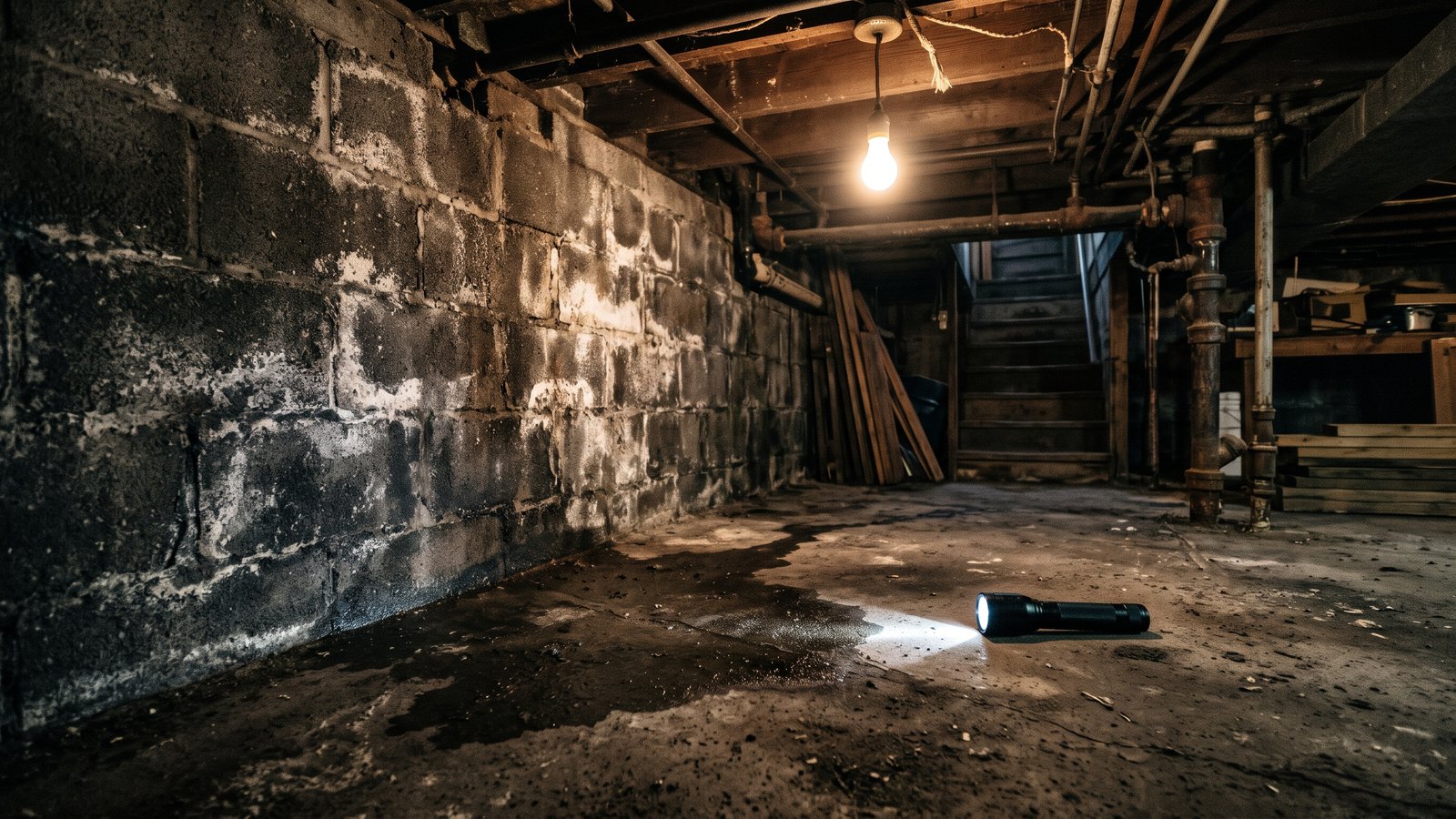
Cleveland-area basements and older foundations make this section worth knowing. If the appraisal shows signs of wood-boring insects, dampness or abnormal settlement, the guide says the appraiser must comment on how it affects value and marketability.
Then the lender has two paths. It can show satisfactory evidence that the condition was corrected. Or it can submit a professional report, based on an inspection, saying the condition does not threaten structural damage. The appraisal is made "subject to" repairs or "subject to" that inspection.
For dampness, insects or settling, a qualified professional's report that there is no threat of structural damage is one of the two paths the guide allows. A repair is not the only answer.
Dated is not the same as damaged
Appraisers also note how updated a home is, separately from condition. The guide uses three labels. "Not updated" means little or no modernization. "Updated" means limited changes to meet current market expectations. "Remodeled" means significant changes, such as complete replacement or expansion.
The guide is clear that a "not updated" area may still be well maintained and fully functional, and that the label does not by itself mean deferred maintenance. An older kitchen with working appliances is not a required repair. It may affect value, but that is a different question from loan eligibility.
| What the appraiser notes | Affects value? | Can block a conventional loan? |
|---|---|---|
| Dated kitchen or baths | It can | No, not by itself |
| Worn carpet, screen holes, cracked glass | It can | Generally no |
| Dampness, insects, abnormal settlement | It can | Until corrected or cleared by a professional report |
| Safety, soundness or structural problem | Yes | Until repaired |
| Overall C6 rating | Yes | Yes, until repaired to at least C5 |
From Fannie Mae Selling Guide B4-1.3-06. The buyer's lender applies these rules to loans it sells to Fannie Mae.
How repairs are confirmed
Topic B4-1.2-05 says repairs generally must be complete when the loan is sold, and the lender must get evidence. One common tool is Form 1004D, the Appraisal Update and/or Completion Report. The appraiser can complete it after a visual inspection, and the guide also allows some other methods. In some cases the guide allows repairs to be postponed, but we have not covered those rules.
Common situations
The appraisal comes back "subject to" repairs
The listed work has to be done and confirmed before the loan can be sold, often with a Form 1004D. Talk with the buyer about who pays and who does the work, and put the agreement in writing.
The appraiser is unsure about a problem
The guide lets the report be made "subject to" a satisfactory inspection by a qualified professional. The lender then decides whether repairs are needed.
Before you list a house that needs work
Walk the house honestly
Separate minor from major
Decide who fixes what
Plan for time
Compare nets
Should I fix everything before listing?
Not necessarily. Our post on expensive repairs before listing walks through when repairs pay for themselves and when they do not.
Know your net proceeds
Here is a simple example with made-up numbers for a $150,000 house with a $60,000 mortgage that needs $15,000 of required repairs to qualify for a conventional loan.
- Listing after repairs: a 6% commission is $9,000. After the $15,000 of repairs and the payoff, you keep $66,000, before holding costs and other closing costs.
- Direct cash sale: no commission, no repairs and no lender rating. The offer minus the $60,000 payoff and closing costs is your net.
- Compare the two nets, not the two prices. A cash offer is often lower than a top listing price.
Your six options
| Option | Condition rating matters? | What to weigh |
|---|---|---|
| Keep it | No | Repairs still need doing someday |
| Repair it | Repairs can raise the rating | Cash, contractors and time |
| Rent it out | Not for a sale | Safety problems still need fixing for tenants |
| List with an agent | Yes, if the buyer uses a loan | Commissions often run 5.5% to 6% |
| Sell it yourself (FSBO) | Yes, if the buyer uses a loan | You handle repair negotiations |
| Sell direct for cash | No lender rating | We can close as fast as 7 days, typically around 21 |
The rating matters when the buyer's loan is sold to Fannie Mae. Other loan types have their own rules.
Compare an as-is offer with a repair plan
We buy houses across Cleveland and Northeast Ohio as-is. Ask for a written offer and line it up against your repair estimate and a listing.
This article summarizes Fannie Mae Selling Guide topics B4-1.3-06 (06/04/2025) and B4-1.2-05 (12/10/2025) as we read them in November 2026. It is general information, not legal, lending or construction advice. We did not cover FHA, VA or USDA property rules, repair costs or postponed improvements. Ask the buyer's lender how their loan treats your house.
Questions about selling a house that needs work?
Call or send us the address. We will walk you through the sale side, and you decide what comes next.
Frequently asked questions
They describe the home's overall condition. C1 is new and never occupied. C4 has minor deferred maintenance. C5 has obvious deferred maintenance and needs some significant repairs. C6 has problems severe enough to affect safety, soundness or structural integrity.
Not as it stands. Fannie Mae says loans on C6 properties are not eligible, and the safety, soundness or structural problems must be repaired to at least a C5 rating before the loan is sold.
No. Fannie Mae says properties rated C1 through C5 are eligible in "as is" condition. A separate rule still applies to any specific safety, soundness or structural problem the appraiser finds.
Generally no. Fannie Mae lists worn floors or carpet, minor plumbing leaks, holes in screens, missing handrails and cracked window glass as minor conditions that generally do not rise to a required repair, though they must be reported.
If the appraiser finds a problem that could affect safety, soundness or structure, the appraisal is completed "subject to" the specific repairs. The value assumes those repairs are done.
Fannie Mae says repairs generally must be complete when the loan is sold, and lenders get evidence of completion. Form 1004D, the Appraisal Update and/or Completion Report, is one way to confirm it.
No. These are lender rules. We buy houses as-is with our own funds, so no lender condition rating applies to our offer.
Find out what we would pay
Free, no obligation, and no pressure. If our number does not work for you, that is a perfectly fine answer.
Keep reading

Why Sell As-Is
Expensive Repairs Homeowners Face When Listing — And Why You Rarely Get That Money Back
What a buyer’s inspection typically demands, what those repairs cost in the Cleveland area, and why spending $20,000 to list rarely returns $20,000 in price.

Investor vs. Realtor
What Happens When the Appraisal Comes In Low?
Your buyer's appraisal came in under the price. Here is how lenders use the lower number, what FHA and VA buyers can do, and the choices you have as the seller.

Why Sell As-Is
We Buy Properties in All Conditions and Circumstances
Foreclosure, fire damage, hoarder homes, code violations, tax liens, vacant properties. The full list of situations we buy in, and what each one actually means for a sale.