Selling a Manufactured Home in Ohio: Deed or Title?
Selling a manufactured home in Ohio starts with a question nobody asks out loud: is it real estate or is it titled like a vehicle? The statute makes it one or the other, three conditions settle which, and the answer changes the office you go to, the document you sign and who can lend a buyer the money.
A single-wide manufactured home on its own grassed lot with a small covered porch and masonry skirting along the base
Ohio makes it one or the other: a manufactured or mobile home with situs here pays either real property tax or the manufactured home tax. Three conditions decide — a permanent foundation, land owned by the home’s owner, and a certificate of title that has been inactivated. If all three are met, you are selling real estate with a deed. If not, you are selling a titled home, and the state holds the first lien on it for any unpaid manufactured home tax.
This is the one question to settle before anything else, because everything downstream depends on it: which office handles the transfer, which document conveys it, which charges apply, and — the part that decides the price — which buyers can get a loan against it.
We buy houses; we are not a law firm, a tax adviser or a county auditor. Everything below is quoted from the Ohio Revised Code so you can check the division named. Whether your own home meets the conditions is a question for the county auditor’s office, and it is usually one phone call.
Two ways to be taxed, and only one of them is real estate
The statute opens by forcing the choice rather than describing it as an option:
The owner of each manufactured or mobile home that has acquired situs in this state shall pay either a real property tax pursuant to Title LVII of the Revised Code or a manufactured home tax pursuant to division (C) of this section.
For a home that acquired situs in Ohio, or changed ownership, on or after 1 January 2000, real property taxes apply where all of three things are true:
- The home is affixed to a permanent foundation, as the building standards chapter defines that term.
- The home is located on land that is owned by the owner of the home — the same person owns both.
- The certificate of title has been inactivated by the clerk of the court of common pleas that issued it.
For a home whose situs or ownership change came before 2000, there is an extra step: the owner has to have elected real property taxation, surrendered the title to the county auditor together with proof that all taxes have been paid, and the auditor has to have placed the home on the real property tax list before the clerk inactivates the certificate.
And if none of that has happened, the home stays on the manufactured home tax — an annual tax payable by the owner for locating the home in this state. One detail there matters at closing more than the rate does: the state has the first lien on the home for the amount of that tax, penalties and interest.
The two definitions that get mixed up
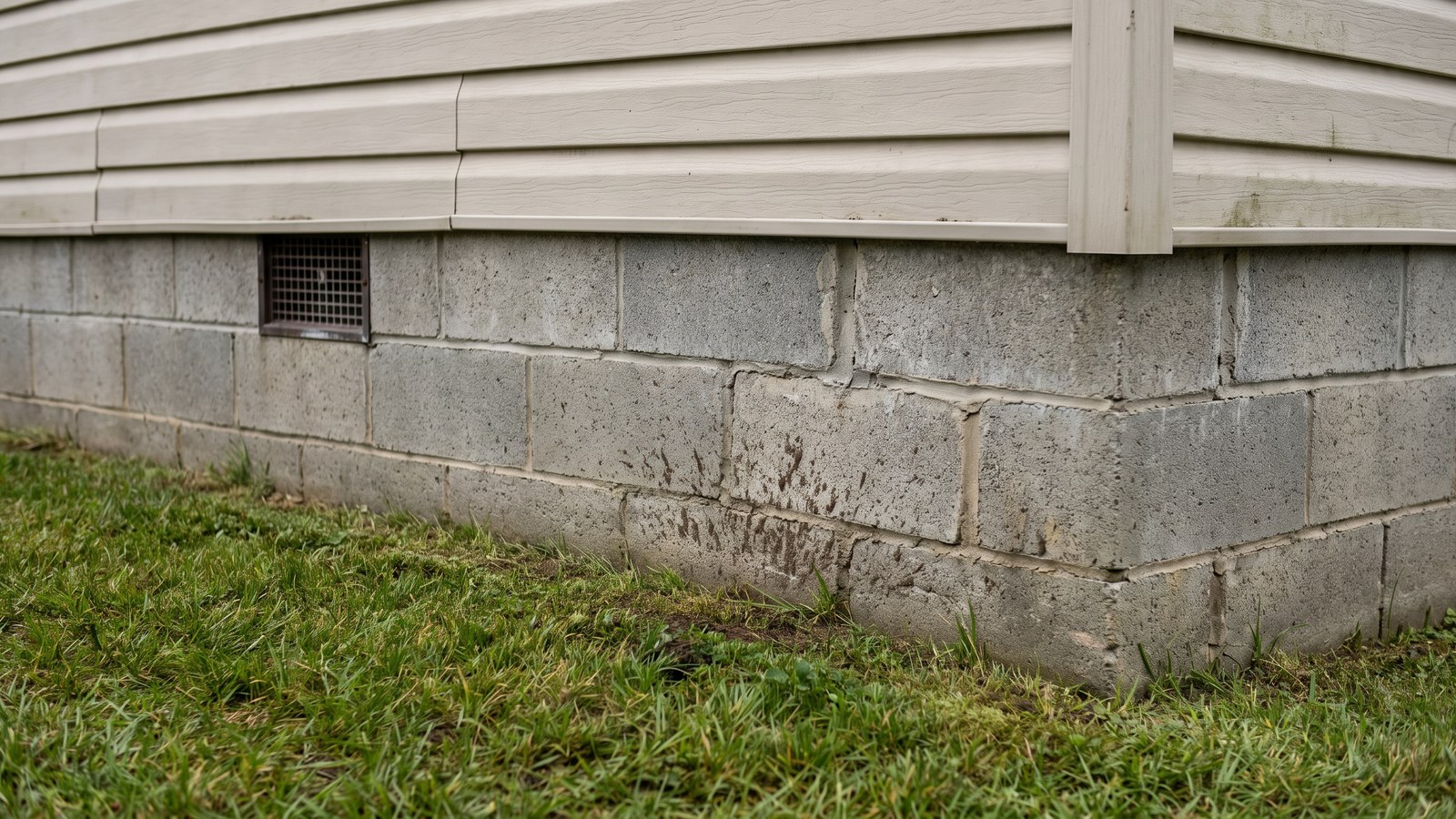
The foundation test is short, and it is worth reading rather than paraphrasing:
"Permanent foundation" means permanent masonry, concrete, or a footing or foundation approved by the division of industrial compliance of the department of commerce pursuant to Chapter 4781. of the Revised Code, to which a manufactured or mobile home may be affixed.
The next division of the same section defines something else entirely, and because the terms sound alike they get run together constantly. A "permanently sited manufactured home" must meet size and appearance criteria: at least twenty-two feet at one point in each direction, at least nine hundred square feet of living area excluding garages, porches and attachments, a minimum 3:12 residential roof pitch, conventional residential siding, and a six-inch minimum eave overhang including appropriate guttering.
The tax section points at the permanent foundation definition only. A home can be on a permanent foundation without meeting the size and roof-pitch criteria of a "permanently sited manufactured home", and the second term appears in other contexts rather than in the one that decides whether you hold a deed. If somebody tells you your home does not qualify because of its width or its roof, ask them which definition they are applying.
How the title actually comes off
The surrender provision lives in the certificate of title chapter rather than the tax one, which is part of why this is hard to piece together. An owner whose home will be taxed as real property shall surrender the certificate of title to the auditor of the county containing the taxing district where the home is located. Where the home qualifies on the foundation and land conditions, that surrender is due within fifteen days after the home meets them. The auditor then delivers the certificate to the clerk who issued it, and the clerk inactivates it and keeps it in the system for thirty years.
Notice the direction of that duty. It is not an option the owner may take up when convenient — a home that already meets the foundation and land-ownership conditions carries a fifteen-day obligation whether or not anyone wanted the change.
The provision most useful to somebody still paying for the home is the next one, and we have not seen it covered anywhere. Where a lienholder holds the certificate, the lienholder shall surrender it to the auditor within thirty days after the homeowner has done both of the following:
- Given the lienholder written notice requesting that the certificate be surrendered to the auditor of the county containing the taxing district where the home is located.
- Either paid the lienholder the remaining balance, or — with the lienholder’s consent — executed and delivered a mortgage on the home and the land on which it sits, in the amount of the remaining balance.
That second limb is the one worth knowing about. It converts a chattel debt into a mortgage on the whole property rather than requiring the balance to be cleared first, and it needs the lienholder to agree. Whether it is available to you is a conversation with them, not with us.
| Taxed as real property | On the manufactured home tax | |
|---|---|---|
| What you are selling | Real estate — the home and the land together | A titled home, separate from any land |
| What conveys it | A deed, recorded like any other | A certificate of title |
| Where the paperwork goes | County auditor and recorder, through a title company | The clerk of the court of common pleas, and the auditor |
| Charges on transfer | The conveyance fee and any county real property transfer tax | A county may levy a manufactured home transfer tax at the same rate, on the grantor |
| Liens to expect | Mortgages, judgment liens, property tax charges | The state has the first lien for unpaid manufactured home tax |
Summarised from ORC 4503.06 and ORC 4505.11(H), with the transfer charges from the sections covered in our article on the Ohio conveyance fee. Which column you are in is a question of fact for the county auditor — we have not read any county’s own process and are not describing one.
Not sure which column your home is in?
Tell us the address and we will tell you what we can see from the public record before you commit to anything. It costs nothing, and it is usually enough to know which question to put to the county auditor.
Why the answer changes the price
We are not going to quote you a figure for the difference, because we have no source for one and the honest answer varies by home and by market. What we can set out is the mechanism. A home taxed as real property, sitting on land the owner holds, is a house for financing purposes: an ordinary buyer can seek an ordinary mortgage on the whole property. A home on the manufactured home tax is a titled chattel, and a buyer looking for finance is in a narrower market with different lenders and different terms.
That is the real reason the paperwork matters. It is not that conversion adds value by itself — it is that the two versions of the same home face different sets of buyers.
Your options, honestly
- Find out which one you are, first. One call to the county auditor establishes whether the home is on the real property list or the manufactured home tax list, and that answer governs everything else on this page.
- Keep it as it is. If the home is on the manufactured home tax and the conditions are not met, nothing obliges you to change that before selling — you are simply selling the other thing.
- Complete the conversion before selling. Where the foundation and land conditions are already met, the fifteen-day surrender duty is not optional anyway, and a buyer with ordinary financing is a wider market.
- Repair and list. As with any property, the open market usually produces the highest gross where the home is in good order. Ohio commissions generally run 5.5% to 6%.
- Rent it. Income rather than a sale, with the landlord obligations attached and, if it is on the manufactured home tax, that tax continuing to run against the home.
- Sell direct. No commissions, no repairs, closing as fast as 7 days where the paperwork is clean and typically around 21, at a price below retail. Worth saying plainly: if the title question is unresolved, "clean paperwork" is doing real work in that sentence.
A listed sale carries commission, concessions, repairs and carrying costs; a direct sale carries a lower price and none of those. But with a manufactured home, neither comparison means much until you know whether you are selling real estate or a titled home — the buyer pool differs, and so does the price the market will support.
Want the comparison once you know the answer?
Come back with what the auditor tells you and we will set our offer beside a realistic listed-sale net, itemised. If the answer turns out to be "convert it and list it", that is what we will say.
Where this leaves you
Three things. The characterisation is a binary the statute sets, not a preference — real property tax or manufactured home tax, and three conditions decide. If the foundation and land-ownership conditions are already met, the fifteen-day duty to surrender the certificate applies whether or not you had thought about it. And if a lender holds the title, there is a written-notice route with a thirty-day duty at the other end, including the option of a consented mortgage instead of paying the balance off.
One caution about a term we have used carefully throughout. Whether a footing or foundation qualifies can turn on an approval by the division of industrial compliance, which is a fact about your property rather than a rule we can apply from here. We did not read the chapter that governs those approvals, and we are not going to guess at it.
When you would rather hand the whole thing over
We buy houses and manufactured homes across Cleveland, Cuyahoga County and the surrounding counties, in any condition, and we close through a title company. Send the address whenever you want a number — and if sorting the title out first would fetch you more, we will tell you that instead.
Frequently asked questions
One or the other, and the statute frames it as a tax question. The owner of each manufactured or mobile home that has acquired situs in Ohio shall pay either a real property tax, or a manufactured home tax. Which one applies is what tells you whether the home transfers with a deed or with a certificate of title.
For a home that acquired situs or changed ownership on or after 1 January 2000, all three of these must be true: it is affixed to a permanent foundation as the building code chapter defines that term; it sits on land owned by the owner of the home; and the certificate of title has been inactivated by the clerk of the court of common pleas that issued it.
The definition is short: permanent masonry, concrete, or a footing or foundation approved by the division of industrial compliance of the department of commerce, to which a manufactured or mobile home may be affixed. Whether a particular foundation qualifies is a fact about your property and, in the third case, about an approval — not something an article can tell you.
No, and the two sit in adjacent divisions of the same section, which is how they get confused. A permanently sited manufactured home has to meet size and appearance criteria — at least twenty-two feet at one point in each direction, at least nine hundred square feet of living area, a minimum 3:12 roof pitch, conventional residential siding and a six-inch minimum eave overhang with guttering. That is a different definition from the permanent foundation test the tax section points at.
An owner whose home will be taxed as real property shall surrender the certificate of title to the auditor of the county containing the taxing district where the home is located. Where the home qualifies on the foundation and land-ownership conditions, the owner shall surrender it within fifteen days after the home meets them. The auditor then delivers the title to the clerk who issued it.
The statute covers it. Where a lienholder holds the certificate, the lienholder shall surrender it to the auditor within thirty days after the homeowner has both given written notice requesting the surrender and either paid the remaining balance or, with the lienholder’s consent, executed a mortgage on the home and the land for that balance.
It is inactivated, not destroyed. On delivery from the auditor, the clerk shall inactivate the certificate and maintain it in the automated title processing system for a period of thirty years.
Yes. On application by the owner of a home taxed as real property that no longer satisfies the foundation and land-ownership conditions, the clerk shall reactivate the record of the certificate.
Then an annual manufactured home tax is payable by the owner for locating the home in this state, and the state has the first lien on the home for the amount of that tax, penalties and interest. Any unpaid amount is the first thing a buyer’s side will find.
Find out what we would pay
Free, no obligation, and no pressure. If our number does not work for you, that is a perfectly fine answer.
Keep reading

The Cash Offer Process
The Ohio Conveyance Fee: Who Pays It, and When There Is None
It is two levies, not one. The state sets the auditor’s fee, the county may add a transfer tax, and a list of twenty-five exemptions can reduce the whole thing to nothing.

Liens, Taxes & Title
Which Deed Do You Sign When You Sell an Ohio House?
All four Ohio deed forms hand over the same thing. What changes is what you promise — and an executor's deed promises something different again.

The Cash Offer Process
When Do You Actually Get Paid After an Ohio Closing?
Ohio law forbids a closing agent from paying anyone until the money is actually there, and it says precisely what "actually there" means. That rule is usually the whole explanation for a delay.