Selling a House With a Home Salon, Daycare or Office
Some homes do double duty. A front room became a one-chair salon. A side addition was built for a home daycare. A back door leads to a small office. When it is time to sell, the buyer's lender has rules for homes like these, and they shape who can buy and how the home is valued.
A modest bungalow with a small side addition that has its own glass entry door and a concrete ramp with metal railings
A buyer can use a conventional loan on a house with a home business space, but Fannie Mae's rules are narrow. It must be a one-unit home the buyer lives in, mostly residential, and the buyer must own and run the business. The appraisal values the home as a residence, not the business build-out.
What Fannie Mae allows
Fannie Mae's Selling Guide, topic B2-3-04, says it will buy loans on properties that have a business use in addition to a residential use. It gives examples: space set aside for a day care, a beauty or barber shop, or a doctor's office.
| Rule | What it means for your buyer |
|---|---|
| One-unit home | Not a two- to four-unit building |
| Main residence | The buyer must live there |
| Owner and operator | The buyer must own and run the business |
| Primarily residential | The home has to be mostly a home |
| No harmful changes | Changes cannot hurt the home's appeal as a residence |
From Fannie Mae Selling Guide B2-3-04 (11/04/2026). FHA, VA and other loans have their own rules, which we have not covered.
This is the rule that narrows the field. Under the mixed-use rules, the borrower must be both the owner and the operator of the business. A buyer who wants to keep running a salon fits. For a buyer who just wants a house, the mixed-use rules do not fit, and the buyer's lender decides how to treat the space.
Is your business space narrowing your buyers?
Send us the address. We will look at the house as it is and tell you plainly whether we can make a written cash offer.
How the appraisal treats business space
Topic B4-1.4-07 sets the appraisal rules for these homes. The appraiser must describe the mixed use in detail and say whether it is a legal, permitted use under local zoning.
The appraiser must also report any negative effect on marketability and any market resistance to the business use. And the value must be based on the home's residential features, not on the business or any special business changes.
What "primarily residential" means
The rule says the property must be primarily residential, and that the home may not be changed in a way that hurts its marketability as a residence. The topics we read do not give a square-foot limit or a percentage for the business space. We are not going to guess one.
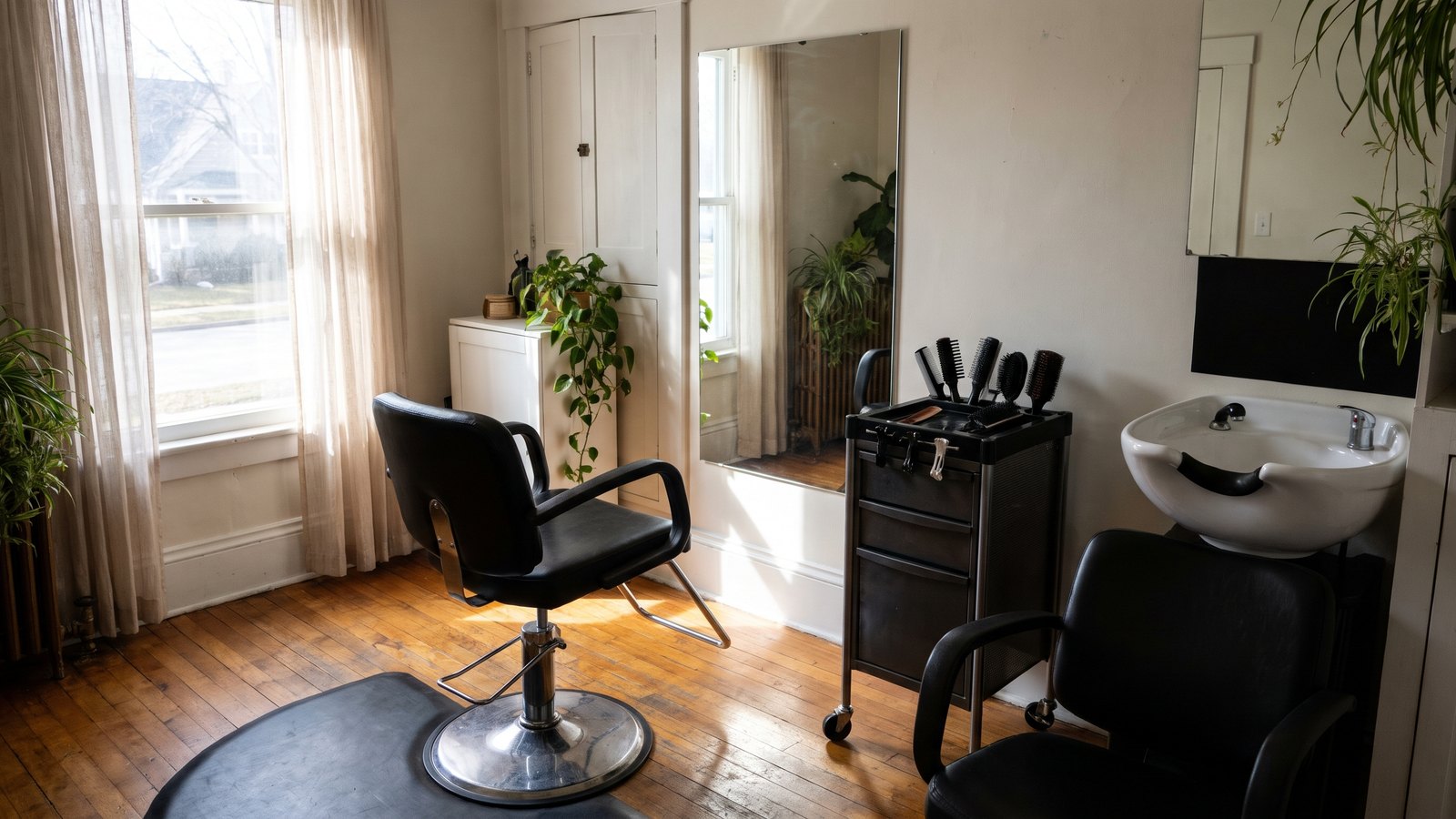
In practice, that leaves the call to the appraiser's detailed description and the lender's review. A front room with a salon chair reads very differently from a house where most of the first floor has been rebuilt as a storefront. The more the space still looks and works like part of a home, the easier it is to describe that way.
The appraiser must state whether the mixed use is legal and permitted under local zoning. We have not covered Cleveland or suburban zoning for home businesses, which varies by city. Ask your city before you list so the answer is ready.
If your house sits on more than one lot
Some homes with a business also have a side lot for parking or a garden. The same Fannie Mae topic covers properties made up of more than one parcel. The parcels must meet these rules:
- Each parcel is sold in its entirety.
- The parcels touch each other. A road in between is allowed only if the parcel without the house cannot be built on, with proof in the loan file.
- They have the same basic zoning, such as residential.
- The whole property has only one dwelling unit. A garage or similar non-residential building is fine.
- A home built across a lot line is acceptable.
- The mortgage must be a valid first lien on every parcel.
Before you list
Describe the business space
Check zoning
Think about who will buy
Decide what to keep
Check your parcels
What about taxes on a home office or business space?
That is a separate question. Our post on selling a house with a home office covers what the IRS says about business use of a home when you sell.
Common situations
You ran a home daycare and are retiring
A buyer who plans to run a daycare there fits the mixed-use rules. For a family that just wants a home, the mixed-use rules do not fit, so the lender decides how to treat the space. Either way, the appraisal values the house as a residence.
Your salon has its own entrance and a ramp
The appraiser will describe those features and report any market resistance to the business use. Features built only for the business do not add appraised value.
Your house and parking lot are two parcels
If they touch, share zoning and contain only one home, Fannie Mae's multiple-parcel rules can work. The mortgage must cover both parcels.
You closed the business and turned the room back into a den
The mixed-use rules are written for properties that have a business use. If the business is gone and the room is back to normal home use, tell the buyer and the appraiser what changed so the listing matches what they see.
Your parking lot is across the street
Parcels must touch each other. The one exception in the guide is parcels split by a road when the parcel without the home cannot be built on, with proof of that in the loan file.
Know your net proceeds
Here is a simple example with made-up numbers for a $165,000 house with a $70,000 mortgage. If you plan to remove business fixtures before listing, count that cost too, because the appraisal does not credit those fixtures anyway.
- Listing: a 6% commission is $9,900, leaving $85,100 after the payoff, before any work to remove business fixtures, holding costs and closing costs.
- Direct cash sale: no commission and no lender mixed-use review. The offer minus the $70,000 payoff and closing costs is your net.
- Compare the two nets, not the two prices. A cash offer is often lower than a top listing price.
Your six options
| Option | Business space plays in | What to weigh |
|---|---|---|
| Keep it | Keep running the business | Your plans and upkeep |
| Repair it | Convert the space back to residential | Cost and time; may widen your buyers |
| Rent it out | Zoning and lease terms matter | Landlord duties |
| List with an agent | Buyer's lender applies mixed-use rules | Commissions often run 5.5% to 6% |
| Sell it yourself (FSBO) | Same lender rules for the buyer | You find the right buyer |
| Sell direct for cash | No lender mixed-use review | We can close as fast as 7 days, typically around 21 |
These rules apply to loans sold to Fannie Mae. Other loan types have their own rules.
Compare a cash offer with a listing
We buy houses across Cleveland and Northeast Ohio as-is, business space and all. Ask for a written offer and compare your net.
This article summarizes Fannie Mae Selling Guide topics B2-3-04 (11/04/2026) and B4-1.4-07 (06/04/2025) as we read them in November 2026. It is general information, not legal, zoning, licensing or lending advice. We did not cover local zoning, business licensing, FHA or VA rules, or taxes. Ask your city, the buyer's lender or an attorney.
Questions about selling a home that is also a workplace?
Call or send us the address. We will walk you through the sale side, and you decide what comes next.
Frequently asked questions
Yes, if the rules are met. Fannie Mae buys loans on homes with business space such as a day care, a beauty or barber shop, or a doctor's office, as long as the home is a one-unit, mostly residential property the buyer lives in.
Under Fannie Mae's mixed-use rules, yes. The borrower must be both the owner and the operator of the business. If the buyer will not run the business, the mixed-use rules do not fit, so ask the buyer's lender how it will treat the space.
No. The appraisal must report the market value based on the home's residential features, not the business use or any special business modifications.
A detailed description of the mixed use, whether that use is legal under local zoning, and any negative effect on marketability or market resistance to the business use.
They can. Fannie Mae says the home may not be modified in a way that hurts its marketability as a residence.
Not always. Fannie Mae allows multiple parcels if they adjoin, have the same basic zoning, contain only one dwelling unit in total, and are all covered by the first mortgage.
We look at each property and buy with our own funds, so these lender rules do not apply to our offer. Send us the address and we will tell you plainly whether we can make one.
Find out what we would pay
Free, no obligation, and no pressure. If our number does not work for you, that is a perfectly fine answer.
Keep reading
Liens, Taxes & Title
Selling a House With a Home Office: What the IRS Says
Used part of your house as a home office? When you sell, the IRS rules depend on where the office was and how you deducted it. Here is what Publication 523 says about gain and depreciation.
Why Sell As-Is
Selling a House With an In-Law Suite or ADU
An apartment over the garage or a basement suite can help or complicate a sale. Here is how a buyer's conventional lender decides whether it counts as an ADU.
Why Sell As-Is
Will the Buyer's Lender Make You Fix the House?
An appraiser rates a home's condition from C1 to C6. On a conventional loan, that rating can decide whether repairs must be finished before the buyer's loan closes.