Ohio Rental Registration With the County Auditor: Selling a Rental
If you own a rental house in Ohio, you may have a filing duty you have never heard of. A state law, ORC Chapter 5323, asks owners of residential rental property in larger counties to keep their contact information on file with the county auditor. When you sell a rental, that information changes. Here is what the law says, in plain English.
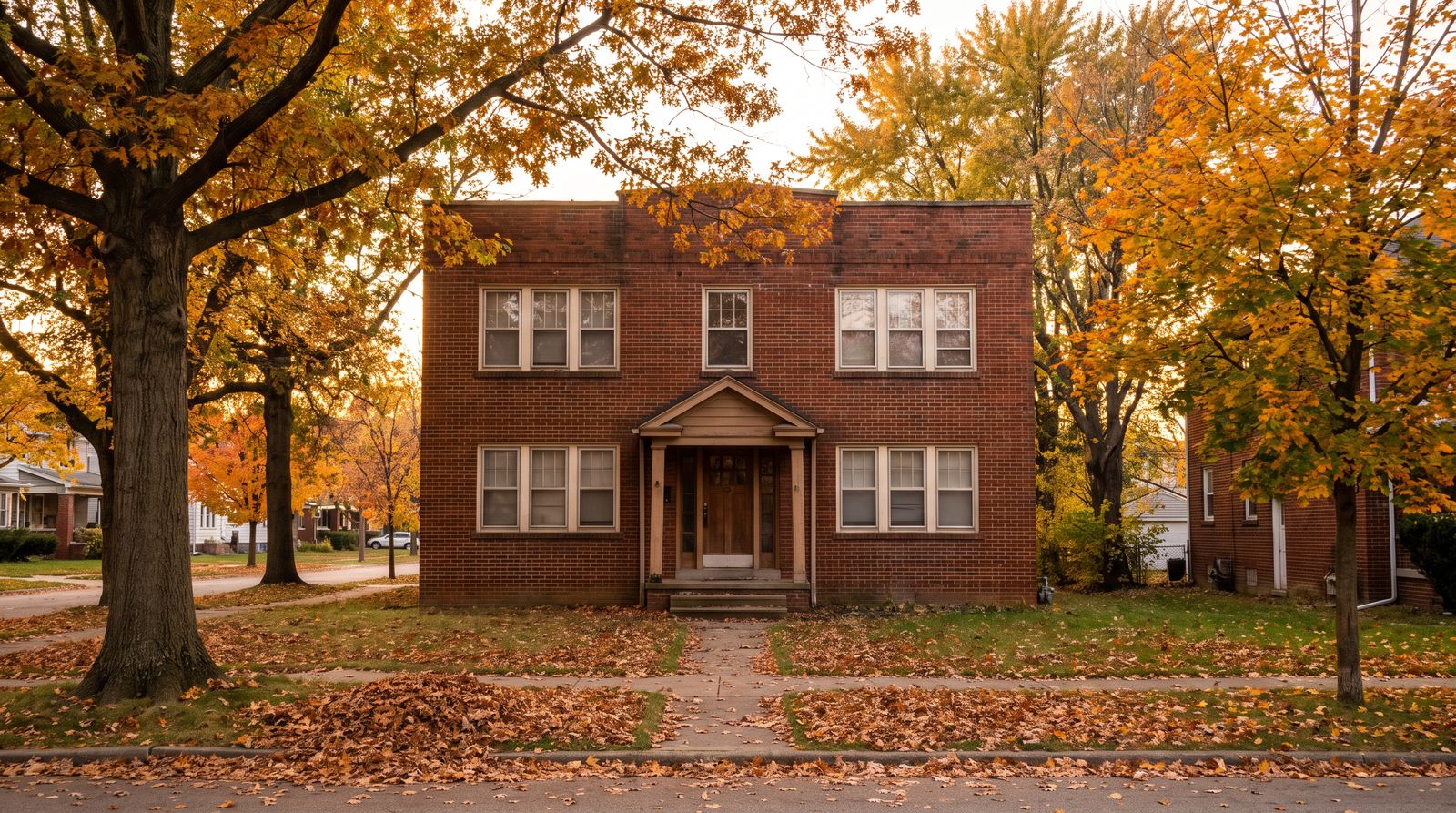
A classic two-family house with stacked front porches on a quiet street in late-autumn afternoon light
In Ohio counties with more than 200,000 people, ORC 5323.02 requires owners of residential rental property to file contact and parcel information with the county auditor and update it within 60 days of any change. A sale is a change. Not complying can lead to a $50 to $150 special assessment on the property.
Who the law covers
ORC 5323.01 defines "residential rental property." It is real property in a county with a population of more than 200,000, under the most recent decennial census, that has one or more dwelling units leased or rented to tenants solely for residential purposes. It also covers mobile home parks and similar sites. Hotels and college or university dormitories are not included.
Not sure whether your county meets the population test? Ask your county auditor's office. They send the notices that start the clock, so they will know.
The law is short, and it is about one thing: being able to reach the person responsible for a rental home. It does not set rent rules, inspection rules or tenant rights. Those come from other laws, including Ohio's landlord-tenant chapter and your city's code. But because the filing sits on the county's property record and can lead to a special assessment, it is worth checking before you sell.
Thinking about selling a rental?
Tell us about the property and the tenants. We can talk through your options, with no pressure to decide.
What goes on file
| Who owns the rental | Contact information required |
|---|---|
| An individual | The owner's name, address and phone number |
| A trust or business trust | A trustee's name, address and phone number |
| An estate | The executor's or administrator's name, address and phone number |
| A partnership or limited partnership | A general partner's name, address and phone number |
| A limited liability company | A member's, manager's or officer's name, address and phone number |
| A corporation | An officer's name, address and phone number |
From ORC 5323.02(A). Every filing also lists the rental's street address and permanent parcel number. Other entity types, like associations, have their own listed contact.

One filing, many requests
There is a small benefit built into the law. Under ORC 5323.04(B), an owner who complies is treated as fully complying with any request from the state or a local government for information that is identical to what was filed with the county auditor. Keeping the county filing current can save repeat paperwork.
The 60-day rules
- When the county auditor sends notice of the requirement, the owner must comply within sixty days after receiving it.
- After that, the owner must update the information within sixty days after any change.
- A property manager the owner designated may do the filing or updating for the owner.
- The information is kept on the tax list or real property record, and it is a public record.
How a sale fits in
When a rental is sold, the owner changes. The statute puts the filing duty on the "owner of residential rental property," and requires updates within sixty days after any change. So after closing, the new owner has the filing duty for the property. Before closing, check that your own filing is current, so there is no special assessment waiting on the tax bill.
Out-of-state owners and heirs
Many Ohio rentals are inherited by family who live elsewhere. ORC 5323.03 says an owner who lives outside Ohio must name an individual who lives in Ohio to accept service of legal papers, and file that person's name, address and phone number with the county auditor. If the owner already keeps a statutory agent with the Ohio Secretary of State, the owner files a certified copy of that designation instead.
Check what is on file
Update it if anything changed
Name an Ohio agent if needed
Look for a special assessment
Tell your buyer
This is a state law filed with the county auditor. Some cities have their own rental registration or inspection programs. Cleveland, for example, has a lead-safe certification program for rentals. Check your city's rules too.
Common situations
Your parent's estate owns the rental
When an estate owns residential rental property, ORC 5323.02 asks for the name, address and phone number of the executor or administrator. If you were just appointed, the information on file has changed, and the sixty-day update rule applies. If you live outside Ohio, also look at the agent rule in ORC 5323.03.
You own the rental through an LLC
The filing lists a member, manager or officer of the LLC. If that person changes, or the LLC sells the property, update the filing or make sure the buyer files after closing.
You got a special assessment on your tax bill
ORC 5323.99 lets the county auditor impose a special assessment of $50 to $150 for failing to file, update or name an agent. The statute says it can be appealed to the county board of revision. If you sell, expect any unpaid assessment to show up with the taxes at closing.
You rent out a lot in a mobile home park
The definition also covers a mobile home park or similar site where lots are rented for manufactured homes, mobile homes or recreational vehicles used solely for residential purposes. The same filing rules apply to the owner of that property.
Know your net proceeds
A small special assessment is not likely to change much, but tenants, repairs and vacancy can. Here is a simple example with made-up numbers. It is for teaching only.
| Line item | Listing (example) | Direct cash sale (example) |
|---|---|---|
| Sale price | $150,000 | $126,000 |
| Agent commission (6%) | -$9,000 | $0 |
| Repairs and turnover before listing | -$7,000 | $0 (sold as-is, tenants in place) |
| Holding costs while on the market | -$3,000 | -$700 |
| Seller closing costs (estimate) | -$2,000 | -$1,000 |
| Estimated net | $129,000 | $124,300 |
Made-up numbers. In this example the listing nets more, which is often true. Lost rent during a vacant listing period is not shown. A cash sale does not always net more.
Your six options
| Option | With a rental | What to weigh |
|---|---|---|
| Keep it | Keep your filing current | Landlord duties continue |
| Repair it | Fix up between tenants | Cash and time up front |
| Rent it out (keep renting) | Same as today | Tenant turnover and repairs |
| List with an agent | May need it vacant for showings | Commissions often run 5.5% to 6% |
| Sell it yourself (FSBO) | You coordinate tenants and showings | More work, no commission |
| Sell direct for cash | Often possible with tenants in place | As fast as 7 days, typically around 21. The price is often lower |
Whatever you choose, the new owner takes over the county filing after closing.
Compare a written offer
We buy rentals across Cleveland and Northeast Ohio as-is, tenants and all. Ask for a written number and compare your net.
This article summarizes Ohio Revised Code 5323.01 to 5323.04 and 5323.99 as we read them in November 2026. It is general information, not legal advice. We did not cover any city's rental registration program, how your county auditor accepts filings, or which counties meet the population test. Ask your county auditor and an Ohio attorney.
Questions about your rental?
Call or send us the address. We will explain how our offers work, and the decision stays yours.
Frequently asked questions
Real property in a county with a population over 200,000 under the most recent decennial census, with one or more dwelling units rented solely for residential purposes, and certain mobile home parks. Hotels and college dormitories are excluded.
The owner's name, address and phone number, plus the street address and permanent parcel number of the rental. If a business entity, trust or estate owns it, the name, address and phone of a person such as a trustee, executor, general partner, member, manager or officer.
Within sixty days after any change in the information.
The owner must designate an individual who lives in Ohio as agent for service of process and file that agent's name, address and phone with the county auditor, unless a statutory agent is already on file with the Secretary of State, in which case a certified copy of that designation is filed.
The county auditor may impose a special assessment on the rental property of not less than $50 nor more than $150. It can be appealed to the county board of revision.
Yes. Information filed with the county auditor under this chapter is a public record.
Yes. An agent designated by the owner to manage the property may file or update the information on the owner's behalf.
Find out what we would pay
Free, no obligation, and no pressure. If our number does not work for you, that is a perfectly fine answer.
Keep reading

Why Sell As-Is
Selling a Pre-1978 Cleveland Rental? What Lead Safe Certification Means
Cleveland requires rentals built before 1978 to carry a Lead Safe Certification, and the city proposed changes to the program in October 2026. Here is what that means if you are selling an older rental.

Why Sell As-Is
Selling a Rental Property With Bad Tenants or Damage? We Can Help
You can sell with tenants in place. What that means for you, what it means for them, and why trying to empty the property first is usually the slower route.
Liens, Taxes & Title
Selling a Rental? How Depreciation Comes Back at Tax Time
Depreciation lowers your tax while you own a rental, then lowers your basis when you sell. Here is how federal law treats that gain, why depreciation you never claimed still counts, and the 25 percent rate that applies.