Selling a Rental? How Depreciation Comes Back at Tax Time
Every year you own a rental, depreciation trims your taxable rent. Many landlords forget that it has a second effect. It also lowers the tax basis of the property, so the gain on the sale is bigger. Federal law has a specific rule for that part of the gain. Knowing it before you sell helps you plan, whatever way you decide to sell.
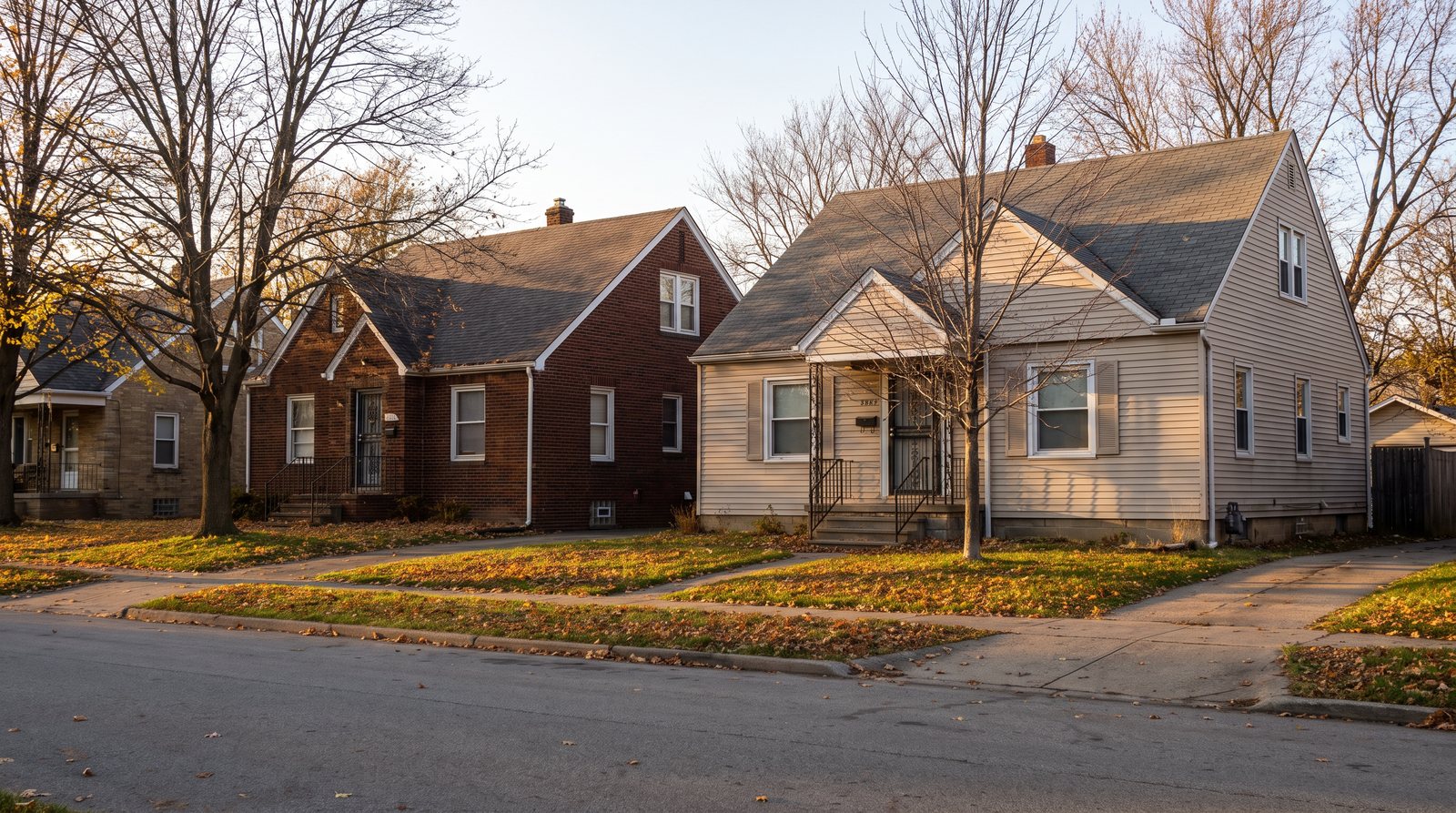
A small older two-story brick four-unit apartment building with a symmetrical front entry on a tree-lined street in autumn
Depreciation on a rental lowers your basis, so your gain on the sale is larger. The part of the gain that comes from depreciation is generally unrecaptured section 1250 gain, taxed at a federal rate of up to 25%. Depreciation counts even if you never claimed it, because the law uses the amount allowable. A 1031 exchange can defer it. Plan with a tax adviser before you sell.
Depreciation works twice
While you own a rental, depreciation is a deduction. Federal law depreciates residential rental property using the straight line method over 27.5 years, so each year you deduct a slice of the building's cost from your rental income.
The second effect shows up when you sell. Your basis, roughly what you paid plus improvements, goes down by the depreciation. When you sell, your gain is the sale price minus selling costs minus that lower basis. So every dollar of depreciation over the years adds a dollar to your gain at the sale.
… to the extent of the amount (A) allowed as deductions in computing taxable income … but not less than the amount allowable …
Some landlords never claimed depreciation, thinking it would save trouble later. The basis rule uses the amount allowable, not just the amount you claimed. So your basis goes down either way, and you may have missed the deduction while still facing the higher gain. Ask a tax adviser whether there is a way to catch up on missed depreciation before you sell.
Thinking about selling a rental?
Tell us the address. We will give you a no-obligation cash offer so you and your tax adviser can work out the after-tax numbers with a real price.
A walk-through in words
Picture a landlord who bought a house years ago, rented it out the whole time and claimed depreciation every year. When they sell, their adviser starts with what they paid for the property, adds qualifying improvements, and subtracts all the depreciation that was allowed or allowable. That gives the adjusted basis.
Next comes the amount realized: the sale price minus the costs of selling. The gain is the amount realized minus the adjusted basis. The adviser then splits that gain. The part that only exists because depreciation lowered the basis is the unrecaptured section 1250 gain. Anything above the original cost is ordinary price growth. Each slice is taxed under its own rule.
The same idea works in reverse. If a house sells for less than its original cost, there may be no price-growth gain at all, but the depreciation can still create a taxable gain because the basis went down. That surprises many landlords who think "I did not make money on this house, so I owe nothing."
How the gain is split
Not all of the gain on a rental is taxed the same way. Federal law separates it into pieces. For a typical rental house held more than a year, it looks like this:
| Part of the gain | What it is | How federal law treats it | Source |
|---|---|---|---|
| Depreciation beyond straight line | "Additional depreciation" | Ordinary income. Usually none for a residential rental, since it uses straight line | 26 U.S.C. 1250(a)-(b); 168(b)(3)(B) |
| Gain from straight-line depreciation | "Unrecaptured section 1250 gain" | Long-term gain taxed at a rate of up to 25% | 26 U.S.C. 1(h)(6), 1(h)(1)(E) |
| Gain above your original basis | True price growth | Long-term capital gain at the regular capital gains rates | 26 U.S.C. 1(h) |
This table is a simplified view of the federal rules for an individual who held a residential rental for more than a year. Other taxes may apply, and the bracket rules can move part of a slice into a lower rate. We have not included any dollar examples, because the result depends on your price, basis, improvements and income. Have a tax adviser run your numbers.

If you inherited the rental
Many Cleveland rentals were inherited. Federal law generally sets the basis of property received from someone who died at its fair market value on the date of death. That means the depreciation the previous owner took does not carry into your starting basis. Depreciation only starts to matter for you once you put the house into service as a rental and begin depreciating it yourself. Keep proof of the date-of-death value, such as an appraisal, because it is the starting point for everything else.
If you once lived there
Some rentals started as the owner's home. If you lived in the house and later rented it out, the home-sale exclusion may cover some of your gain, but federal law says it does not cover gain up to the amount of depreciation after May 6, 1997. So the depreciation slice can be taxable even when the rest is excluded. We explain the home-sale exclusion and its former-rental traps in our capital gains post.
What to gather before you sell
Your purchase records
Improvement receipts
Your depreciation history
A realistic sale price
Your selling costs
Ways landlords plan around it
The main way to put off the tax is a 1031 exchange into another investment property, which we cover in a separate post. For landlords who want out of the business, that may not fit, and paying the tax may be the right trade for being done. That is a personal choice, and your adviser can show you both sets of numbers.
Ohio's income tax starts from federal adjusted gross income, adjusted as Ohio law provides. So the federal gain generally carries into the Ohio calculation. City income taxes and your own facts can change things, so ask your adviser about them too.
Questions to ask your tax adviser
- What is my adjusted basis? Ask them to walk you through the purchase price, improvements and depreciation that make it up.
- How much of my gain is from depreciation? That is the slice that can be taxed at up to 25%.
- Did I miss depreciation in past years? If so, ask what can be done about it before the sale, since the basis goes down either way.
- Does the year I sell matter? The federal rate rules depend on your taxable income for the year, so timing can change which bracket part of the gain lands in.
- Would a 1031 exchange fit my plans? Only if you want to buy another investment property within the deadlines.
- What about Ohio and my city? Ask how the gain flows into your Ohio return and whether any city income tax applies.
Bring the documents from the checklist above to that meeting. A good adviser can turn them into an estimate of the tax on each offer you receive, which is the only way to compare offers fairly.
Your six options
- Keep the rental. No sale, no tax on the gain yet. You keep collecting rent, and keep depreciating.
- Repair it, then sell. Work on the house can raise the price. Ask your adviser how the cost will be treated for tax before spending.
- Keep renting with a manager. Hand off the daily work while you plan the timing of a sale.
- List it with an agent. The open market often brings the highest price. Ohio commissions usually run 5.5% to 6%, and selling costs are part of figuring your gain.
- Sell it yourself. No commission. You handle the buyer, any tenants and the paperwork.
- Sell direct. No commission, no repairs and no showings, and tenants can often stay in place. Closings can happen as fast as 7 days and typically take around 21. The price will be below full retail, and a lower price also means a smaller taxable gain.
For a rental, the number that matters is what you keep after costs and taxes. Start with each offer, subtract commission, closing costs, repairs and holding costs, then estimate the tax on the gain with your adviser. A higher price brings more tax as well as more cash. Compare the after-tax amounts side by side.
Get a number for your tax planning
We buy rentals across Cleveland and Northeast Ohio, with or without tenants. Ask for an offer and run it through your after-tax math alongside listing. If listing leaves you more, we will tell you.
This article summarizes 26 U.S.C. §§ 1(h), 168, 1014, 1016 and 1250, and Ohio Revised Code § 5747.01(A), as we read them. It is general information, not tax advice. We did not cover the net investment income tax, passive loss rules, city income tax or catching up on missed depreciation. Talk to a CPA or tax attorney before you sell a rental property.
Questions about selling your rental?
Call or send us the address. We will explain how a sale would work, tenants and all, and leave the tax planning with your adviser.
Frequently asked questions
It is the tax on the part of your gain that comes from depreciation you took, or could have taken, while you owned the rental. Depreciation lowered your basis, which makes the gain bigger when you sell. Federal law treats that slice of the gain separately from the rest.
Federal law uses the straight line method for residential rental property, over a recovery period of 27.5 years.
Yes. The law reduces your basis by the depreciation allowed, but not by less than the amount allowable. So the depreciation you were entitled to take still lowers your basis, even if you never claimed it. Talk to a tax adviser about whether you can still claim missed depreciation.
For a typical residential rental, usually not under the main recapture rule. That rule taxes only "additional depreciation", meaning depreciation beyond straight line, as ordinary income. Residential rentals use straight line. Instead, the gain from depreciation is generally "unrecaptured section 1250 gain", which has its own rate of up to 25 percent.
The federal tax rate rules apply a 25 percent rate to unrecaptured section 1250 gain, subject to limits in the statute that can put part of it in a lower bracket depending on your income. Your adviser will work out the exact split.
A 1031 like-kind exchange into another investment property can defer the gain, including the part tied to depreciation, if you follow the rules. Otherwise the tax applies when you sell. We cover exchanges in a separate post.
Generally no. Federal law sets the basis of property received from a person who died at its fair market value on the date of death. The previous owner's depreciation does not carry into that starting basis. Depreciation you take after you start renting it does.
Ohio income tax starts from federal adjusted gross income, adjusted as Ohio law provides, so the federal gain generally flows into the Ohio calculation. Ask your adviser how Ohio and any city income tax apply to you.
Find out what we would pay
Free, no obligation, and no pressure. If our number does not work for you, that is a perfectly fine answer.
Keep reading
Liens, Taxes & Title
Selling a Rental in Ohio? How a 1031 Exchange Works
A 1031 exchange lets a landlord put off tax on the gain from selling a rental by buying another investment property. The deadlines are strict, and the money cannot pass through your hands. Here is how it works.

Liens, Taxes & Title
Do You Pay Tax When You Sell Your House?
Most sellers owe nothing. The federal rule excludes up to $250,000 of gain — $500,000 for many couples — and inherited houses usually show almost no gain at all.

Why Sell As-Is
Selling a Rental Property With Bad Tenants or Damage? We Can Help
You can sell with tenants in place. What that means for you, what it means for them, and why trying to empty the property first is usually the slower route.