Special Assessments on an Ohio House: What Happens When You Sell
You open your tax bill and see a line that is not a tax. It might say street, sewer or sidewalk. That is a special assessment, and it can run for years. When you sell, the title company will find it. Knowing how it works ahead of time keeps it from becoming a surprise on your closing statement.
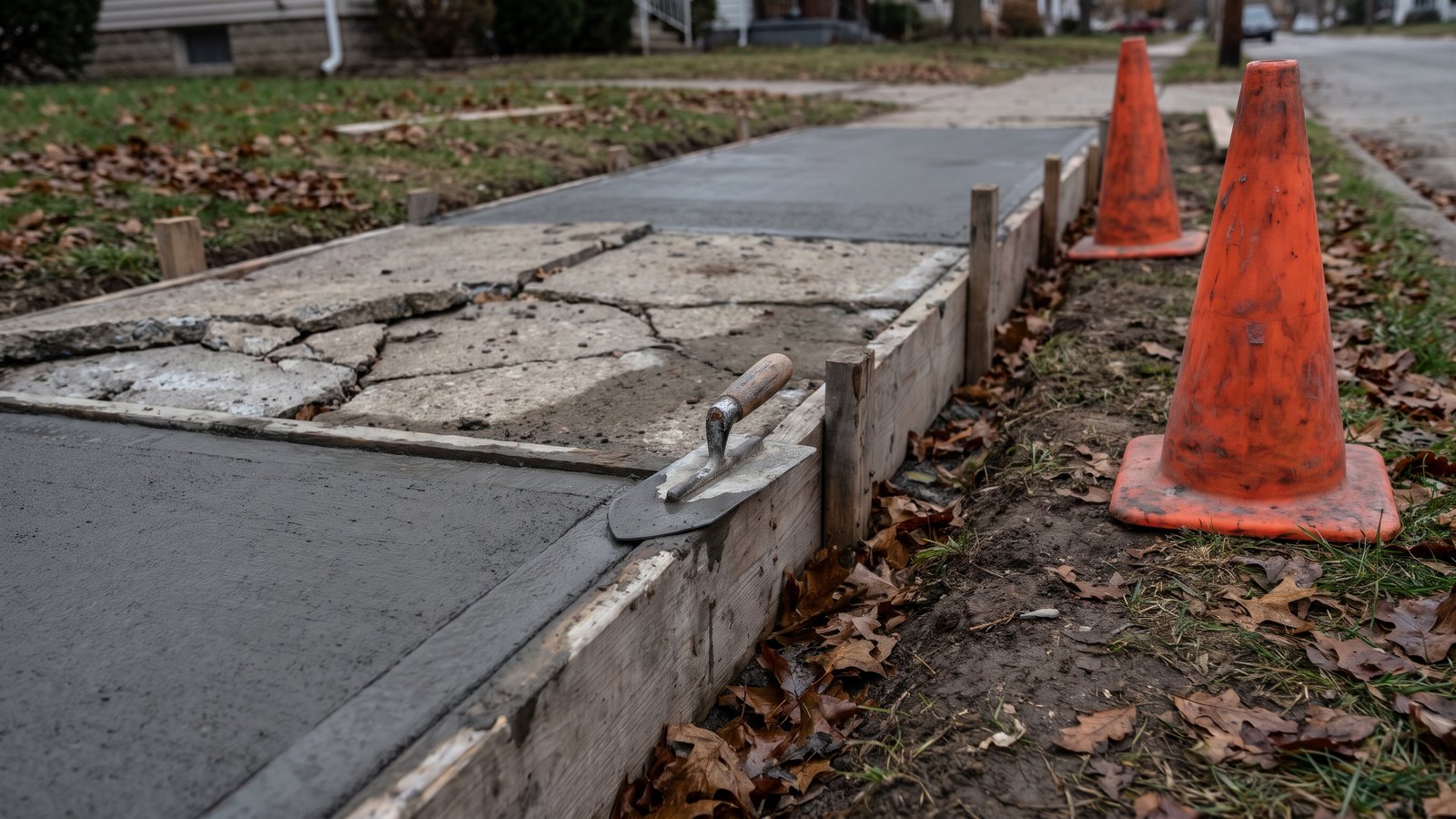
A freshly repaved neighborhood street with bright new concrete curbs and sidewalks in front of older frame houses with porches in autumn light
A special assessment is a charge for a public project, like a street or sewer, placed on the lots it benefits. In Ohio it is a lien on the house. It is usually paid in yearly installments on your tax bill. When you sell, it does not vanish. Your purchase contract decides whether you pay it off at closing or the buyer takes over the payments.
What a special assessment is
Ohio gives each city and village the power to charge part of the cost of certain public projects to the lots that benefit. The list in the law is long. It includes paving and repaving streets, curbs, sidewalks, sewers, water mains, street lighting, snow removal and shade trees.
In Cuyahoga County, these charges show up on your property tax bill. The Treasurer's sample bill page calls them "non-tax fees assessed to the tax bill by political subdivisions." It lists water and sewer delinquency charges, trash and recycling fees, and street maintenance fees as common examples. The county says it must add them to the bill when a city asks.
So "special assessment" is a broad label on the bill. This post is about the project kind: a city builds or fixes something and spreads the cost over the lots it serves. If yours is an old water bill, see our post on unpaid water bill liens. If it is the cost of boarding up or tearing down a building, see our post on municipal demolition liens.
How a city puts an assessment on your lot
Ohio law lays out the steps. They take time, which is why an assessment can start years after you first hear about a project.
Notice to owners
Two weeks to object
Two weeks to claim damages
The final assessment
Onto the tax bill
See an assessment on your bill?
Send us the address. We will look at the tax bill and title report with you and show how any assessment balance affects a cash offer before you decide.
Why it matters when you sell
Under Ohio law, a special assessment is a lien on the lot from the day council passes the assessing ordinance. A lien stays with the property, not the person. That is why a title company looks for assessments before closing.
The lien does not last forever if the city does nothing. It runs for two years after the assessing ordinance. It keeps going only if the city certifies it to the county auditor or sues to enforce it. Most project assessments are certified, so they stay a lien until paid.
An installment that is on the tax list and goes unpaid is delinquent. It carries the same penalty as delinquent property taxes, and the county treasurer can collect it the same way. Falling behind on assessments is not a separate, softer problem from falling behind on taxes.
Who pays the rest: you or the buyer?
This is the question most sellers have. The assessment chapter of the Ohio Revised Code does not answer it. It says how assessments are levied and collected, not how a seller and buyer split them. That is up to your purchase contract.
| Approach | How it works | What to weigh |
|---|---|---|
| Seller pays the balance at closing | The remaining installments are paid from your sale proceeds | Clean for the buyer, but it lowers your net now |
| Buyer takes over future installments | You pay what is due through closing. The buyer pays the rest on future tax bills | Buyers may ask for a lower price in return |
| Split by agreement | You and the buyer agree on a share, in writing | Spell out exactly which installments each side pays |
These are common ways to handle it, not rules. Your contract controls. Also ask whether any installment that is already due will be prorated with the taxes or paid in full.
If the house is in a life estate, there is one more rule. Ohio law says the person with the life estate pays the assessment. A court can split the cost with the owner of the remainder. See our post on selling a house with a life estate for that setup.
What to check before you list
- Read your latest tax bill. Look for lines that are not taxes. In Cuyahoga County, MyPlace shows bills by year.
- Ask how many installments are left. The city that levied the assessment, or the Fiscal Officer's Special Assessments office, can tell you.
- Watch for new notices. If you get a notice of a proposed project while you are selling, the two-week window to object or claim damages still applies.
- Tell buyers early. An assessment found late can stall talks. Put it on the table at the start.
- Get it in writing. Make sure the purchase contract says who pays which installments.
The Cuyahoga County Fiscal Officer's Special Assessments page lists spa@cuyahogacounty.gov and 216-443-7420, option 5, for questions about charges on the tax duplicate.
How an assessment changes your net proceeds
Net proceeds are what you keep. Start with the sale price. Subtract the mortgage payoff, closing costs, any commission and any liens. An assessment you pay off at closing is one of those liens. If the buyer takes over the payments instead, it may show up as a lower price rather than a payoff.
Here is a made-up example. Say a house sells for $150,000, the mortgage payoff is $80,000 and $4,000 of assessment installments are left. If you pay them at closing, that leaves $66,000 before other costs. A 6% commission on a listing would take another $9,000. Your real numbers will differ.
Your six options
| Option | What happens with the assessment | What to weigh |
|---|---|---|
| Keep it | You keep paying installments on the tax bill | Fine if you can afford them. Stay current to avoid penalties |
| Repair it | Repairs do not change the assessment | Spend only where it raises your net |
| Rent it out | You still owe the installments as the owner | Count them in your rental costs |
| List with an agent | The title search finds it, and the contract decides who pays | Commissions often run 5.5% to 6% |
| Sell it yourself (FSBO) | You negotiate the assessment with the buyer yourself | You save a commission, but write the terms carefully |
| Sell direct for cash | We handle the assessment through the title company at closing | We can close as fast as 7 days, typically around 21. Compare the offer with your other nets |
An assessment is a cost of owning the house under every option. What changes is when it is paid and who pays it.
Compare your options side by side
We buy houses across Cleveland and Northeast Ohio as-is. Ask for a written cash offer that shows any assessment payoff, then compare it with what a listing would net you.
This article summarizes Ohio Revised Code Chapter 727 (sections 727.01, 727.13, 727.15, 727.18, 727.25 to 727.27, 727.29, 727.30, 727.33, 727.34 and 727.36) and Cuyahoga County Treasurer and Fiscal Officer pages as we read them in October 2026. It is general information, not legal or tax advice. We did not research township, county or special district assessments, or any city's own assessment schedule. Talk to an Ohio real estate attorney about your contract or an objection.
Questions about an assessment?
Call or send us the address. We will explain how we handle assessments and other liens at closing, and you decide what comes next.
Frequently asked questions
It is a charge a city or village puts on the lots that benefit from a public project, such as a new street, curb, sidewalk or sewer. Cuyahoga County calls these non-tax fees that political subdivisions add to the tax bill.
Yes. Under Ohio law, an assessment is a lien on the lot from the date the city passes the assessing ordinance. The lien lasts two years unless the city certifies it to the county auditor or sues on it. Then it lasts as long as it stays unpaid on the tax list.
Ohio's assessment law does not say who pays the remaining installments when a house sells. Your purchase contract does. Some sellers pay the balance at closing, and some buyers take over the future installments. Read your contract and agree on it in writing.
Once it is on the tax list, an unpaid installment is delinquent and carries the same penalty as delinquent property taxes. The county treasurer can collect it the same way it collects taxes.
Yes, but the window is short. You must file a written objection with the clerk of the city council within two weeks after the notice is complete. If you think the project will damage your property, a damages claim has the same two-week deadline.
The Cuyahoga County Fiscal Officer has a Special Assessments office. Its page lists spa@cuyahogacounty.gov and 216-443-7420, option 5. For the details of a project, ask the city or village that levied it.
Yes. The title company finds the assessment and the balance, and it is handled at closing like any other lien. We show you how it affects your net before you sign anything.
Find out what we would pay
Free, no obligation, and no pressure. If our number does not work for you, that is a perfectly fine answer.
Keep reading
Liens, Taxes & Title
When an Unpaid Water Bill Becomes a Lien
Ohio gives anyone selling a house the right to demand a meter reading and a final water bill within ten days. It also limits when an unpaid bill can be put on your tax duplicate at all — and gives you a way to get a wrong one removed.
Damaged & Condemned
When the City Repairs or Demolishes Your House and Bills You
Ohio gives a municipality three ways to recover what it spends on your building — and one of them follows the person who owned it at the time, not the land. There are also three situations where the charge cannot be placed at all.
Liens, Taxes & Title
Property Taxes When You Sell in Ohio: Why You Pay a Year Behind
Ohio property taxes are billed a year behind. That is why a closing statement can show a tax credit to the buyer even when your bills are paid. Here is how it works in Cuyahoga County.