Property Taxes When You Sell in Ohio: Why You Pay a Year Behind
Many sellers are surprised by one line on their closing statement: a credit to the buyer for property taxes, even though every tax bill they ever received is paid. The reason is simple once you see it. In Ohio, real estate taxes are billed a year behind, so the taxes for the time you lived in the house this year have not been billed yet.
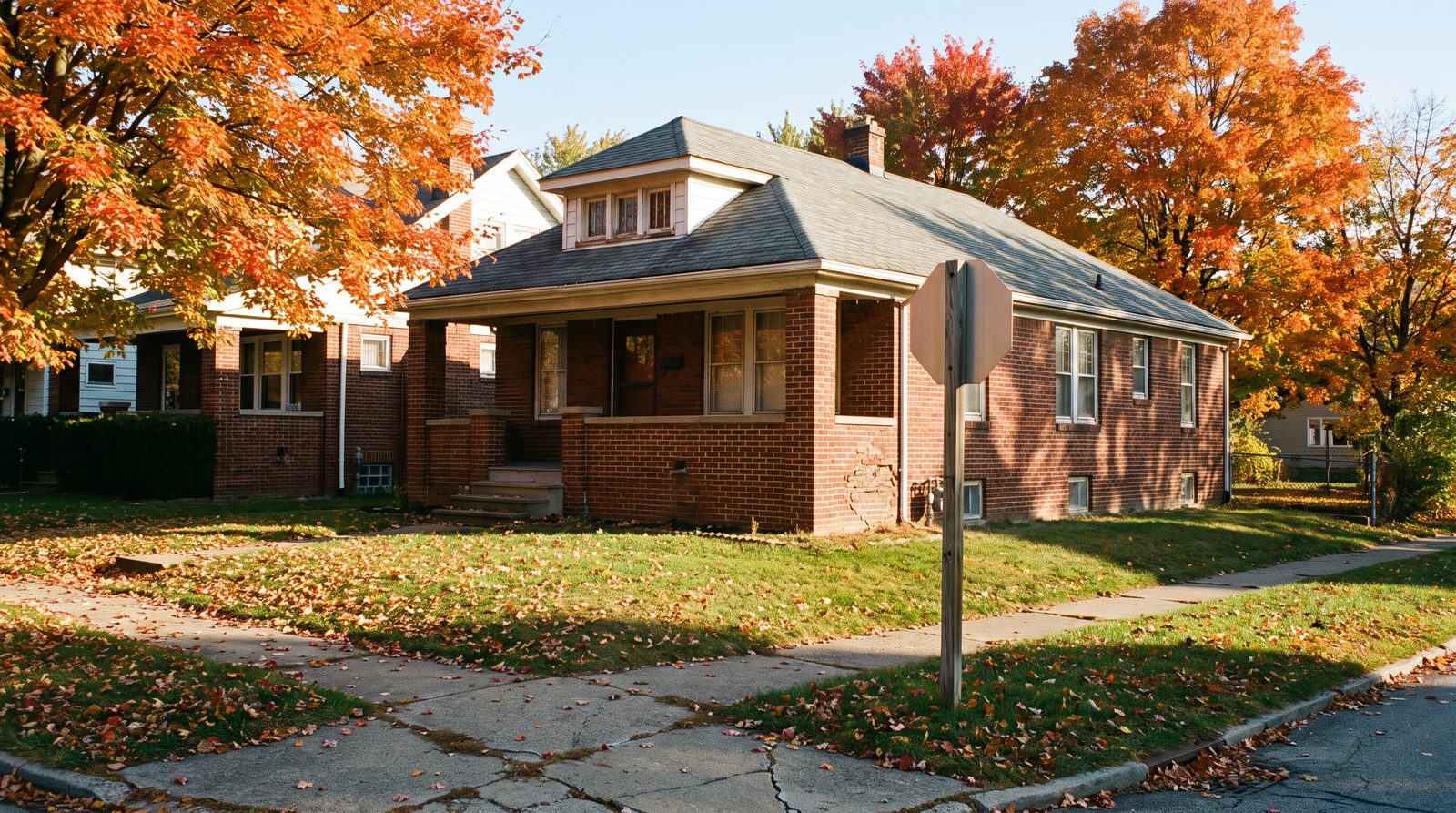
A red brick bungalow after a light snowfall, with a shoveled front walk and bare trees in gray winter light
In Cuyahoga County, real estate taxes are billed a year behind. The bills you pay in 2026 are for tax year 2025. So when you sell, the taxes for the part of this year you owned the house usually have not been billed yet. If your purchase contract prorates taxes, you give the buyer a credit for your share, and the buyer pays the bill when it comes. Ohio's tax lien attaches on January 1 each year.
Ohio taxes are billed a year behind
The Cuyahoga County Treasurer says it plainly: real estate taxes are billed in arrears, one year behind. Charges payable in 2026 are for tax year 2025. The first half of 2025 taxes was due February 19, 2026, and the second half August 13, 2026.
Ohio law also says the state's tax lien attaches to the property on January 1 each year and stays until the taxes are paid. So on January 1, 2026, a lien for tax year 2026 attached to your house, even though that bill will not be due until 2027.
| Tax year | Lien attaches | Billed and paid | Source |
|---|---|---|---|
| 2025 | January 1, 2025 | First half due February 19, 2026. Second half due August 13, 2026 | ORC 323.11; Cuyahoga Treasury calendar |
| 2026 | January 1, 2026 | In 2027, on dates the county will set | ORC 323.11; Cuyahoga Treasury |
Ohio's default due dates are December 31 and June 20, but the law allows them to be extended, and Cuyahoga's 2026 dates were February 19 and August 13. Always check the county's current calendar. Manufactured homes are different: the county says those taxes are charged and payable in the same year.
Want to see your real net?
Tell us the address. We will give you a no-obligation cash offer and walk through the tax credit, payoff and other costs line by line.
What proration means on your closing statement
Proration is a way of splitting a cost by time. With property taxes, the idea is that you pay for the days you owned the house and the buyer pays for the days after. Because the bill for this year has not arrived, the seller's share is often handled as a credit to the buyer at closing. The buyer then pays the whole bill when it comes.
The Ohio tax statutes we read set the lien date and the payment dates. They do not say how a buyer and a seller must split taxes. Your purchase contract decides that. Contracts can differ on which bill to use, how to count days, and whether last year's unpaid half is included. Read the tax clause before you sign, and ask the title company to show you the math.
A made-up example of the math
These numbers are invented to show the steps. They are not from any real bill.
Start with a yearly tax figure
Count your days this year
Multiply
See where it lands
Check the earlier year

Closing near a due date
Timing matters most early in the year. Because taxes run a year behind, a closing in the first part of the year can involve two tax years at once: last year's bill, which may not be paid yet, and this year's, which has not been billed.
- Closing in January or early February 2026. The first half of 2025 taxes was not due until February 19, and the second half until August 13. Your contract should say who pays those halves, and how this year's days are split.
- Closing after a due date has passed. If a half was due and is still unpaid, the county calendar shows a 10% penalty: on March 2 for the first half and August 23 for the second half in 2026. An unpaid bill is usually something to clear at closing, not a proration.
- Closing late in the year. Both halves of last year's bill are normally paid by then. What is left is your share of this year, which has not been billed.
Because the January 1 lien stays on the property until the taxes are paid, a buyer's title company will look at the tax status as part of the sale. That is one reason a tax problem tends to surface before closing, not after.
Selling part of a lot
If you are selling only part of a tract or lot, Ohio law allows the taxes to be apportioned between the transferred part and the part you keep. The lien then follows each part only to the extent of the amount allocated to it. If that is your situation, ask the county and your title company how the split will be handled.
Things that change the tax picture
- Unpaid or late bills. A bill that is due and unpaid is a different problem from proration. Our post on selling with back taxes in Cleveland covers that.
- A tax reduction in your name. Some reductions are tied to the owner, not the house. Our post on the homestead reduction explains why the buyer's bill may differ from yours.
- An escrow account. If your mortgage escrow paid your taxes, the payoff closes that account. Our post on mortgage payoff and escrow refunds explains what happens to the balance.
- A manufactured home. The county bills manufactured home taxes for the current year, not a year behind.
Cuyahoga County's MyPlace property search lets you look up your property by address, owner name or parcel number, then choose Tax By Year to see current and past bills, payment history when available, and balances due. Five minutes there can save a surprise at closing.
How this fits into your six options
| Option | Property taxes | What to weigh |
|---|---|---|
| Keep it | You keep paying both halves each year | Taxes are part of the true cost of staying |
| Repair it | Same as keeping it while you work | Improvements can affect future value, and future taxes |
| Rent it out | You pay the bills; rent has to cover them | Budget for both halves on the county's schedule |
| List with an agent | Prorated per your contract at closing | Commissions often run 5.5% to 6%, on top of the tax credit and other costs |
| Sell it yourself (FSBO) | Prorated per your contract at closing | You write or approve the tax clause yourself, so read it closely |
| Sell direct for cash | Handled per the written contract at closing | As-is and as fast as 7 days, typically around 21. Compare the net, not the price |
The tax credit is not an extra fee. It is your share of a bill that has not arrived yet. Every selling option deals with it in some way, so compare offers after taxes, payoff and costs.
Compare offers the honest way
We will show you a written cash offer with the tax proration, payoff and costs spelled out, so you can set it next to a listing estimate. If listing nets you more, we will tell you.
This article summarizes Ohio Revised Code §§ 323.11, 323.12 and 323.17 and the Cuyahoga County Treasurer's 2026 calendar and payment pages as we read them in October 2026. It is general information, not tax or legal advice. Proration is set by your purchase contract, and other counties may use different dates. Ask your title company and a tax professional how it applies to your sale.
Questions about closing costs?
Call or send us the address. We will explain each line you can expect at closing, taxes included, and let you decide what is right for you.
Frequently asked questions
Yes, in Cuyahoga County. The County Treasurer says real estate taxes are billed in arrears, one year behind. Charges payable in 2026 are for tax year 2025.
The first half of 2025 taxes was due February 19, 2026, and the second half August 13, 2026. A 10% penalty applied to past-due first-half taxes on March 2 and to past-due second-half taxes on August 23.
On the first day of January each year. The lien stays on the property until the taxes, plus any penalties, interest or charges, are paid.
The tax statutes we read set the lien date and the payment dates, not how a buyer and seller split taxes. That split is set by your purchase contract. Read the tax clause before you sign.
Because the taxes for the part of this year you owned the house have not been billed yet. The buyer will pay that bill next year. If your contract prorates taxes, the credit covers your share of that future bill.
No. The Cuyahoga County Treasurer says manufactured home taxes are charged and payable in the same calendar year.
On MyPlace, Cuyahoga County's property search. Search by address, owner name or parcel number, then choose Tax By Year to see current and past bills, payment history when available, and balances due.
Find out what we would pay
Free, no obligation, and no pressure. If our number does not work for you, that is a perfectly fine answer.
Keep reading

Liens, Taxes & Title
Ohio Has Two Homestead Exemptions. This Is the Tax One
The property tax reduction for owners 65 and over follows the person, not the house — so a buyer does not inherit it, and the tax bill changes hands upward.
The Cash Offer Process
Selling Your House: The Mortgage Payoff and Your Escrow Refund
When you sell, your mortgage is paid off from the sale, your servicer owes you back whatever is left in escrow, and Ohio law limits prepayment penalties. Here is how each piece works and when the money moves.

Liens, Taxes & Title
Can I Sell a House With Back Property Taxes in Cleveland?
Yes — unpaid taxes are a lien, and liens get paid at closing. The more useful question is whether you still qualify for the payment plan Ohio law entitles you to.