When the City Repairs or Demolishes Your House and Bills You
A city can board up, repair or pull down a building it considers unsafe, and then come after the cost. Most articles stop at "it becomes a lien". Ohio actually gives the municipality three routes, and the one people never hear about follows whoever owned the property when the work was done — off the deed and into their own pocket.
An empty grassed lot between two older houses, with the original front steps and walkway still leading in from the pavement
Ohio gives a municipality three ways to recover what it spends. It can put the cost on the tax list as a lien, which relates back in priority to the date the work was done — provided it certifies within one year. It can sue the person who held title when the costs were incurred, which follows you off the deed. Or it can file an affidavit with the county recorder and foreclose. There are also three situations where the charge cannot be placed at all, and a written notice that obliges the county auditor to remove one that was.
We should say plainly where our interest lies and why it does not shape this page. A demolition bill is the sort of thing a house-buying company can use to hurry somebody. But one of the three routes below survives a sale, so "sell it and walk away" is not advice we can honestly give — and two of the provisions below are protections that cost nothing to use.
This article touches property and municipal law. We are a house-buying company, not a law firm and not a building department. Everything below is quoted from the Ohio Revised Code so you can check the division named. What your own city has done and under what authority is a question for them.
It is not only demolition
The first surprise is how wide the trigger is. The statute does not talk about condemned houses. It defines an abatement activity as each instance of any of the following:
- Removing, repairing or securing insecure, unsafe, structurally defective, abandoned, deserted, or open and vacant buildings or other structures.
- Making emergency corrections of hazardous conditions.
- Abatement of any nuisance by the municipality or its agent.
Read the first one again. Securing an open and vacant building is in there. A crew screwing plywood over a broken back window on a house nobody lives in is an abatement activity, and "each instance" means the count is per visit rather than per property.
What they can charge for is defined just as carefully: costs from using the municipality’s own employees, materials or equipment; costs arising out of contracts for labour, materials or equipment; and the costs of serving notice or publishing it. We are not going to put a number on any of that. Competing pages quote demolition prices freely, and not one of those figures is traceable to a source we can read.

Three ways they collect, and only one is about the land
This is where most writing on the subject stops too early. The statute says a municipality "may collect the total cost of abatement activities by any of the methods" it then lists. Three of them.
| Route | What happens | Who it follows |
|---|---|---|
| Certify to the county auditor — 715.261(B)(1) | Placed as a charge on the tax list and duplicate; a lien on the land from and after the date the costs were incurred; collected as other taxes | The land |
| Civil action — 715.261(B)(2) | A lawsuit for the total costs | The person who held title when the costs were incurred |
| Affidavit with the county recorder — 715.261(B)(3) | A lien filed stating the parcel number, total costs and date; enforceable by foreclosure in court or with the board of revision under ORC 323.65 to 323.79 | The land |
Summarised from ORC 715.261(B). These are alternatives available to the municipality, not stages it must work through in order. The board of revision route named in the third row is the expedited procedure we cover separately in our article on abandoned-land tax foreclosure; we read those sections for that post and did not re-read them for this one.
The second one is the reason this page exists. The municipality "may commence a civil action to recover the total costs from the person that held title to the parcel at the time the costs were incurred". That is a claim against a person. Transferring the deed does not extinguish it, and a buyer taking the house does not absorb it. If work was done while you owned the place, ask a lawyer where you stand before you assume a sale closes the matter.
The one-year condition on priority
On the tax-list route, the charge does not simply take its place in the queue from the day it is entered. The statute says the placement "relates back to, and is effective in priority, as of the date the costs were incurred" — with a condition attached:
provided that the municipal corporation or its agent … certifies the total costs within one year from the date the costs were incurred.
So the date the work was done, and the date the paperwork was certified, are two different dates and the gap between them matters. It is a reasonable question to put to the city in writing: when were the costs incurred, and when were they certified to the auditor.
Three situations where the charge cannot be placed
Division (D) is the part that is genuinely in a property owner’s favour, and it is missing from every page we found on this subject. The municipality shall not certify, and the auditor shall not place, the costs as a charge against the land where any of these apply:
The land went to an electing subdivision first
It sold at a sheriff’s or auditor’s sale to a genuine outside buyer
It was forfeited to the state for delinquent taxes
And if a charge was placed anyway, the remedy is a letter rather than a lawsuit. On valid written notice to the county auditor from an owner possessing an ownership interest of record, saying the charge was placed in violation of that division, "the county auditor shall promptly remove such charge from the tax duplicate". The notice has to carry four things: the parcel number, the common address, the date the transfer to the owner was recorded, and the charge alleged to have been placed in violation.
Not sure what is actually on the parcel?
Send us the address and we will tell you what we can see about the property from the public record before you decide anything. No cost, no obligation, and no pressure to sell — plenty of people use it to work out what to ask the city.
What a trip through the land bank does
One more provision worth knowing, particularly around here. Where a parcel carrying one of these liens is transferred to a county land reutilization corporation — a county land bank — the lien is extinguished, so long as it is for costs incurred before the transfer that the corporation did not itself incur, and whether or not the lien had already attached or the costs had already been certified.
The corporation and its successors in title take the property free and clear of the lien and are immune from liability in any action to collect those costs. And where the land bank takes title before any costs are certified, the statute deems it a bona fide purchaser for value without knowledge — "regardless of whether the corporation had actual or constructive knowledge" of the costs or the lien. That is why a house that has come through a county land bank can arrive on the market clean of charges that were sitting on it beforehand.
Your options, honestly
If a building of yours is empty and deteriorating, the order below is roughly the order of least regret.
- Secure it yourself, now. Every route above starts with the city doing something you did not. Boarding, locking and keeping the grass down is cheaper than being billed for the same work, and it removes the trigger. This is first on the list for a reason.
- Ask the city what is outstanding, in writing. What work was done, on what dates, when it was certified, and under which of the three routes they are proceeding. You cannot make a decision around a number nobody has given you.
- Repair and list. If the building is salvageable, a repaired house on the open market is usually the highest gross. Ohio commissions generally run 5.5% to 6%.
- Rent it. An occupied building stops being an "open and vacant" one, which is the description several of these powers hang on — though being a landlord on a property in this condition is its own project.
- List it as-is. A narrower buyer pool and a lower price, with whatever is on the tax duplicate coming out of the proceeds at closing like any other charge collected as taxes.
- Sell direct. No commissions, no repairs, closing as fast as 7 days where the title work is clean and typically around 21, at a price below retail. It resolves what attaches to the land. It does not by itself resolve a claim under the civil-action route against you personally.
A listed sale at a higher price carries commission, concessions, repairs and every month of carrying cost; a direct sale carries none of those and a lower price. Either way, anything already on the tax duplicate comes off the top. Run both through the same arithmetic with the charge included, and if listing wins, list.
Want the arithmetic with the charge in it?
Give us the address and roughly what the city has billed, and we will set our offer beside a realistic listed-sale net with the charge and the deductions itemised. Useful as a benchmark whichever way you go.
Where this leaves you
Three things to take away. The trigger is wider than demolition — securing an open and vacant building is named in the same breath. The exposure is wider than the lien, because the civil-action route follows the person who held title when the work was done rather than the property. And the protections in division (D) are real: three situations where the charge cannot be placed, plus a written notice that obliges the county auditor to remove one that was.
What we cannot tell you is what your own municipality has done or how it runs its programme. We did not read any city’s pages for this article, deliberately — a guessed municipal URL has served us an unrelated page before — so ring the building department and ask. If the building has already been declared unfit, our article on selling a condemned house covers that side of it, and the receivership article covers what happens when a court rather than the city takes charge.
If the building has gone past saving
We buy houses and vacant parcels across Cleveland and Cuyahoga County in any condition, including ones with charges on the duplicate. Tell us the address whenever you want a number — and if securing it and keeping it is the better answer this year, we will say so.
Frequently asked questions
The statute calls it an abatement activity, and it is wider than demolition. It covers each instance of removing, repairing or securing insecure, unsafe, structurally defective, abandoned, deserted, or open and vacant buildings; making emergency corrections of hazardous conditions; and abating a nuisance. Boarding a window on an empty house is inside that definition.
Costs from using the municipality’s own employees, materials or equipment; costs arising out of contracts for labour, materials or equipment; and the costs of serving notice or publishing it. We are not going to quote a figure for any of that — competing pages publish demolition prices freely and none of them is traceable to a source we can read.
The clerk of the legislative authority certifies the total costs, the parcel number, the date the costs were incurred and the name of the owner of record at that time to the county auditor, who places the costs as a charge on the tax list and duplicate. The costs are a lien upon the land from and after the date the costs were incurred, and are collected as other taxes are.
The placement relates back in priority to the date the costs were incurred — but only if the municipality certifies the total costs within one year from that date. That one-year condition is the part almost nobody mentions, and it is what decides where the charge sits against anything recorded in between.
Not necessarily, and this is the most important line on this page. Separately from the lien, the municipality may commence a civil action to recover the total costs from the person that held title to the parcel at the time the costs were incurred. That is a claim against a person, not against the land, and selling does not by itself put it behind you.
Three. Where the land was transferred or sold to an electing subdivision and the work predates the transfer. Where the land was sold at a sheriff’s or auditor’s sale, the work predates confirmation of sale, and the purchaser is not the former owner of record or one of several connected persons the statute lists. And where the land has been forfeited to the state for delinquent taxes, unless the owner of record redeems it.
There is a remedy and it is a letter. On valid written notice to the county auditor by an owner possessing an ownership interest of record, saying the charge was placed in violation of that division, the auditor shall promptly remove the charge from the tax duplicate. The notice must give the parcel number, the common address, the date the transfer was recorded, and the charge alleged to be in violation.
The lien is extinguished, where it is for costs incurred before the transfer that the corporation did not itself incur. The land bank and its successors in title take free and clear and are immune from liability in any action to collect those costs. If it takes title before any costs were certified, it is deemed a bona fide purchaser for value without knowledge, whether or not it actually knew.
No. We buy houses; we are not a law firm and not a building department. Everything here is quoted from the Ohio Revised Code so you can check the division named. What your own municipality has actually done, and under what authority, is a question for them and for a lawyer.
Find out what we would pay
Free, no obligation, and no pressure. If our number does not work for you, that is a perfectly fine answer.
Keep reading

Damaged & Condemned
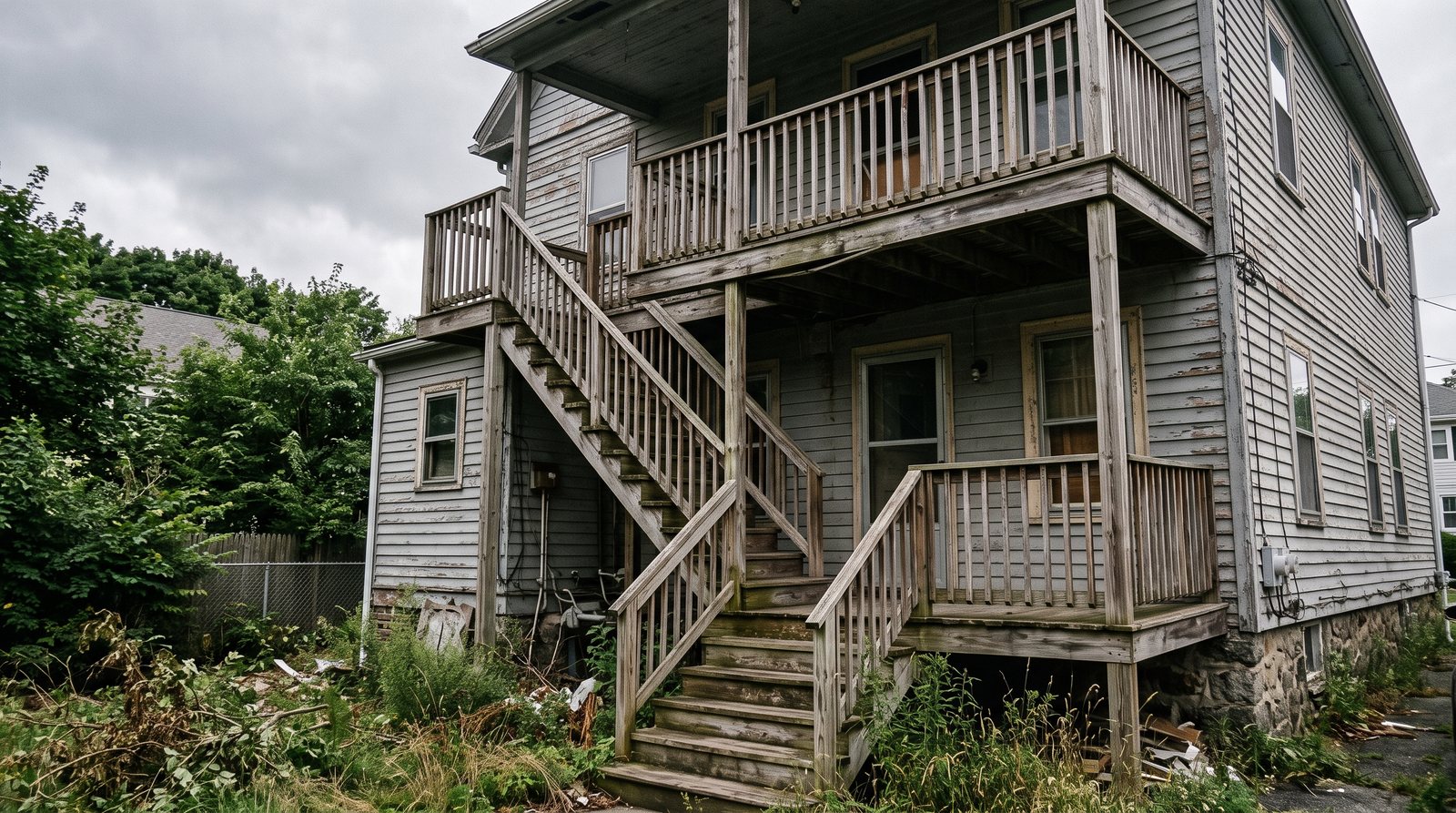
How to Sell a Condemned House in Cleveland, Ohio
A condemnation is not a seizure — you still own it and can still sell it. What matters is the demolition bill, which becomes a lien on the land whether the house is there or not.
Damaged & Condemned
When a Court Puts Your House in Receivership
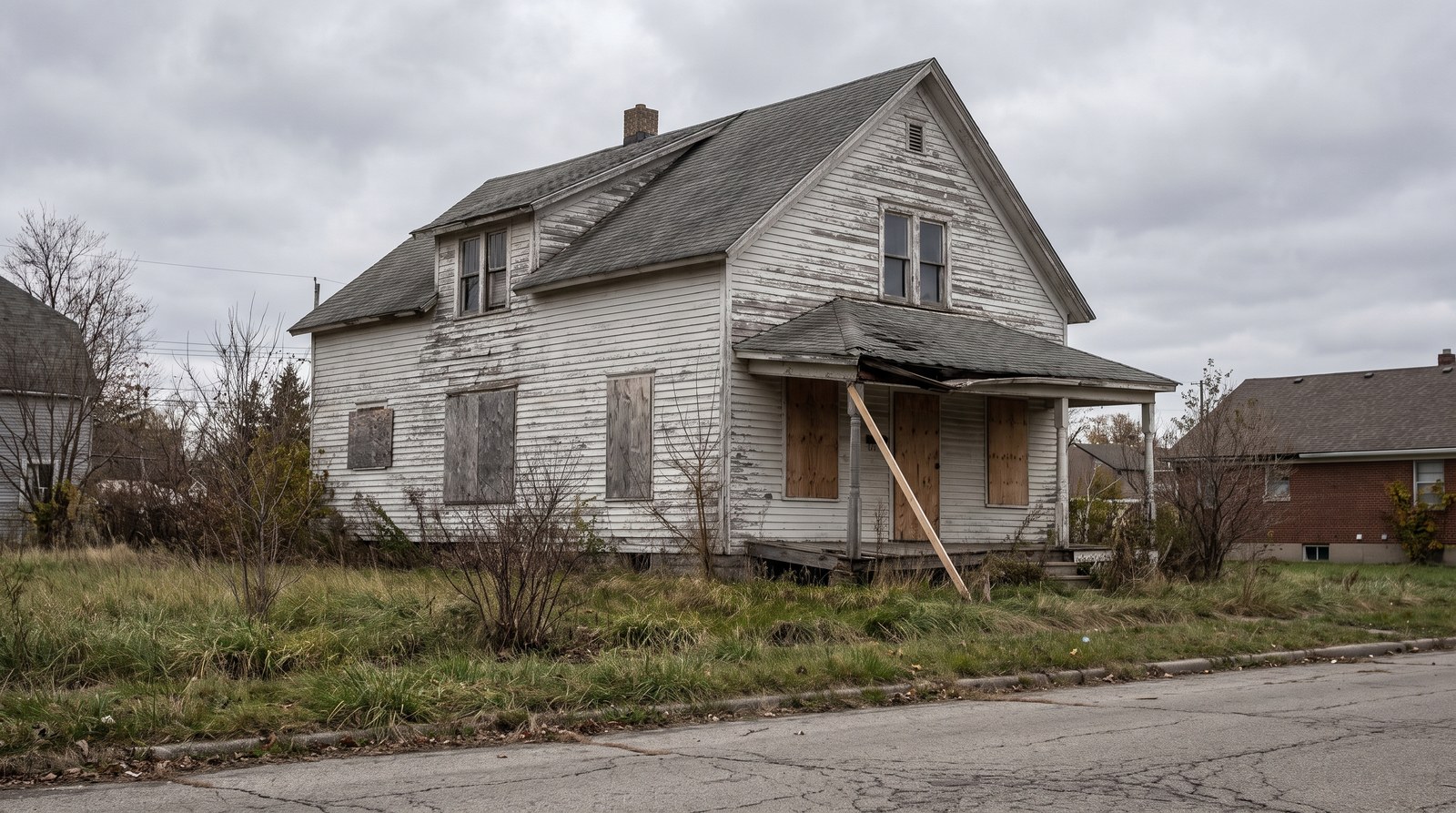
Ohio lets a city, a neighbour, a tenant or a nonprofit ask a court to declare a building a public nuisance and hand it to a receiver. The costs become a lien that outranks even the taxes — but the section does not reach an owner-occupied house at all.
Foreclosure & Hardship
The Faster Tax Foreclosure Route for Vacant Ohio Property
A county board of revision — not a judge — can foreclose tax-delinquent vacant land. Whether your property counts as "unoccupied" is something you can contest.