Lead Water Service Lines When Selling a Cleveland House
Some buyers ask a simple question: is there a lead water line? In Cleveland Water's service area, you can often check online. Here is how the line is split between you and the city, how to check yours, and how it fits into a sale.
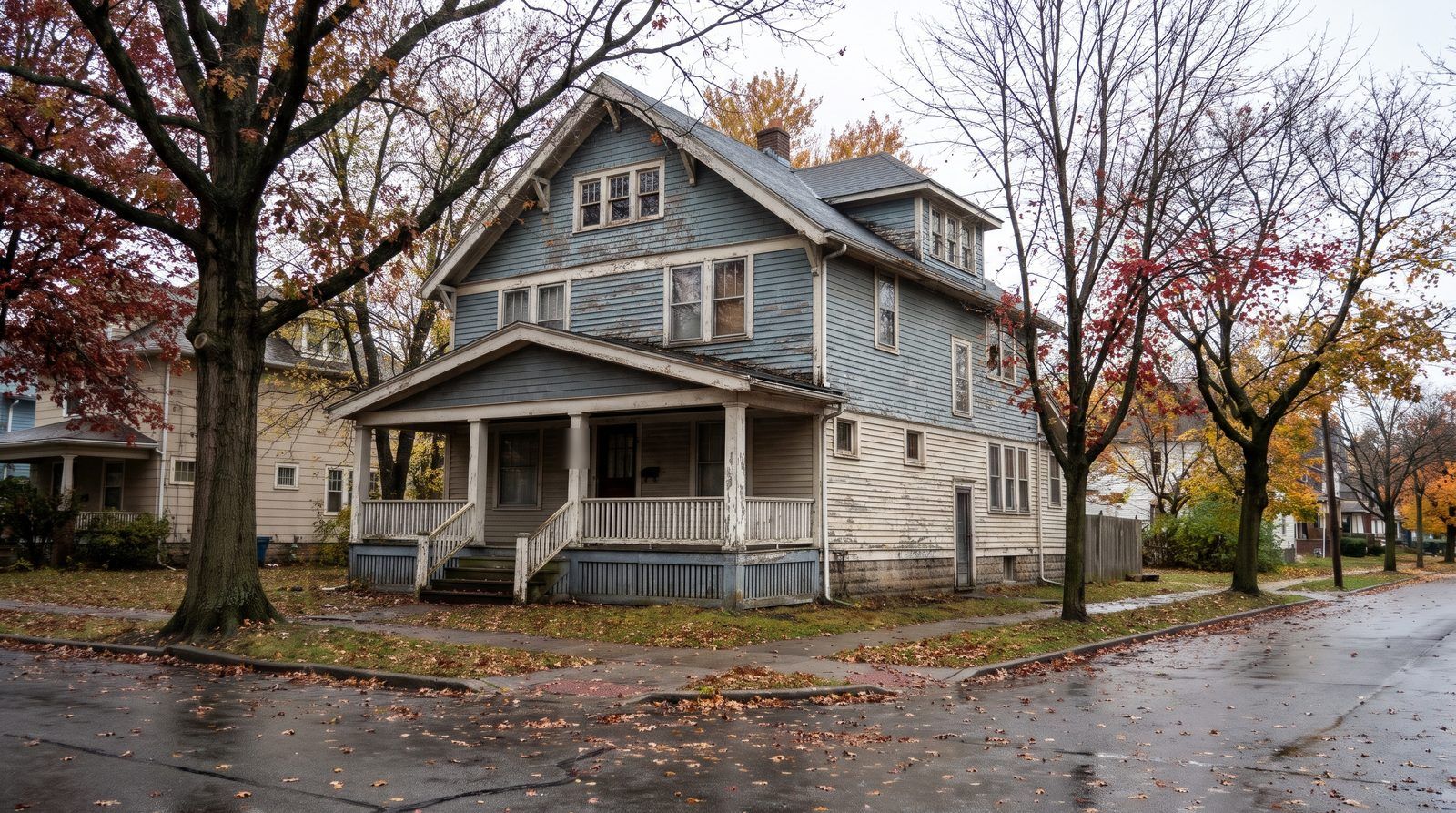
An older Cleveland residential street in late autumn, with frame houses, a grassy tree lawn and a small round metal water curb box cover in the grass
The water line to your house has two parts: one the city owns and one you own, split at the curb stop in the tree lawn. Cleveland Water has a map showing what each part is made of, and a simple magnet and penny test if yours is unknown. Knowing the answer before you list lets you answer buyers clearly.
Your water line has two owners
Cleveland Water explains that the service line running from the water main to your house is split in two. The city-owned part is Cleveland Water's responsibility. The customer-owned part belongs to you, the property owner. The dividing point is the curb stop, which is generally in the tree lawn between the sidewalk and the street.
| Part of the line | Who owns it | Where it runs |
|---|---|---|
| City-owned service line | Cleveland Water | From the water main to the curb stop |
| Customer-owned service line | The property owner | From the curb stop into your basement or crawl space |
| Household plumbing and fixtures | The property owner | Inside the house |
From Cleveland Water's Check. Test. Date. page. This applies to homes served by Cleveland Water. If another utility serves your house, ask it how its lines are split.
Cleveland Water says lead can show up in any of these three places. It also offers some reassurance: even where the city-owned part is lead, it says 91% of customers still have a copper customer-owned connection.
Want to know how a lead line affects your offer?
Send us the address. We will look up the service line with you and give you a written cash offer, so you can compare it with fixing the line or listing.
How to check your line
Look up your address
Check the age of the house
Do the magnet and penny test
Report what you find
Keep a record
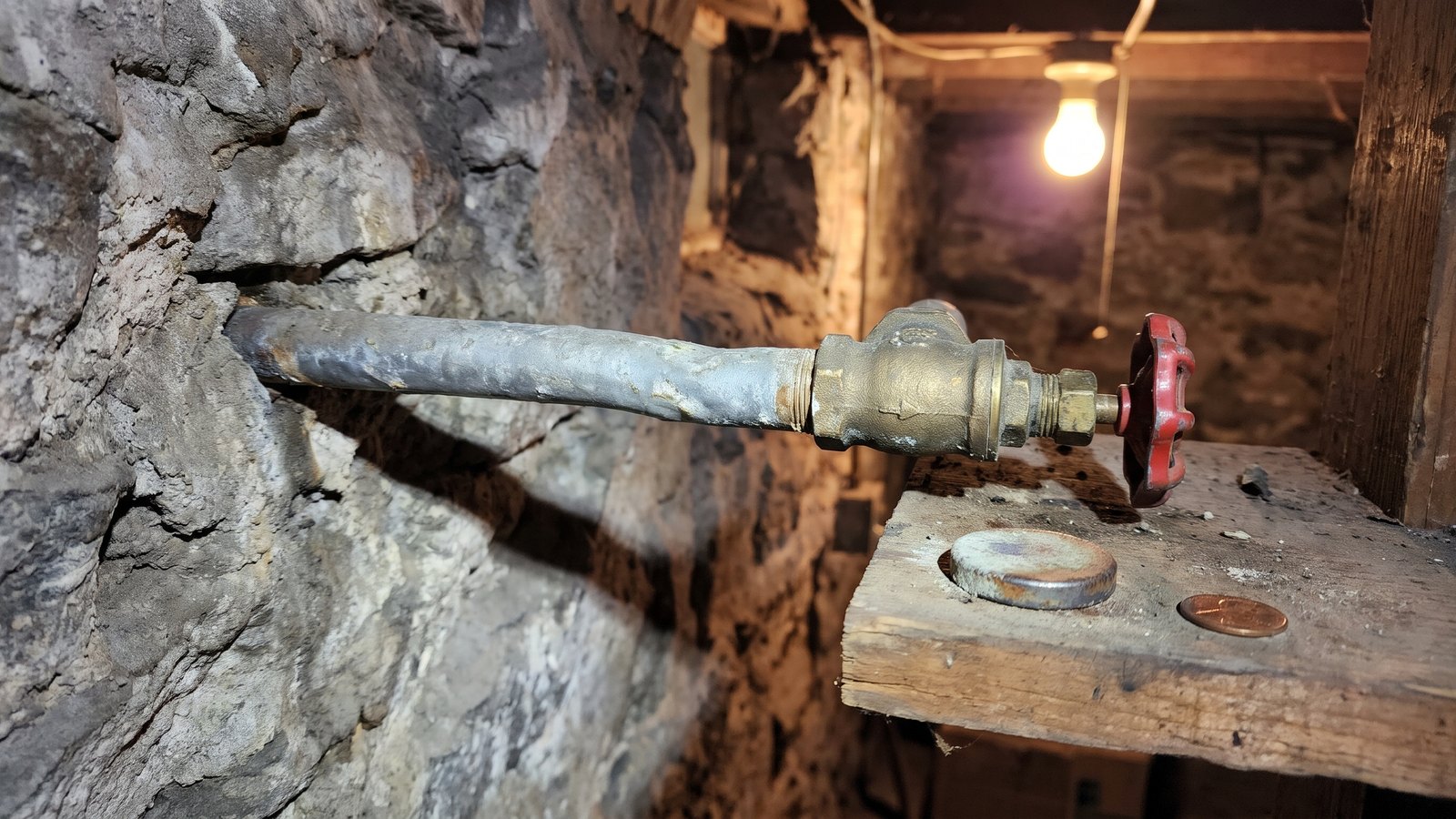
Inside the house, Cleveland Water says plumbing or fixtures installed before 1986 may contain lead, and so can faucets made between 1986 and 2014. In 1986, amendments to the Safe Drinking Water Act banned lead pipes for drinking water.
What Cleveland Water does on its side
It helps to understand the city's side, because buyers sometimes worry that any lead pipe means unsafe water. Cleveland Water describes several steps on its What We Do page.
- Corrosion control. Since 1997, it has added orthophosphate, which forms a protective coating inside pipes so metals are less likely to dissolve into the water.
- pH control. It keeps the water leaving its plants above pH 7, usually between 7.2 and 7.6, to reduce corrosion.
- Monitoring. It tests water in homes that have lead service lines or lead plumbing, as federal rules require.
- Results. It reports lead levels below the federal 15 parts per billion since 1997, and below 5 parts per billion for over 15 years. Its most recent compliance results showed 90% of samples below 3.15 parts per billion.
- An inventory. It keeps a record of service line material, which is what feeds the map.
None of this changes who owns the customer-side pipe. If your part of the line is lead, it is still yours to replace or not. But it gives you accurate, sourced facts to share with a buyer, instead of guesses in either direction.
Cleveland Water also asks for volunteer homes with lead service lines or lead plumbing to help with its testing. If you think your home qualifies, its page lists 216-664-2339 and a volunteer form.
What the door notices mean
When Cleveland Water works on a street, it may leave a door notice. Its door notice page describes three kinds. The one that matters most to a seller is the orange and purple notice. Cleveland Water says it means the city-owned line was replaced, but the property still has a customer-owned lead line.
For an orange and purple notice, Cleveland Water lists steps such as a 30-minute cold water flush, using the filter pitcher it left, and collecting a water sample. If you are living in the house while selling, follow them. For questions, its Lead Inquiry Line is 216-664-2882.
How it fits into a sale
Ohio's seller disclosure form covers material matters about the property's condition, including the source of water supply, and material defects you actually know about. Whether a lead customer-owned line is something you must list depends on your facts, so ask an Ohio real estate attorney. A buyer may be able to look up the same map you can, so knowing the answer first puts you in a better position.
The federal lead disclosure rule for older homes is about lead-based paint, not pipes. Our post on lead paint disclosure in Ohio covers that. If you own a rental in Cleveland, the city's lead safe certificate is a separate requirement, covered in our post on Cleveland lead safe certification.
Questions buyers may ask
- What is the service line made of? Show the map result or your test photos.
- Has the city replaced its side? A door notice or the map can answer this.
- When was the plumbing last updated? Share permits or receipts if you have them.
- Have you tested the water? If you did, share the result. If not, say so.
- Will you replace the line? That is a negotiation. Price, repairs and timing all play in.
Your net proceeds
Net proceeds are the price minus your mortgage payoff, closing costs, any commission and any repairs you pay for. We do not quote a cost to replace a customer-owned line, because it depends on the house and the plumber. Get a written estimate if you are weighing it. Here is a made-up example: a house sells for $140,000 with a $60,000 payoff, leaving $80,000 before other costs. A 6% commission on a listing takes $8,400.
Your six options
| Option | What happens with the line | What to weigh |
|---|---|---|
| Keep it | You keep the line as is | Follow Cleveland Water's flushing and testing advice |
| Repair it | Replace the customer-owned line before selling | Get a written estimate. Update the map after |
| Rent it out | You remain responsible for the property's plumbing | Cleveland rentals have separate lead safe rules |
| List with an agent | Buyers may ask or check the map themselves | Commissions often run 5.5% to 6% |
| Sell it yourself (FSBO) | You answer buyer questions directly | Have your map screenshot and photos ready |
| Sell direct for cash | We buy as-is, line and all | We can close as fast as 7 days, typically around 21 |
A lead service line does not stop a sale. It is one more fact that affects price, repairs and buyer questions.
Compare replacing with selling as-is
We buy houses across Cleveland and Northeast Ohio in any condition. Ask for a written offer and put it next to a plumber's estimate.
This article summarizes Cleveland Water's Lead Awareness, Check. Test. Date., What We Do and Door Notice pages and ORC 5302.30 as we read them in November 2026. It is general information, not legal, health or plumbing advice. We did not research replacement costs, assistance programs or new federal rules on service lines. Contact Cleveland Water at 216-664-2882 about your line and an Ohio attorney about disclosure.
Questions about an older Cleveland house?
Call or send us the address. We will talk through the pipes, the paint and anything else on your mind, and you decide what comes next.
Frequently asked questions
Start with Cleveland Water's interactive service line map, which shows the city-owned and customer-owned parts separately. If yours shows unknown, Cleveland Water explains a magnet and penny test you can do where the pipe enters your basement, and a form to report the result.
Both, in parts. Cleveland Water says the city-owned line is its responsibility and the customer-owned line belongs to the property owner. The dividing point is the curb stop, which is generally in the tree lawn.
Cleveland Water says homes built in 1949 or later should not have lead city-owned lines, because it stopped using lead in 1948. It also says a connection larger than one inch is unlikely to be lead.
Cleveland Water says its water meets Safe Drinking Water Act requirements and that it has added orthophosphate since 1997 to coat pipes. It reports lead results below 15 parts per billion since 1997. Lead can still come from pipes and fixtures in a home, so it gives flushing and testing steps.
Cleveland Water says an orange and purple notice means the city-owned line was replaced but the property still has a customer-owned lead line. It lists flushing, filter and sampling steps. Its Lead Inquiry Line is 216-664-2882.
Ohio's disclosure form covers the source of water supply and material defects you actually know about. Whether a lead service line is something you must list depends on your facts, so ask an Ohio real estate attorney.
Yes. We buy houses as-is, including ones with older plumbing. We look at the line's status with you and show you how it affects the offer before you sign.
Find out what we would pay
Free, no obligation, and no pressure. If our number does not work for you, that is a perfectly fine answer.
Keep reading
Why Sell As-Is
Selling a House Built Before 1978: The Lead Paint Rule
You do not have to test for lead, remove it, or fix it before selling. You do have to disclose what you know — and hiding it carries treble damages.
Why Sell As-Is
Selling a Pre-1978 Cleveland Rental? What Lead Safe Certification Means
Cleveland requires rentals built before 1978 to carry a Lead Safe Certification, and the city proposed changes to the program in October 2026. Here is what that means if you are selling an older rental.
Liens, Taxes & Title
When an Unpaid Water Bill Becomes a Lien
Ohio gives anyone selling a house the right to demand a meter reading and a final water bill within ten days. It also limits when an unpaid bill can be put on your tax duplicate at all — and gives you a way to get a wrong one removed.