Selling a House With an Old Buried Oil Tank in Ohio
Lots of older Ohio houses were once heated with fuel oil, and some of those tanks are still in the yard. If you are selling one of those houses, three questions matter: which rules cover the tank, what you have to tell a buyer, and what each of your options really costs you.
A short capped pipe and a taller narrow pipe rising out of the lawn beside the brick foundation of an older house, with fallen autumn leaves
A buried tank that held heating oil for your own house is left out of Ohio's regulated underground-tank rules. That does not make it invisible. The Ohio disclosure form asks if you know of underground storage tanks, existing or removed. And Ohio water-pollution law covers oil that reaches underground water, whatever kind of tank it came from. Disclose what you know. Then compare the net on every option.
How to tell if your house might have one
Many older houses in Cleveland and across Northeast Ohio were once heated with fuel oil. When owners switched to natural gas, the old tank was often left where it was. In a basement, you can see it. Buried in the yard, it is easy to forget, and a new owner may never know it is there.
There are a few signs worth looking for. None of them proves a tank is still in the ground. They only tell you it is worth asking.
- A small capped pipe in the lawn near the foundation. That is often the fill pipe the delivery truck used.
- A thin vent pipe along the outside wall, usually with a cap that turns down.
- Copper lines coming through the basement wall or floor toward where the furnace or boiler sits now, or used to sit.
- A patch in the basement floor or wall where a line was cut and filled.
- Old paperwork: a fuel delivery bill, a furnace receipt, or a note from the last sale.
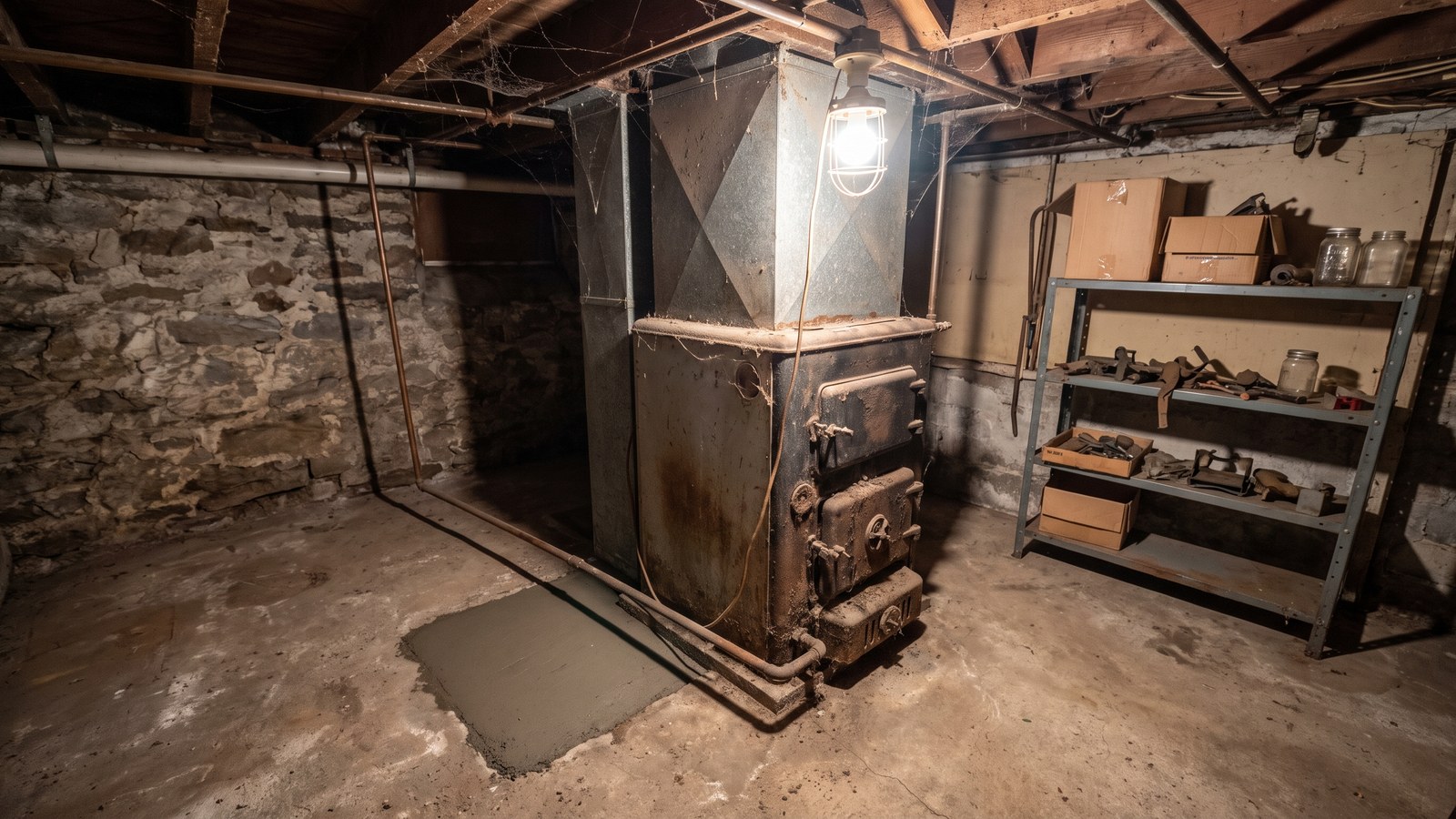
Which rules apply to a home heating-oil tank
Ohio has a program for underground storage tanks, the kind gas stations use. The law defines an underground storage tank as a tank holding regulated substances with ten percent or more of its volume below ground. Then it lists what does not count. One of those is plainly worded:
Tanks used for storing heating fuel for consumptive use on the premises where stored.
Federal rules say almost the same thing. They leave out a tank used for storing heating oil for consumptive use on the premises where stored, and they explain that consumptive use means the oil is consumed on the premises. So a tank that fed the furnace of the house it sits beside is generally outside the program. A tank that fed a different building is a different case, and one for a professional.
The same Ohio list also leaves out tanks in a basement or cellar that sit on or above the surface of the floor. A tank standing on your basement floor is not an underground storage tank under this law, however old it is.
| The question | What the source says | Source |
|---|---|---|
| Is a buried tank that heated my own house a regulated underground storage tank? | No. Tanks storing heating fuel for use on the premises are left out. | ORC 3737.87(P)(3); 40 CFR 280.12 |
| Is a tank on my basement floor an underground storage tank? | No. Basement or cellar tanks on or above the floor surface are left out. | ORC 3737.87(P)(7) |
| Does the disclosure form ask about it? | Yes. It asks about underground storage tanks, existing or removed. | Ohio disclosure form, Section I |
| Does oil leaking into groundwater fall under Ohio law? | Yes. Oil is listed as an other waste, and waters of the state include underground water. | ORC 6111.04(A); 6111.01 |
| Must I remove the tank before I sell? | We found no such rule in the sources we read. Ask your city about permits before any work. | None located |
This table covers the state and federal sources we read. We did not read local fire or building codes, which may have their own rules for removing or closing a tank. Your city building or fire department can tell you.
The exclusion only means the tank is not part of the regulated-tank program. Ohio's water-pollution law is separate. It says no person shall cause pollution or place other wastes where they cause pollution of any waters of the state, and it lists oil as one of those wastes. It also calls that action a public nuisance. If a tank has leaked, that is the law that matters, not the tank exclusion.
Want to know what the house is worth with the tank in place?
Tell us the address and what you know about the tank. We will give you a no-obligation cash offer for the house as it sits, and you can weigh it against the other options below.
What the Ohio disclosure form asks
Most Ohio home sellers fill out the state's Residential Property Disclosure Form. The current version has its own section for tanks and wells. The question is short:
Do you know of any underground storage tanks (existing or removed), oil or natural gas wells (plugged or unplugged), or abandoned water wells on the property?
Notice three things. First, the form does not use the narrow program definition, and it does not say heating-oil tanks are left out. In plain words, a buried oil tank is an underground storage tank. Second, it says existing or removed, so a tank dug out years ago still belongs in the answer. Third, it asks what you know. The statute behind the form ties it to things within your actual knowledge, and the form says the owner has not inspected hidden areas unless the buyer is told otherwise.
The form also has a catch-all section for other known material defects. It defines those as non-observable physical conditions that could be dangerous to anyone living there, or that could limit how someone uses the property. A tank you know has leaked could fit there as well. And the form reminds owners that it does not limit any duty to disclose under other laws, including rules against fraud by concealment.
Keep it factual. Say what you know and how you know it: "Buried oil tank in the side yard, not used since the furnace was changed to gas. No known leaks. No testing done." Or: "Tank removed in a stated year, paperwork attached." Do not guess. If you do not know something, say you do not know.
Removed, closed, or just forgotten
Old tanks usually end up in one of three states. Some were dug up and hauled away. Some were emptied and left in the ground, sometimes filled with sand or another material. And some were simply disconnected when the house switched to gas, with whatever oil was left still inside.
For the disclosure form, all three lead to the same place. The question covers tanks that exist and tanks that were removed, so each of them is something a seller who knows about it should describe. What changes is what you can show. A receipt from a contractor, a city permit, or a test report tells a buyer much more than a sentence saying "I think it was taken care of."
If you bought the house with a tank already in the past, check the papers from your own purchase. The last owner's disclosure form, the inspection report and any notes from the title company may say what was done. Those records were made for you, and passing them along is one of the simplest ways to answer the buyer's first question before they ask it.
If you have no records at all, that is fine to say. The form asks what you actually know. "Fill pipe in the yard, history unknown" is an honest answer. Guessing that the tank is empty or was removed, when you do not know that, is not.
Your choices, step by step
Your six options
An old tank does not lock you into one path. Here is how each option looks with a tank in the yard.
- Keep the house. If you are not ready to sell, nothing in the sources we read makes you remove the tank now. Gathering records and learning what is in the ground can still help you later.
- Deal with the tank, then sell. Some owners hire a contractor to scan, test, remove or close the tank before listing. Get written quotes and ask your city about permits. That cost comes out of your net, so price it before you decide.
- Rent it out. Renting keeps the house and the tank. Think about whether you want to be a landlord of a property with an open question in the yard.
- List it with an agent. The open market often brings the highest price for a house in good shape. Commissions in Ohio usually run 5.5% to 6%. Expect buyers or their inspectors to ask about the tank, and some may want a scan, a soil test or removal before closing.
- Sell it yourself. You save the commission, but you handle the disclosure form, the buyer's questions and the negotiation on your own.
- Sell direct to a cash buyer. No commission, no repairs and no showings. A direct buyer may buy the house with the tank still there. Closings can happen as fast as 7 days and typically take around 21. The price will be below full retail.
For each option, start with the price. Then subtract commission, closing costs, any tank work, other repairs, and every month of taxes, insurance and utilities while you wait. The number left is what you keep. No option always wins. Do the math with real quotes, not guesses.
Get a number to compare
We buy houses across Cleveland and Northeast Ohio in any condition, including houses with old oil tanks. Ask for an offer and put it next to your other options. If listing would leave you more money, we will tell you.
What to do this week
Look for the signs
Gather your paperwork
Ask your city
Fill in the form honestly
Run the numbers
This article summarizes Ohio Revised Code §§ 3737.87, 6111.01, 6111.04 and 5302.30, 40 C.F.R. § 280.12, and the Ohio Residential Property Disclosure Form as we read them. It is general information, not legal or environmental advice. We did not read local fire or building codes, and we do not quote costs for tank work because they vary by site. If you know or suspect a tank has leaked, talk to an Ohio real estate attorney and a qualified environmental professional.
Questions about your house?
Call or send us the address. We will walk you through what a direct sale would look like and leave the decision with you.
Frequently asked questions
Usually not under the tank program. Ohio law says an underground storage tank does not include tanks used for storing heating fuel for consumptive use on the premises where stored. Federal rules say the same about heating oil consumed on the premises. If the tank heated your own house, it generally falls in that exclusion. If it fed another building, ask an expert.
No. The exclusion only takes the tank out of the regulated-tank program. Ohio water-pollution law still says no person shall cause pollution of any waters of the state, and its definition of other wastes includes oil. Waters of the state include underground water. A leak is a separate question from whether the tank is regulated.
The form asks directly: do you know of any underground storage tanks, existing or removed, on the property. It does not borrow the narrow program definition, and it does not say heating-oil tanks are left out. If you know there is a buried tank, or that one was removed, the safe answer is yes, with a short description of what you know.
The question on the form says existing or removed, so a removed tank is still within it. Describe what you know, such as when it was removed and whether you have paperwork. Records of the removal help the buyer and help you.
We found nothing in the sources we read that makes a homeowner remove a heating-oil tank or test the soil before a sale. The form is based on what you actually know, and it says it is not a substitute for inspections. Whether your city requires a permit to remove or close a tank is a local question, so ask your building or fire department before any work starts.
Ohio law leaves out storage tanks in a basement or cellar that sit on or above the surface of the floor. A tank you can see standing on the basement floor is not an underground storage tank under that definition. You should still answer the rest of the form honestly, including the heating system questions.
The form itself explains that if it is not provided before the buyer signs a purchase contract, the buyer may rescind by delivering a signed, dated document of rescission before the earliest of three dates: closing, 30 days after you accepted the offer, or 3 business days after the buyer or their agent receives the form or an amendment.
Yes, an as-is sale is one of your options. You still answer the disclosure form honestly. Some buyers will ask for a scan, a soil test or removal before closing, and others, including direct buyers, may take the house with the tank. Compare the net you would keep on each path, not just the price.
Find out what we would pay
Free, no obligation, and no pressure. If our number does not work for you, that is a perfectly fine answer.
Keep reading
Why Sell As-Is
Selling a House Built Before 1978: The Lead Paint Rule
You do not have to test for lead, remove it, or fix it before selling. You do have to disclose what you know — and hiding it carries treble damages.

Inherited Property & Probate
Which Ohio Home Sales Are Exempt From the Disclosure Form?
Ohio law exempts fourteen kinds of transfer from the residential property disclosure form — including most estate sales and inherited houses you never lived in.

Damaged & Condemned
Asbestos and Selling an Older Ohio House
Most sellers assume asbestos means a licensed abatement before the house can change hands. For the majority of Ohio homes, the demolition and renovation rules do not reach the building at all — but the duty to disclose what you know never goes away.