Junk or Abandoned Cars on a House You Are Selling in Ohio
An old car that has not moved in years. A truck a relative left behind. A car someone else parked on the lot and never came back for. When you sell a house, vehicles like these raise questions. Ohio law answers them in two different ways, depending on whether the car was left with permission.
An old faded sedan with rust spots parked in the gravel driveway of a two-story house, weeds around the tires and leaves on the hood
Ohio treats two kinds of cars differently. A stranger's car left on your home's property without permission can be ordered towed by police after four hours. A very old, wrecked, low-value car left 48 hours or more can be disposed of by police as an abandoned junk vehicle. Your own junk car, left in the open with permission, can draw a notice to cover it or remove it within ten days.
First question: was it left with permission?
Ohio's vehicle laws in Chapter 4513 turn on one fact: whether the person with the right to the property gave permission for the car to be there. A neighbor's friend who parked on your lot and left is one case. Your late father's truck in the garage is another.
| Situation | Ohio rule | Section |
|---|---|---|
| Any car left without permission, 4+ hours | Police may order it towed after a complaint | 4513.60(A)(1) |
| Old, wrecked, low-value car left without permission, 48+ hours | Police photograph it and dispose of it | 4513.63 |
| Junk car left in the open with permission, 72+ hours | Local officials may send a 10-day notice to cover or remove | 4513.65 |
| Owner sets up a tow-away zone with the required sign | Owner may have cars towed | 4513.601 |
The four-hour rule covers private residential property, which the law defines as homes with no more than three separate households. Towing and storage fees are set by rule or by the city, and we have not listed them.
Selling a house with a car still on it?
Send us the address and tell us what is in the driveway. We will give you a written cash offer and talk through what needs to happen with the vehicle.
A stranger's car on your property
Under ORC 4513.60, if a vehicle has been left on private residential property for at least four hours without permission, the sheriff or police chief may order it into storage. It starts with a complaint from the person affected, which is you as the owner.
The law makes the police keep a record of where the car went. The owner or lienholder can get it back by paying the set fees and showing proof of ownership, such as a title or registration. So you do not have to track down the owner yourself first.
When the car is a wreck
ORC 4513.63 covers an "abandoned junk motor vehicle." It must meet all five tests: left on private property 48 hours or longer without permission, three years old or older, extensively damaged (for example missing wheels, tires, motor or transmission), apparently inoperable, and worth $1,500 or less.
When a car meets those tests, the law says law enforcement shall have it photographed, record its make and serial number, and dispose of it to a salvage dealer or scrap facility. They also file an affidavit about the disposal with the county clerk of courts.
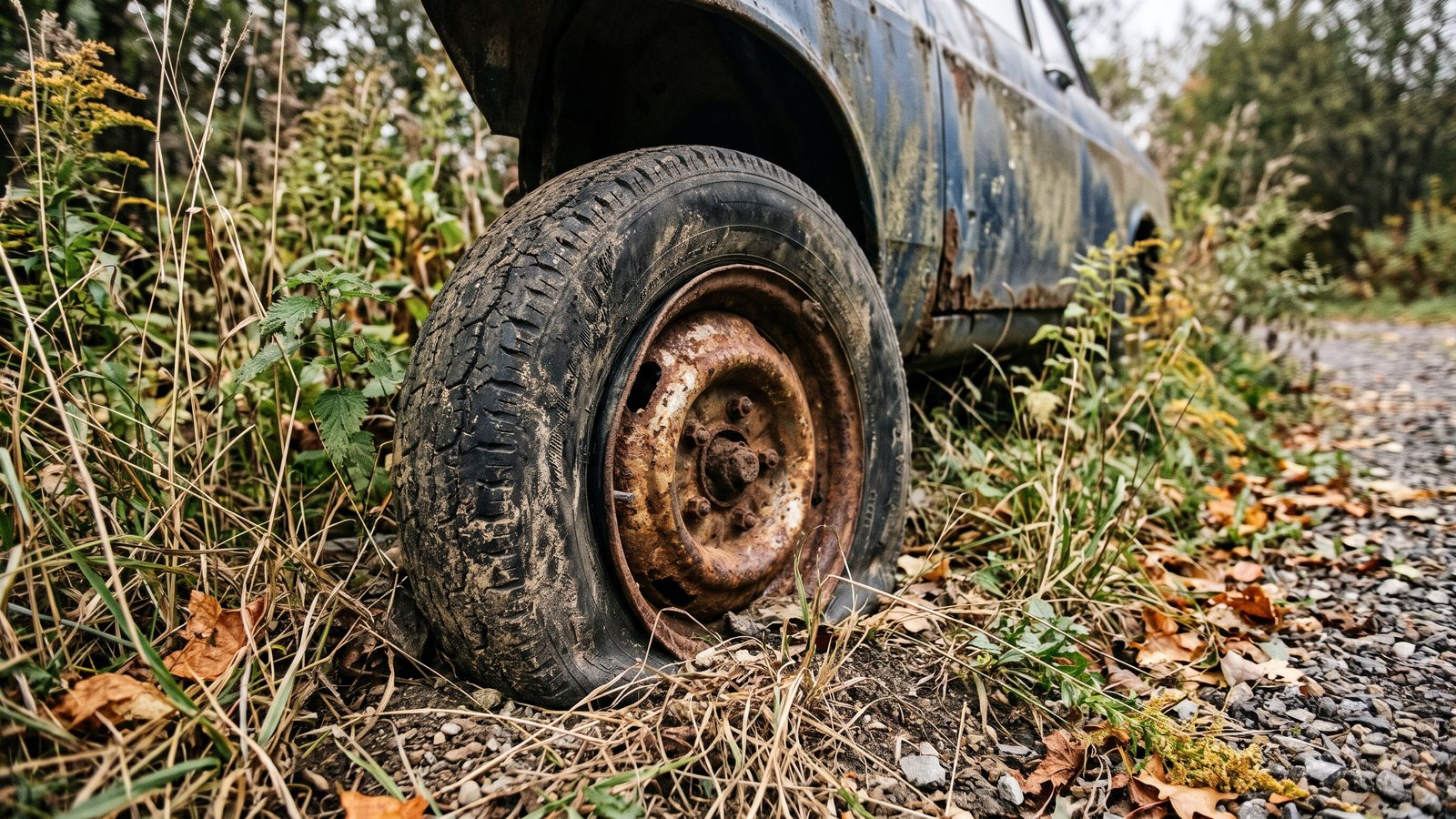
Your own junk car in the yard
ORC 4513.65 is about junk cars left with permission, which usually means the owner's own car or a family car. It applies to a vehicle that meets the age, damage, inoperable and value tests and is left uncovered in the open for more than 72 hours.
Local officials, including the sheriff, police, township trustees, or a city council or zoning authority, may send a notice by certified mail. It gives you ten days to put the car in a garage or other structure, or remove it. Leaving it out after that is a minor misdemeanor, and each further 30 days counts as a separate offense.
The ten-day notice rule does not apply to a collector's vehicle. Ohio law says a local government may still require an unlicensed collector's vehicle stored in the open to be hidden by a building, fence, plants or other cover.
Setting up a tow-away zone
For a vacant house where people keep parking, ORC 4513.601 lets the owner set up a private tow-away zone. The law is strict about the sign. It must be at least 18 by 24 inches and visible from all entrances.
- A statement that the property is a tow-away zone.
- Who is allowed to park there. For a home, the sign may say only tenants and guests.
- The times it is enforced, if it is not enforced all the time.
- The phone number and address where a towed car can be recovered, day or night.
- A statement that failing to recover a towed car may result in loss of title to it.
Common situations
A neighbor keeps parking at the vacant house
Each time a car is left there without your permission for four hours or more, you can complain to the police or sheriff under ORC 4513.60. If it keeps happening, a tow-away zone sign that meets ORC 4513.601 lets you call a towing service yourself.
Dad's old truck sits in the side yard with no tires
It was left with permission, so the abandoned junk rules do not apply. If it meets the age, damage and value tests, local officials could send a ten-day notice under ORC 4513.65. The truck is part of the estate, so its title has to be handled before it is sold or scrapped.
A wrecked car appears after you sign a contract
Call the police. After four hours it can be ordered towed. If it is old, wrecked, worth $1,500 or less and sits 48 hours or more, police can dispose of it as an abandoned junk vehicle.
Before you sell: a checklist
List every vehicle
Sort them by permission
Call police for a stranger's car
Handle titles for your own cars
Tell your buyer
What about the rest of the stuff in the house?
Belongings inside the house are a separate issue. Our post on selling a hoarder house in Ohio covers that. If a person is living in the house without permission, see our post on removing an occupant from an inherited house.
Know your net proceeds
Many competitor sites quote cleanout and towing prices. We are not going to, because we could not verify them and they vary by city and job. What matters is your net: price minus your mortgage, liens, closing costs, commission and any cleanup you pay for.
- Listing: a 6% commission comes off the price, and you may choose to clear the yard before photos and showings.
- Direct cash sale: no commission, and we buy as-is. Ask us whether a vehicle can stay.
- Compare the two nets, not the two prices. A cash offer is often lower than a top listing price.
Your six options
| Option | What happens with the vehicles | What to weigh |
|---|---|---|
| Keep it | Vehicles stay; 4513.65 notices are possible | Yard upkeep and local rules |
| Repair it | Your choice; work crews may need the space | Cash and time up front |
| Rent it out | Agree with the tenant in writing | Landlord duties and risk |
| List with an agent | Ask your agent; clearing may help showings | Commissions often run 5.5% to 6% |
| Sell it yourself (FSBO) | You decide with the buyer | You handle showings and paperwork |
| Sell direct for cash | Ask us; we buy as-is | We can close as fast as 7 days, typically around 21 |
A car you or an estate owns still needs its title handled, whatever path you choose.
Get a number for the house as it sits
We buy houses across Cleveland and Northeast Ohio as-is. Ask for a written offer and compare your net with a listing estimate.
This article summarizes Ohio Revised Code 4513.60, 4513.601, 4513.63 and 4513.65 as we read them in November 2026. It is general information, not legal advice. We did not cover towing fees, city ordinances, or how to transfer or scrap a deceased owner's car. Ask your local police, the BMV or an attorney about your situation.
Questions about a property with vehicles on it?
Call or send us the address. We will walk you through the sale side, and you decide what comes next.
Frequently asked questions
If a vehicle has been left on private residential property for at least four hours without permission, the sheriff or police chief may order it into storage after a complaint from the person affected.
It must meet all five tests: left 48 hours or longer without permission, three years old or older, extensively damaged, apparently inoperable, and worth $1,500 or less.
Law enforcement photographs it, records its make and serial number, and disposes of it to a salvage dealer or scrap facility under contract with the local government.
A junk car left uncovered in the open for more than 72 hours with permission can draw a certified-mail notice to cover it or remove it within ten days. Ignoring it is a minor misdemeanor, and each further 30 days is a separate offense.
Ohio lets a property owner set up a private tow-away zone, but only with a sign at least 18 by 24 inches, visible from every entrance, with the details the law lists, including where to recover a towed car.
The junk vehicle notice rule does not apply to a collector's vehicle. A local government may still require an unlicensed collector's vehicle stored in the open to be hidden by a building, fence or plants.
Not always. Tell us about any vehicles when you ask for an offer. A car that belongs to you or an estate still needs its title handled, so ask the BMV or the probate court about that part.
Find out what we would pay
Free, no obligation, and no pressure. If our number does not work for you, that is a perfectly fine answer.
Keep reading
Why Sell As-Is
Selling a House Full of Belongings in Ohio
You can sell a house without emptying it first. What you cannot skip is a careful search for the papers that matter, and if someone has died, Ohio law has firm rules about a will you find in the piles.
Inherited Property & Probate
Someone Is Living in the House You Inherited and Will Not Leave
Ohio has a specific ground for an occupier with no claim to the property — and a specific rule making it expensive to handle it yourself.

Why Sell As-Is
We Buy Properties in All Conditions and Circumstances
Foreclosure, fire damage, hoarder homes, code violations, tax liens, vacant properties. The full list of situations we buy in, and what each one actually means for a sale.