Selling a House Full of Belongings in Ohio
A house packed with belongings feels like it has to be emptied before anything else can happen. It does not. But before anything is thrown out, sold or hauled away, there are a few things worth finding, and a few rules that apply if the owner has died.
The living room of an older house stacked high with cardboard boxes, bags and old furniture, with a narrow path through the middle and light from a window
You do not have to empty a house to sell it. Some buyers will take it with everything inside. But search before anything leaves: papers, keys, photos and valuables are easy to lose in a cleanout. If the owner has died, Ohio law has firm rules about a will you find, and the executor has to inventory the person's belongings. Disclose what you know about the house, and compare the net on every option.
You do not have to empty it first
Houses fill up for many reasons. Someone lived there for fifty years. Someone was sick, or grieving, or struggled with hoarding. A parent moved to care and left everything behind. However it happened, the result is the same: a house so full that it is hard to see what you are selling.
We know of no rule that says a house must be empty before it can be sold. What changes is how buyers see it. A buyer using a mortgage, and their inspector and appraiser, need to walk the rooms and see the walls, floors, furnace and roof. A direct buyer who plans to clear and repair the house may take it as it stands. That is the real choice: clear it and sell to the widest market, or sell it full to a smaller one.
Look for these before anything leaves
Whatever you decide, the most important step comes first. Cleanout crews move fast, and once a bag goes in a dumpster, it is gone. Go through the house, or have someone you trust do it, and look for these:
Legal papers
Money papers
Keys and codes
Photos and keepsakes
Valuables
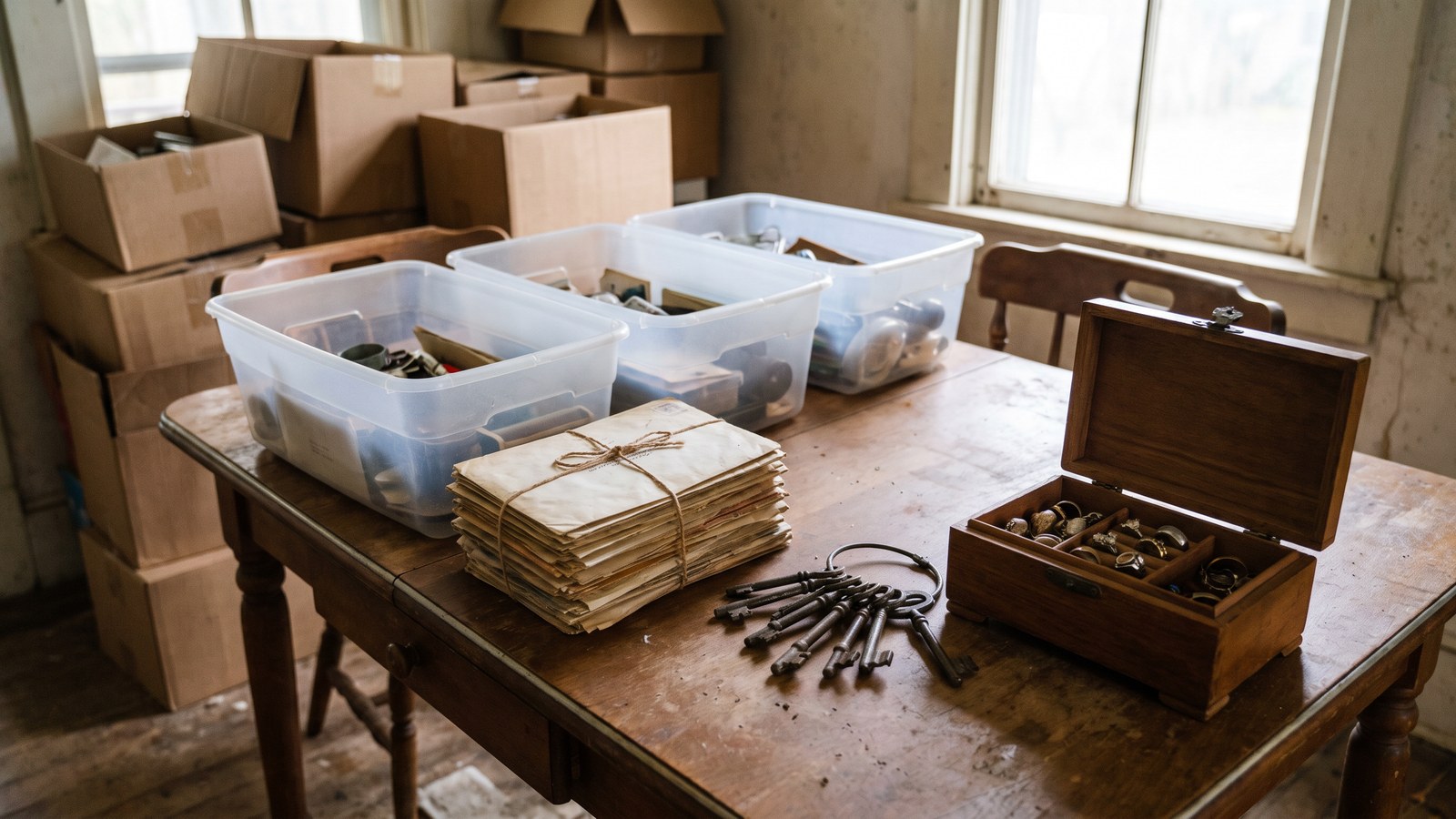
If the owner has died: the rules on wills and belongings
When the house belonged to someone who has died, the belongings are not just clutter. They are part of what the person left behind, and Ohio law has rules about both the will and the inventory.
The will. If you find one, keep it safe. Ohio law lets the probate court order the person holding a will to bring it to court, and it is strict about anyone who hides one:
If the person having the custody or control of the will intentionally conceals or withholds it or neglects or refuses to produce it for probate without reasonable cause, the person may be committed to the county jail and kept in custody until the will is produced.
That same section says the person is also liable for damages to anyone harmed. And the next section adds a second consequence. A beneficiary who knows about a will for one year after the death, can control it, and without reasonable cause hides it or fails to offer it for probate within that year, takes nothing under it. Their share passes as if they had died first. A will is probated in the county where the person lived at death, so for someone who lived in Cuyahoga County, that is the Cuyahoga County Probate Court.
The belongings. Once an estate is opened, the executor or administrator has three months from appointment to file an inventory with the court. It covers the person's real property and their tangible and intangible personal property that has come into the executor's possession or knowledge, valued as of the date of death. The court can extend that time for good cause.
It is natural for family to want keepsakes right away. But the furniture, jewelry, tools and papers may need to be listed in the estate inventory. Items that disappear early can make the executor's job harder and can start family arguments. Make a list, take photos, and ask the estate's attorney before anything of value leaves the house.
Want to know what the house is worth as it stands?
Tell us the address. We will give you a no-obligation cash offer for the house with the belongings still inside, so you have a real number to weigh against clearing and listing.
What the clutter hides, and the disclosure form
Piles can hide problems. A leak under the sink, damage behind boxes, a soft spot in the floor, or signs of pests can all sit unseen for years. That matters for the Ohio Residential Property Disclosure Form, which most sellers fill out.
The form is based on what the owner actually knows. It says that unless the buyer is told otherwise in writing, the owner has no more information than a careful inspection would give, and has not inspected areas that are generally hard to reach. It also says it is not a substitute for the buyer's own inspections. So you disclose what you know. If you could not see the basement walls for boxes, it is honest and useful to say so.
| Path | Who clears the house | What the buyer can see | Your main cost |
|---|---|---|---|
| Clear it, then list | You, family or a hired crew | Everything, after the cleanout | Cleanout cost, time, commission |
| Clear part of it, then list | You, for the rooms and systems that matter | Most of the house | Some cleanout cost, time, commission, possibly a lower price |
| Sell it full to a direct buyer | The buyer, after closing | What they can reach on a walk-through | A lower price than a cleared, listed house |
| Sell it yourself, full or cleared | Your choice | Depends on what you clear | Your time and the work of selling |
We do not put dollar figures in this table. Cleanout costs depend on the size of the house and what is in it, and we have no verified source for typical prices. Get written quotes for your own house.
A simple order to work in
Why we will not quote you a cleanout price
Many websites put a dollar range on cleanouts, dumpsters or junk removal. We do not, because we have not found a source we can check for those numbers, and the real cost swings with the size of the house, how full it is, and what is in it. Some items can be sold or donated, which changes the math. A made-up number could push you toward the wrong choice in either direction.
The better move is to get two or three written quotes for your own house. Ask what is included: hauling, disposal fees, donation drop-off, and whether they sort for papers or valuables or just remove everything. That last question matters most if you have not finished searching.
Your six options
- Keep the house. If no one is ready, you can wait. Use the time to search, sort and make decisions without pressure. Keep paying taxes, insurance and utilities while you do.
- Clear and repair, then sell. Clearing lets you see the house's true condition and opens it to the widest market. It costs money and time, and repairs may follow once you see what was hidden.
- Rent it out. It will need to be cleared and made livable first, and you take on the work of being a landlord.
- List it with an agent. A cleared house usually draws more buyers and a higher price. Ohio commissions usually run 5.5% to 6%. Expect the cleanout to come before photos and showings.
- Sell it yourself. You save the commission, but you handle showings, the disclosure form and negotiations, on top of the cleanout if you do one.
- Sell direct. A direct buyer may take the house with the belongings inside after you remove what you want. No commission, no repairs and no showings. Closings can happen as fast as 7 days and typically take around 21. The price will be below a cleared, listed house.
For each path, start with the price. Subtract commission, closing costs, the cleanout, any repairs, and every month of taxes, insurance and utilities until closing. What is left is what you keep. A cleared, listed house often brings a higher price. Whether it leaves you more money depends on those costs. Use real quotes, not guesses.
Get a number to put next to your quotes
We buy houses across Cleveland and Northeast Ohio with the belongings still in them. Take what matters to you, and leave the rest. If clearing and listing would leave you more, we will tell you.
What to do with what you find
Not everything in a full house is trash. Furniture, tools, collections and household goods may be worth selling through an estate sale, a consignment shop or online. Some can be donated. Doing that takes time, and it can lower the cleanout bill because less has to be hauled away. Whether it is worth the effort depends on what is there and how much time you have.
If someone has died, check with the estate's attorney before selling belongings, since they may need to appear on the inventory first. If it is your own house, there is no inventory to file, but the same order still helps: search, sort, then decide what to sell, give away or leave for the buyer.
Go easy on yourself
Clearing a full house is hard work and often hard feelings. It may be a parent's whole life in those rooms, or a reminder of a difficult time in your own. There is no prize for doing it fast. Search carefully, ask for help, and make the selling decision once you know what the house is and what each path would really leave you.
This article summarizes Ohio Revised Code §§ 2107.09, 2107.10, 2107.11 and 2115.02 and the Ohio Residential Property Disclosure Form as we read them. It is general information, not legal advice. We did not read local ordinances on property upkeep or accumulations, and nothing here covers them. If someone has died, talk to an Ohio probate attorney before belongings are removed or the house is sold.
Talk it through with us
Call or send the address. We will explain how a sale with the contents inside would work, and you can decide in your own time.
Frequently asked questions
No law we know of makes you empty a house before selling it. Whether you need to clear it depends on how you sell. A listed sale usually goes better with the house cleared so buyers and inspectors can see it. A direct buyer may take the house with the belongings still inside. Your purchase contract should say what happens to anything left behind.
Keep it safe and do not throw it away or hide it. Ohio law lets the probate court order the person holding a will to produce it, and a person who intentionally conceals or withholds it without reasonable cause may be jailed until it is produced and can owe damages. The will is admitted to probate in the county where the person lived at death.
Under Ohio law, a beneficiary who knows about a will for one year after the death, has the power to control it, and without reasonable cause conceals or withholds it, or fails to offer it for probate within that year, takes nothing under it. Their share passes as if they had died before the person who made the will.
Be careful. When an estate is opened, the executor or administrator must file an inventory of the person's real property and their tangible and intangible personal property within three months of appointment. Items that leave the house early can make that job harder and can cause family disputes. Ask the estate's attorney before anyone takes anything of value.
The Ohio disclosure form is based on what you actually know. It says that unless the buyer is told otherwise in writing, the owner knows no more than a careful inspection would show, and has not inspected areas that are hard to reach. Disclose what you know. If clutter kept you from seeing parts of the house, you can say so on the form.
We do not quote a figure, because we have no verified source for one and the cost depends on the size of the house, how much is in it, and what the items are. Get written quotes from more than one local company, and ask what is included, such as hauling, disposal and donation drop-off.
Many direct buyers will, including us, but terms differ, so read the offer. Take what matters to you first. Then compare the net from a direct sale with the net from clearing and listing, counting the cleanout cost and the time it takes.
Find out what we would pay
Free, no obligation, and no pressure. If our number does not work for you, that is a perfectly fine answer.
Keep reading

Why Sell As-Is
Inherited a Property in Cleveland? Selling a Probate or Inherited Home
How probate works in Ohio, what you can and cannot do before it completes, and how to handle a house full of a lifetime of belongings when you live somewhere else.

Why Sell As-Is
We Buy Cleveland Properties As-Is — No Repairs, No Cleanouts, No Hassle
What "as-is" actually means in practice, what you can leave behind, and the one thing you still have to do even when selling as-is.

Inherited Property & Probate
Which Ohio Home Sales Are Exempt From the Disclosure Form?
Ohio law exempts fourteen kinds of transfer from the residential property disclosure form — including most estate sales and inherited houses you never lived in.