Selling Your House While on SSI: How the Money Is Counted
If you get Supplemental Security Income, or SSI, your home does not count against you. But when you sell it, the money from the sale can. The federal rules are specific about how and when that money counts, and what you can do to protect your benefits.
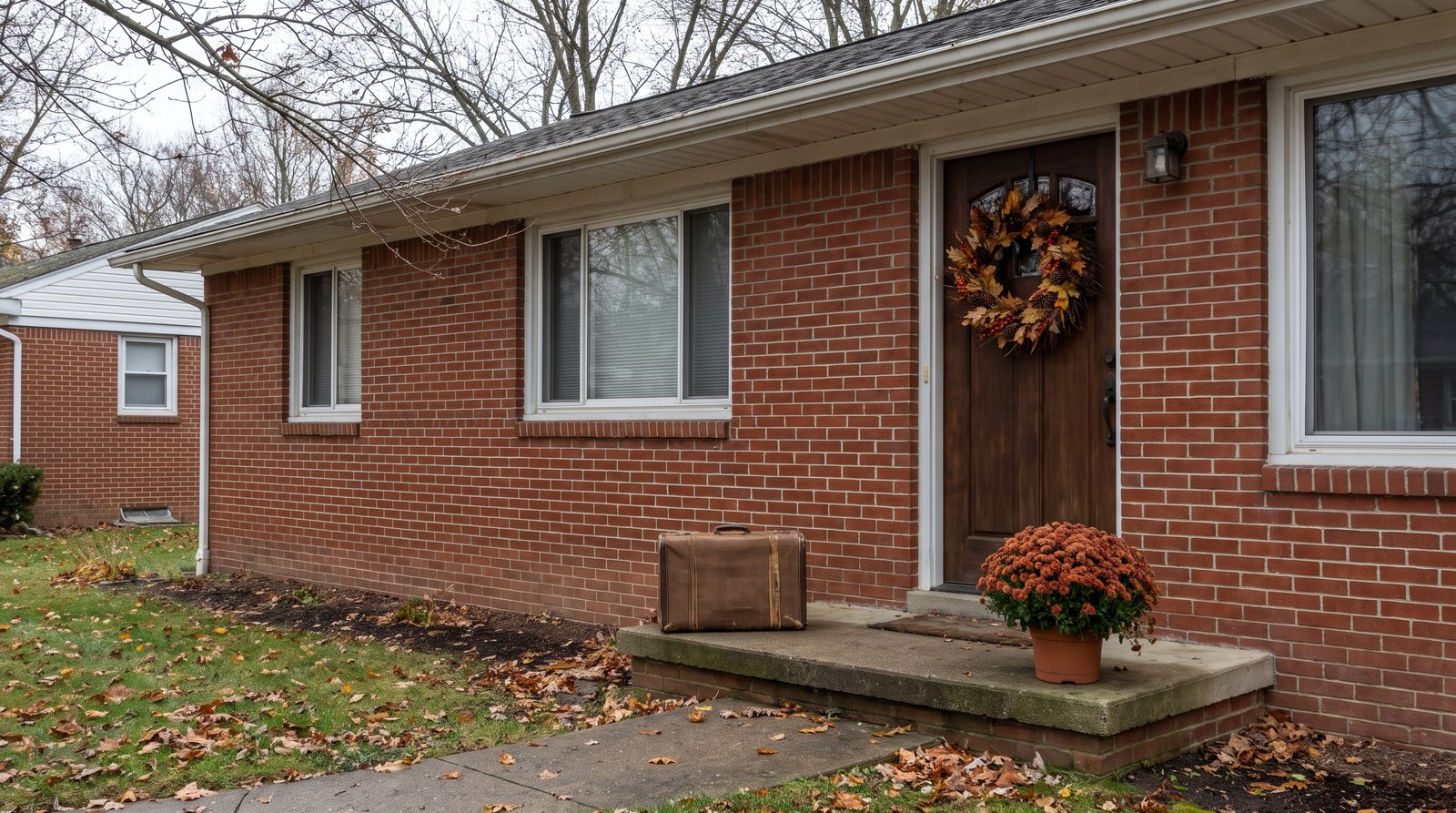
A small single-story frame house at dusk in November, with warm light in the front window, bare trees and a few leaves on the lawn
Your home does not count for SSI while you live in it. Money from selling it is not income, but it is a resource, and the SSI resource limit is $2,000 for one person or $3,000 for a couple. Proceeds you use to buy another home within 3 months are excluded. You must report the sale to Social Security.
Why your house does not count, but the money can
SSI is a needs-based program, so it counts most of what you own. Your home is a big exception. Under 20 CFR 416.1212, a home that is your principal place of residence is not counted, regardless of its value.
When you sell, the house turns into money. Social Security's rules say money from selling a resource is not income. It is the same resource in a new form. Money you keep can count toward the resource limit unless an exclusion applies.
| Situation | How SSI treats it | Rule |
|---|---|---|
| You live in the home | Not counted, no matter the value | 416.1212(b) |
| You sell and receive the money | Not income. A resource in a new form | 416.1103(c) |
| You use the money to buy another home within 3 months | Excluded to that extent | 416.1212(e)(1) |
| You keep the money | Counts toward the resource limit | 416.1205(c) |
| You move out with no plan to return, and do not sell | Home becomes countable the next month, with exceptions | 416.1212(c) |
This is a summary of the federal SSI rules. Social Security decides your case. If you also get Medicaid, Ohio's Medicaid rules are separate.
Want to know what you would net?
Send us the address. We will give you a written cash offer so you can plan your next home and talk to Social Security with real numbers.
The resource limit and timing
The regulation lists the SSI resource limit as $2,000 for an individual and $3,000 for an individual and spouse, effective since January 1, 1989. Resources are measured as of the first moment of each month. If your resources go up during a month, the increase counts as of the first moment of the next month.
That timing matters. Money that arrives from a closing during a month is looked at as of the start of the following month. Knowing your closing date helps you and Social Security talk about the same months.

The 3-month rule for buying another home
The most important exclusion for sellers is in 20 CFR 416.1212(e). Proceeds from selling your excluded home are also excluded, to the extent you intend to use them, and actually do use them, to buy another home that is also excluded, within 3 months of the date you receive the proceeds.
You must report resources you receive or part with. Social Security says to report as soon as the event happens. If you report more than 10 days after the end of the month it happened, the report is late, and it may take a penalty deduction from your benefits.
A made-up timeline
Here is how the rules line up in an example. Say your sale closes and you receive the money on March 10. Under the timing rule, an increase in resources during March is counted as of the first moment of April. Under the 3-month rule, money you intend to use and do use to buy another home by about June 10 is excluded to that extent. Money you keep beyond that, and do not spend down, can count toward the limit.
Your own dates and facts will differ, and Social Security applies the rules to your case. Use the example only to see why the closing date and your next purchase date both matter.
Married couples and special cases
- Couples. The limit listed for an individual and spouse is $3,000. Social Security's home rule refers to property the individual and spouse own.
- Leaving because of domestic abuse. If you leave your home without intending to return because you are fleeing domestic abuse, the rule says Social Security will not count the home until you set up a new principal residence or take other action that ends the exclusion.
- A spouse or dependent relative still at home. If you move into an institution and they keep living there, the home is still treated as your principal residence.
If the buyer pays you over time
Seller financing has its own SSI rule. The value of a promissory note or installment contract from selling your home can be excluded, but only if you buy a replacement home within 3 months of the note and reinvest all note payments in the replacement home within 3 months of getting them. If you do not, the note and the money you keep can count. Our post on seller financing explains how those deals work.
If you are moving into care
If you leave your home to live in an institution, the rule says your home still counts as your principal residence as long as your spouse or a dependent relative keeps living there. Otherwise, a home you leave without intending to return becomes countable starting the month after. There is also a special rule for people leaving because of domestic abuse. If Medicaid is involved, read our post on selling before a nursing home move.
Before you sell
Decide where you will live next
Talk to Social Security first
Know your net
Plan the timing
Report the sale
Your net proceeds
Net proceeds are the price minus your mortgage payoff, closing costs and any commission. That net is what SSI may look at. For example, a house sells for $90,000 with no mortgage. After a 6% commission of $5,400 on a listing and other costs, you might receive around $80,000. That is far above the $2,000 limit unless you use it for another home within 3 months. These numbers are made up, so run your own.
Your six options
| Option | SSI effect | What to weigh |
|---|---|---|
| Keep it | Home stays excluded while you live there | Upkeep and taxes on a fixed income |
| Repair it | Home stays excluded | Paying for repairs can strain a small budget |
| Rent it out | If you move out with no plan to return, the home can become countable | Talk to Social Security about how rent is treated before you do this |
| List with an agent | Proceeds can count unless used for another home within 3 months | Commissions often run 5.5% to 6% |
| Sell it yourself (FSBO) | Same proceeds rules | You handle the sale and timing yourself |
| Sell direct for cash | Same proceeds rules | A set closing date can help you plan a replacement purchase. We can close as fast as 7 days, typically around 21 |
No sale method changes the SSI rules. What you do with the money, and when, is what matters.
Plan your move with a real number
We buy houses across Cleveland and Northeast Ohio as-is. A written offer and a firm closing date can help you time your next purchase.
This article summarizes 20 CFR 416.1103, 416.1205, 416.1207, 416.1212, 416.708 and 416.714 as we read them in November 2026. It is general information, not legal or benefits advice. It does not cover SSDI, Ohio Medicaid rules or any other program. Social Security makes the final decision on your benefits. Talk to Social Security or a benefits counselor before you sell.
Questions about selling on a fixed income?
Call or send us the address. We will walk you through the numbers, and you decide what comes next.
Frequently asked questions
No. Social Security's rules say a home that is your principal place of residence is not counted, no matter what it is worth.
No. The rules say money from selling a resource is not income. It is a resource that has changed form. That means it can count toward the resource limit instead.
Since 1989, the regulation lists $2,000 for an individual and $3,000 for an individual and spouse. Countable resources above that can affect eligibility.
The proceeds are excluded to the extent you intend to and actually do use them to buy another home that is also excluded, within 3 months of receiving them.
SSI looks at your resources as of the first moment of each month. An increase during a month is counted as of the first moment of the next month.
Yes. You must report resources you receive or part with. Report as soon as it happens. A report made more than 10 days after the end of the month is late and can lead to a penalty deduction.
If you move out without intending to return, the home becomes a countable resource starting the month after. There are exceptions, such as a spouse or dependent relative still living there while you are in an institution.
Find out what we would pay
Free, no obligation, and no pressure. If our number does not work for you, that is a perfectly fine answer.
Keep reading

Divorce & Life Changes
Selling a House After a Family Member Moves Into Assisted Living or a Nursing Home
Putting the house in joint names may not do what your family thinks. Ohio defines "estate" broadly enough to reach it — here is what the statute actually says.

The Cash Offer Process
Seller Financing Your Ohio House: How It Works and What It Risks
Seller financing means you act as the bank and get paid over time. Here is how it works, the federal rules on who can offer it, how the IRS treats the payments, and the risks to weigh.
The Cash Offer Process
Selling Your House With a Reverse Mortgage While You Are Living
You can sell a house that has a reverse mortgage. Here is when the loan comes due, the 12-month rule for a move to care, what a non-borrowing spouse should know, and why you never owe more than the house.