Selling Your House With a Reverse Mortgage While You Are Living
A reverse mortgage does not lock you into your house. People sell to downsize, move closer to family or move into care. When you do, the loan is paid from the sale. The federal rules for these loans, called HECMs, spell out when the loan comes due and what your choices are.
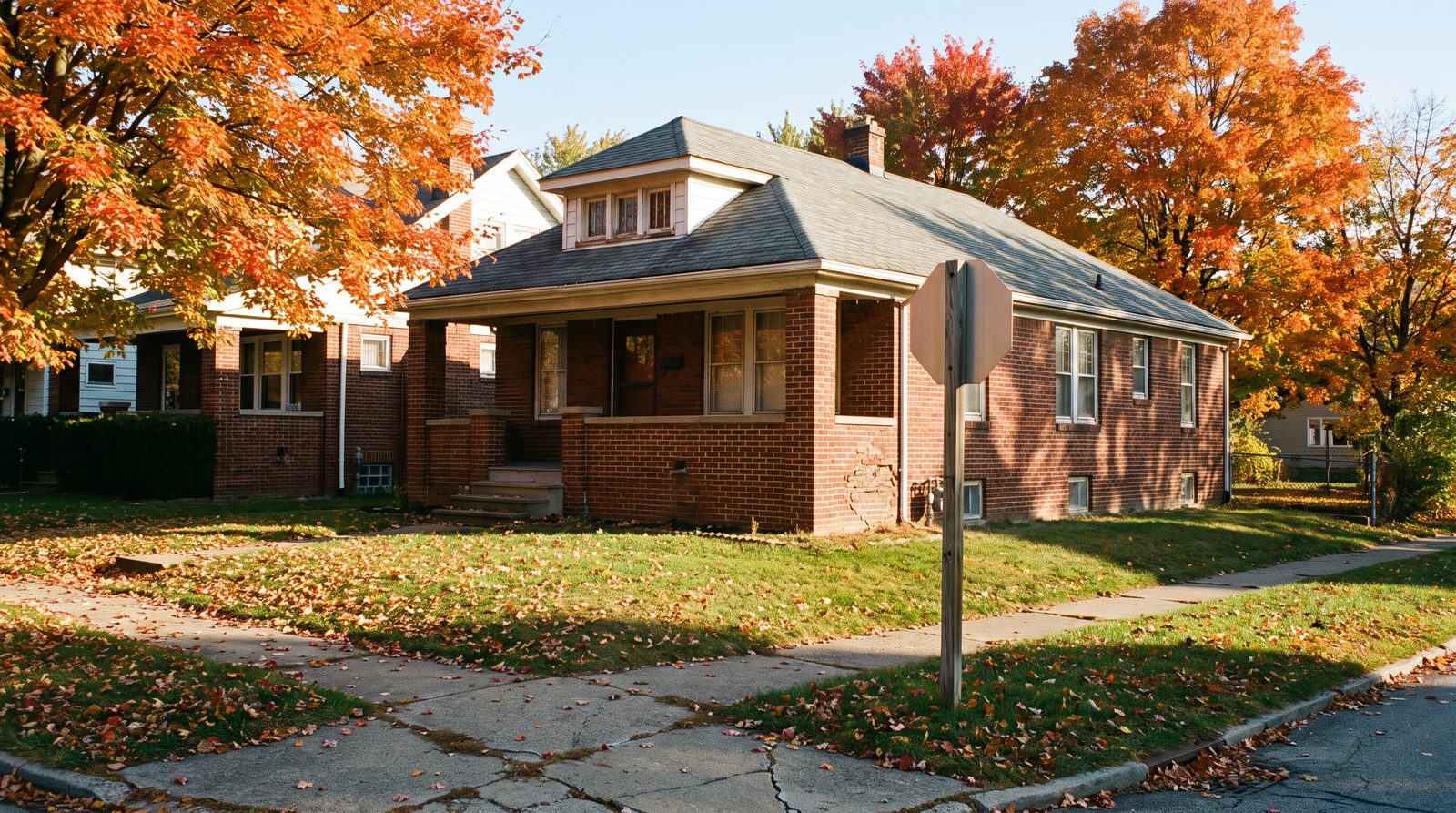
The front entry of a tidy brick ranch house in November, with an autumn wreath on the door and a small packed suitcase and potted mum on the stoop
You can sell a house with a reverse mortgage at any time. The loan is paid from the sale and you keep the rest. If you move out for good, or are away more than 12 straight months because of illness, the loan can come due even if you do not sell. And under HUD's rules, you never owe more than the house brings.
When a reverse mortgage comes due
The federally insured kind of reverse mortgage is called a Home Equity Conversion Mortgage, or HECM, and this post is about those. HUD's rules, at 24 CFR 206.27, list when the loan becomes due and payable in full. Some happen automatically. Others need HUD's approval first.
| What happens | Does the loan come due? | Rule |
|---|---|---|
| You sell or give away all your title, and no other borrower keeps title | Yes | 206.27(c)(1) |
| The last borrower dies, and no surviving borrower lives there | Yes, unless a non-borrowing spouse deferral applies | 206.27(c)(1), (c)(3) |
| The house stops being your principal residence, and no other borrower lives there | Yes, with HUD approval | 206.27(c)(2)(i) |
| You are away more than 12 straight months for physical or mental illness, and no other borrower lives there | Yes, with HUD approval | 206.27(c)(2)(ii) |
| Property taxes, insurance or other required charges go unpaid | Yes, with HUD approval | 206.27(c)(2)(iii) |
A short hospital stay or rehab is not the 12-month rule. The rule is about more than 12 consecutive months away because of illness. Talk to your servicer about your situation.
Thinking about moving?
Send us the address. We will help you get a payoff figure and give you a written cash offer, so you can see what you would keep before you decide.
You never owe more than the house
This is the part that worries people most, and the rule is clear. Under 24 CFR 206.27(b)(8), the borrower has no personal liability for the loan balance. The lender can only collect through the sale of the property, and it cannot get a deficiency judgment if the loan is foreclosed.
So if your balance has grown larger than what the house is worth, a sale does not leave you with a bill. If the house is worth more than the balance, the extra money is yours after the payoff and closing costs.

Once the lender says the loan is due
After the loan becomes due and payable, the servicer must notify you. Under 24 CFR 206.125(a)(2), you then have 30 days from that notice to choose a path.
If you sell, the rule sets a minimum price the lender must accept. HUD sets it by notice, and it cannot be more than 95 percent of the appraised value. Our post on reverse mortgages after death explains that 95 percent rule and the time extensions in more detail.
Unpaid property taxes, insurance or other required charges are their own reason the loan can come due. If you are planning a move, keep those current so a missed bill does not start the clock before you are ready.
If the loan does go to foreclosure, HUD's rule lets a borrower correct the problem and reinstate the loan even after foreclosure has begun, with the costs added to the balance. The lender can refuse in some cases, such as when it already allowed a reinstatement in the past two years.
If your spouse is not on the loan
Some couples have a reverse mortgage in only one spouse's name. HUD requires the mortgage to include a provision that defers the due and payable status after the last borrower dies, for an Eligible Non-Borrowing Spouse who meets the requirements. That protection is about the borrower's death. If you are the borrower and plan to move out, ask your servicer how your spouse's status affects the move, before you go.
Situations families ask about
One spouse moves to care, the other stays home
If both of you are borrowers, the move-out and 12-month illness rules only make the loan due when the house is not the principal residence of at least one other borrower. So if a borrower spouse is still living there, those rules do not make the loan due.
You move in with your children
Moving out for good means the house is no longer your principal residence. If no other borrower lives there, the loan can become due with HUD's approval, even if you do not sell. Some families then decide to sell so the payoff comes from the sale.
You want to put the house in a child's name now
Conveying all of your title, with no other borrower keeping title, makes the loan due. HUD's rule says a borrower still counts as keeping title if they hold a life estate. Deed changes like that have other effects too, so talk to an attorney first. Our post on selling a house with a life estate explains how life estates work.
You are behind on property taxes
Unpaid property charges are a separate reason the loan can come due. If you plan to sell anyway, a sale can pay the back taxes and the loan together at closing.
Before you list or move
Ask for a payoff statement
Get a sense of value
Plan the timing of a move
Keep charges current
Check care and benefit plans
Your net proceeds
Your net is the sale price minus the reverse mortgage payoff, closing costs and any commission. Here is a made-up example. A house sells for $180,000 and the payoff is $110,000. That leaves $70,000 before other costs. A 6% commission on a listing takes $10,800. If the payoff were larger than the price, you would walk away with nothing, but you would not owe the difference.
Your six options
| Option | What happens to the reverse mortgage | What to weigh |
|---|---|---|
| Keep it | Loan stays in place while you live there and meet the terms | Keep taxes and insurance paid |
| Repair it | Loan stays in place | Repairs may raise value, but you pay up front |
| Rent it out | If it stops being your principal residence, the loan can come due | Renting usually means moving out, which triggers that rule |
| List with an agent | Paid off at closing | Commissions often run 5.5% to 6%. Watch the 30-day timeline if the loan is already due |
| Sell it yourself (FSBO) | Paid off at closing | You handle the servicer and payoff yourself |
| Sell direct for cash | Paid off at closing | We can close as fast as 7 days, typically around 21, once the servicer provides the payoff |
In every sale, the reverse mortgage is paid from the proceeds. Under HUD's rules, you are not personally liable for any shortfall.
See your number before you move
We buy houses across Cleveland and Northeast Ohio as-is. A written cash offer next to your payoff shows what you would keep.
This article summarizes HUD's HECM rules at 24 CFR 206.27 and 206.125 as we read them in November 2026. It applies to federally insured HECMs, not private reverse mortgages. It is general information, not legal or financial advice. We did not cover servicer timelines, extension procedures or Medicaid rules in detail. Talk to your servicer, a HUD-approved housing counselor or an Ohio attorney about your loan.
Questions about your reverse mortgage?
Call or send us the address. We will walk through your payoff and options, including staying put, and you decide what comes next.
Frequently asked questions
Yes. HUD's rules say the loan becomes due and payable when a borrower conveys all of their title and no other borrower keeps title. The balance is paid from the sale, and you keep what is left after costs.
If the house stops being your principal residence, or you are away for more than 12 consecutive months because of physical or mental illness, the loan can become due and payable with HUD's approval, unless another borrower still lives there.
No. HUD's rules say the borrower has no personal liability for the outstanding balance. The lender can only collect through the sale of the property and cannot get a deficiency judgment.
After the lender notifies you that the loan is due and payable, the rule gives 30 days from the notice to pay it off, sell, give a deed in lieu of foreclosure, or fix the problem that made it due. Our heirs post explains extensions in more detail.
HUD requires the mortgage to include a provision deferring the due and payable status after the last borrower dies for an Eligible Non-Borrowing Spouse who meets the requirements. Ask your servicer whether your spouse qualifies.
Sometimes. The rule lets a borrower correct the problem and reinstate the loan even after foreclosure begins, with the costs added to the balance. The lender may refuse in certain cases, such as a reinstatement within the past two years.
Yes. A cash sale pays off the reverse mortgage at closing like any other sale. We ask for the payoff, show you your net, and you decide.
Find out what we would pay
Free, no obligation, and no pressure. If our number does not work for you, that is a perfectly fine answer.
Keep reading

Inherited Property & Probate
A Reverse Mortgage Came Due When the Owner Died. Now What?
The federal rules give heirs 30 days from the lender's notice — and the "six months" everyone repeats is the lender's foreclosure deadline, not your extension.

Divorce & Life Changes
Selling a House After a Family Member Moves Into Assisted Living or a Nursing Home
Putting the house in joint names may not do what your family thinks. Ohio defines "estate" broadly enough to reach it — here is what the statute actually says.
The Cash Offer Process
Selling Your House: The Mortgage Payoff and Your Escrow Refund
When you sell, your mortgage is paid off from the sale, your servicer owes you back whatever is left in escrow, and Ohio law limits prepayment penalties. Here is how each piece works and when the money moves.