Ohio Has Two Homestead Exemptions. This Is the Tax One
Search "Ohio homestead exemption" and you will get two completely different answers, because Ohio uses the phrase for two unrelated things. One protects your equity from creditors. The other reduces the property tax bill for owners who are sixty-five or older or permanently and totally disabled. This article is about the second one — and about the part that matters when the house changes hands, which is that it does not go with it.
A well-worn older kitchen with painted wooden cabinets from decades ago, a stovetop kettle and a patterned linoleum floor
Ohio's property tax homestead reduction cuts the bill for owners who are sixty-five or older or permanently and totally disabled, on a homestead they own and occupy, where an application has been approved. Two things sellers should know: the dollar figures printed in the statute are baselines adjusted every year and are not what applies to you; and the reduction is a continuing application tied to the qualifying person, so it does not pass to a buyer with the house.
First, which homestead exemption are we talking about?
Ohio uses the word "homestead" for two unrelated protections, and search engines cheerfully mix them. We should declare an interest here: we published an article about the other one earlier this month, so we are part of the problem. Here is the distinction.
Two different things, both called a homestead exemption
| Property tax reduction | Creditor exemption | |
|---|---|---|
| Statute | ORC 323.152 | ORC 2329.66 |
| What it does | Reduces the property tax bill | Protects home equity from execution, garnishment, attachment or sale to satisfy a judgment |
| Who it is for | Owners 65 or older, owners permanently and totally disabled, and certain surviving spouses | Any person domiciled in Ohio |
| Application needed? | Yes — an approved application, then continuing | No application; it is claimed when it is needed |
| Follows the house on sale? | No. It follows the qualifying person | Not applicable — it attaches to the owner's interest, not the property |
If what you actually want to know is whether a creditor can take your house, that is the second column and we have written about it separately. Everything below this table is the first column.
Who qualifies
The statute names three groups, and the third is narrower than people expect:
- A person who is permanently and totally disabled.
- A person who is sixty-five years of age or older.
- The surviving spouse of a person who was permanently and totally disabled or sixty-five or older and who applied and qualified for the reduction in the year of death — provided the surviving spouse is at least fifty-nine but not sixty-five or more on the date the deceased spouse dies.
Read the third one twice. It requires that the deceased spouse had actually applied and qualified in the year they died, and it has an age window on the survivor. A widow of sixty-two whose husband never got round to applying is not in it.
The property must be a homestead owned and occupied by the qualifying person, and the taxes are reduced "for each year for which an application for the reduction has been approved". No application, no reduction — however obviously someone qualifies.
Working out what an inherited or parent's house really costs to hold?
Property tax is usually the biggest line, and it can change when ownership does. Tell us about the house and we will give you an honest figure with no obligation.
The numbers in the statute are not the numbers
Anyone quoting a flat figure for this reduction is quoting the printed baseline. The statute puts the real figures somewhere else entirely:
The tax commissioner shall adjust the total income threshold … and the reduction amounts … by completing the following calculations in September of each year … Round the resulting sum to the nearest multiple of one hundred dollars. The commissioner shall certify the amount resulting from each adjustment to each county auditor not later than the first day of December each year.
So the income threshold printed as thirty thousand dollars, and the twenty-five thousand dollars of true value that drives the reduction calculation, both move every year on the gross domestic product deflator, rounded to the nearest hundred, and are certified to your county auditor by the first of December for the following tax year.
We did not obtain the commissioner's certification, so we are not going to print a number and let you rely on it — the whole point of this section is that the printed number is stale. Ask the county auditor for the current certified threshold and reduction amount. This is the second Ohio statute we have written about this month whose codified dollar figures are adjusted outside the text; it is a genuine pattern in Ohio law and worth being sceptical about wherever you see a confident round number.
For completeness: the reduction itself is calculated as the product of four things — the adjusted twenty-five thousand of true value, the assessment percentage set by the tax commissioner (not to exceed thirty-five per cent), the effective tax rate used for the current year, and a factor of one minus the sum of certain other percentage reductions the property already receives. It is not a flat discount, and two houses with the same qualifying owner can get different amounts.
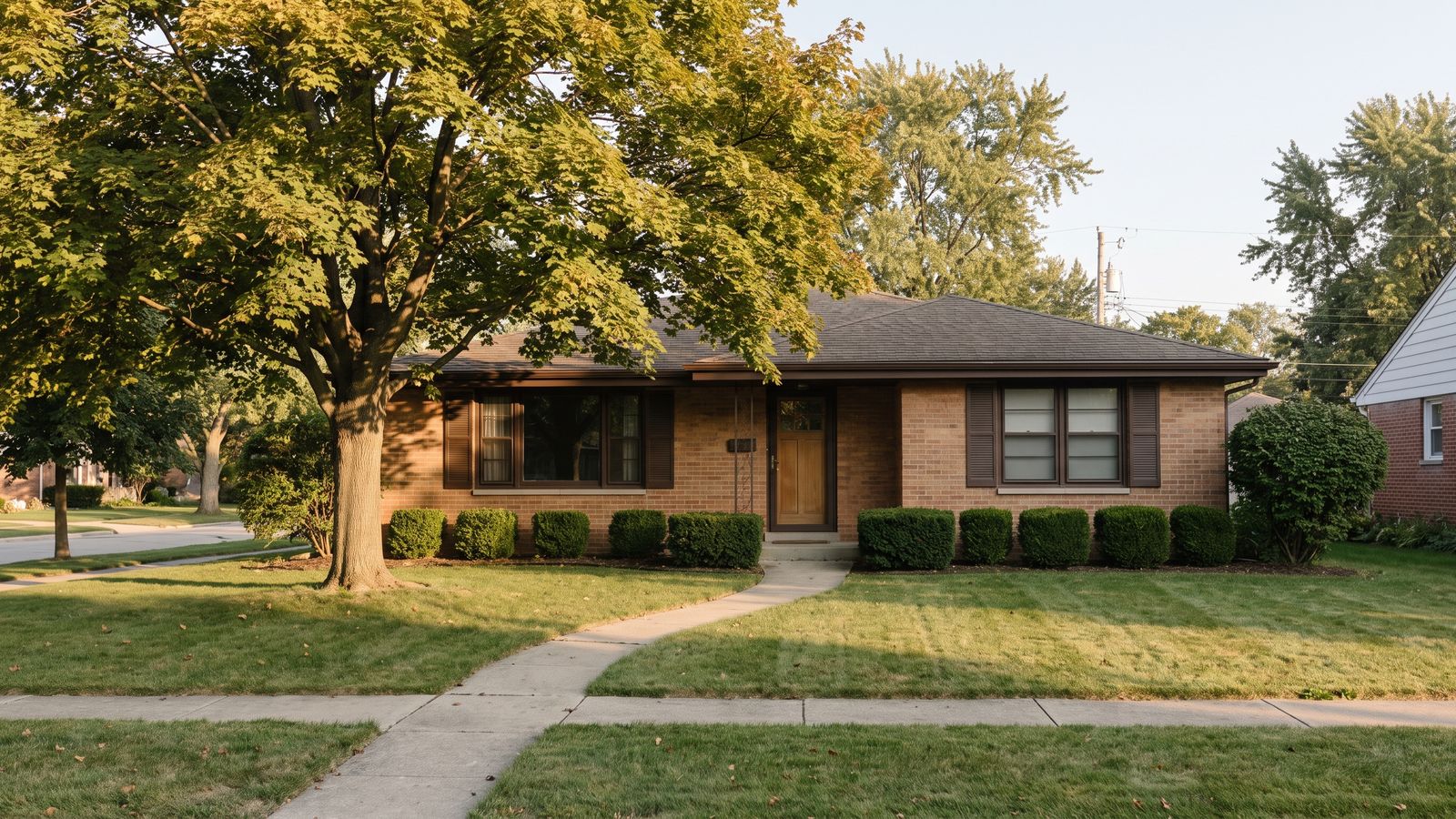
The part that matters when you sell
Here is the provision with the practical consequence, and it is short:
…constitutes a continuing application for a reduction in taxes for each year in which the dwelling is the applicant's homestead.
The reduction continues automatically — but only for each year in which the dwelling is the applicant's homestead. It is tethered to the qualifying person and their occupancy of that home. It is not a characteristic of the property that a new owner picks up at closing.
The practical effect for a sale is worth stating plainly. If your parent has held this reduction for fifteen years, the tax figure on their bill reflects it. A buyer who is forty-five does not qualify, and on the same house in the same year their bill will not carry that reduction. So the historic tax figure is not a reliable guide to what the property will cost its next owner — and a buyer who assumes otherwise is in for an unwelcome surprise.
First, do not quote your own reduced tax figure to a buyer as though it were theirs — not because anyone would be misleading on purpose, but because it is the number on the paperwork and it is easy to hand over without thinking. Second, ask your title company how taxes will be prorated at closing in your particular case. Proration is a closing practice rather than something these sections govern, and it is exactly the sort of detail worth a direct question rather than an assumption.
The duty nobody mentions
There is an obligation sitting in the application section that matters most in exactly the situation this site sees constantly — an older owner who moves into care.
If, in any year after an application has been filed, the owner does not qualify for a reduction on that homestead, the owner shall notify the county auditor that they are not qualified. That is a duty on the owner, not something the county is expected to discover.
We are deliberately not going to tell you whether a move into a nursing home ends homestead status. The statute conditions the continuing application on the dwelling being the applicant's homestead, and whether a particular move ends that depends on facts — permanence, intention, whether the home is kept available. What we will say is that it is a question worth asking the county auditor directly rather than leaving unexamined, because the duty to speak up rests with the owner or whoever is acting for them.
The second reduction, and what we could not pin down
Division (B) of the same section provides a separate percentage partial exemption against qualifying levies. The statute sets a phased schedule — 5.70%, then 8.92%, then 12.15%, then 15.38% "for the third following tax year and every year thereafter" — and a board of county commissioners may by resolution authorise a further partial exemption of up to two and one-half per cent.
The schedule runs from "the first tax year to which this amendment applies". We did not read the enactment note, so we cannot tell you which step of that ladder governs the current tax year, and we are not going to guess at a percentage you might rely on. Your county auditor can tell you which applies.
One genuine difference is worth noting though: unlike the (A) reduction, the (B)(2) reduction has a transfer route. An application under it is filed where the homestead was transferred in the preceding year, and that application is incorporated into the form the county auditor uses to administer conveyances of real property. So the two reductions behave differently on a sale.
Selling a long-held family home?
These are the houses where the tax history is least useful as a guide to the future. We can tell you what the property is worth to us today, and we will flag anything we think a buyer will look at differently than you do.
Where this leaves your options
- Keep it. If the qualifying owner still owns and occupies it, the reduction continues. If circumstances change, remember the notification duty.
- Repair, then list. No effect on the reduction while the qualifying owner is still in occupation. Improvements can affect valuation, which is a separate subject.
- Rent it out. The dwelling stops being the owner's occupied homestead, which goes to the heart of the continuing application. Ask the auditor before assuming.
- List it with an agent. Expect 5.5%–6% commission plus closing costs. Be careful how the current tax figure is presented in marketing — it is the seller's number, not the buyer's.
- Sell it yourself. Same caution, with nobody else checking the listing copy.
- Sell direct to a cash buyer. No repairs, no cleanout, closing as fast as 7 days and typically around 21 days. We work out the carrying cost on the buyer's basis, which is the honest way to do it.
We will not claim a cash sale nets more. What this article should change is smaller and more specific: when you compare routes, do not carry a reduced tax figure into the comparison as though it will survive the sale. Work out the net each way on the numbers the next owner will actually face.
The qualifying groups, in the statute's own words
Division (A)(1) of this section applies to any of the following persons: (i) A person who is permanently and totally disabled; (ii) A person who is sixty-five years of age or older; (iii) A person who is the surviving spouse of a deceased person who was permanently and totally disabled or sixty-five years of age or older and who applied and qualified for a reduction in taxes under this division in the year of death, provided the surviving spouse is at least fifty-nine but not sixty-five or more years of age on the date the deceased spouse dies.
This article summarises ORC 323.152 and 323.153 as we read them and is provided for general information. It is not legal or tax advice. We have deliberately not given current dollar figures or a current percentage, not described how or when to apply, and not covered the enhanced reduction for disabled veterans — in each case because we did not read the source we would need. Several other sections are named by the ones we read and were not read themselves. Your county auditor is the right first call, and an Ohio tax professional for anything that turns on money.
Questions about a parent's house and its tax bill?
Call or text 216-899-CASH. We will not pretend to be your tax adviser, but we can tell you what the house is worth and what a buyer will actually be looking at — which is often the missing half of the conversation.
Frequently asked questions
No, and the overlap in names causes real confusion. One is a property tax reduction under ORC 323.152 for owners who are sixty-five or older or permanently and totally disabled. The other is an exemption that protects a slice of your home equity from creditors under ORC 2329.66. Different statutes, different purposes, different amounts. We have written about the creditor one separately.
Three groups: a person who is permanently and totally disabled; a person who is sixty-five years of age or older; and the surviving spouse of a person who was in one of those groups and who applied and qualified in the year of death, provided the surviving spouse is at least fifty-nine but not sixty-five or more on the date the spouse dies.
For people not covered by the grandfathering provisions, yes. The statute sets a total income threshold, printed as thirty thousand dollars, but that figure is adjusted annually — so the number in the statute is not the number that applies to you. Ask the county auditor for the current certified threshold.
Because the adjustment happens outside the statute text. Each September the tax commissioner adjusts the income threshold and the reduction amounts by the increase in the gross domestic product deflator, rounds to the nearest hundred dollars, and certifies the result to every county auditor no later than the first day of December, for the following tax year.
Not the one under division (A). An approved application is a continuing application for each year in which the dwelling is the applicant's homestead — it follows the qualifying person, not the property. A buyer who does not qualify in their own right does not inherit it.
On the same house, in the same year, with the reduction gone, yes — that is the practical effect. It is worth understanding before you assume a buyer will look at your tax bill and see what they will pay. It also matters to how taxes are prorated at closing, which is a question for your title company.
The statute puts the duty on you. If in any year after an application has been filed the owner does not qualify for a reduction on that homestead, the owner shall notify the county auditor that they are not qualified. Whether a particular move ends homestead status is a fact question worth asking the auditor about directly.
Yes. Division (B) provides a percentage partial exemption against qualifying levies, on a phased schedule rising over several tax years, and a board of county commissioners may by resolution authorise a further partial exemption of up to two and one-half per cent. Unlike the (A) reduction, that one has a transfer application built into the auditor's conveyance form.
Find out what we would pay
Free, no obligation, and no pressure. If our number does not work for you, that is a perfectly fine answer.
Keep reading

Foreclosure & Hardship
How Much of Your Home Equity Does Ohio Protect?
Far more than the statute appears to say. The codified figure is a decade-stale baseline — the operative amount is adjusted every three years, and it is large.

Divorce & Life Changes
Selling a House After a Family Member Moves Into Assisted Living or a Nursing Home
Putting the house in joint names may not do what your family thinks. Ohio defines "estate" broadly enough to reach it — here is what the statute actually says.

Liens, Taxes & Title
Can I Sell a House With Back Property Taxes in Cleveland?
Yes — unpaid taxes are a lien, and liens get paid at closing. The more useful question is whether you still qualify for the payment plan Ohio law entitles you to.