Can You Give a Tax-Delinquent House to the Land Bank in Ohio?
When a house is behind on taxes and nobody wants to deal with it, some owners wonder if they can simply hand it over. Ohio has a law that allows exactly that in some cases: a conveyance in lieu of foreclosure to a county land bank or a local government. Here is what the law requires, and what it does not promise.
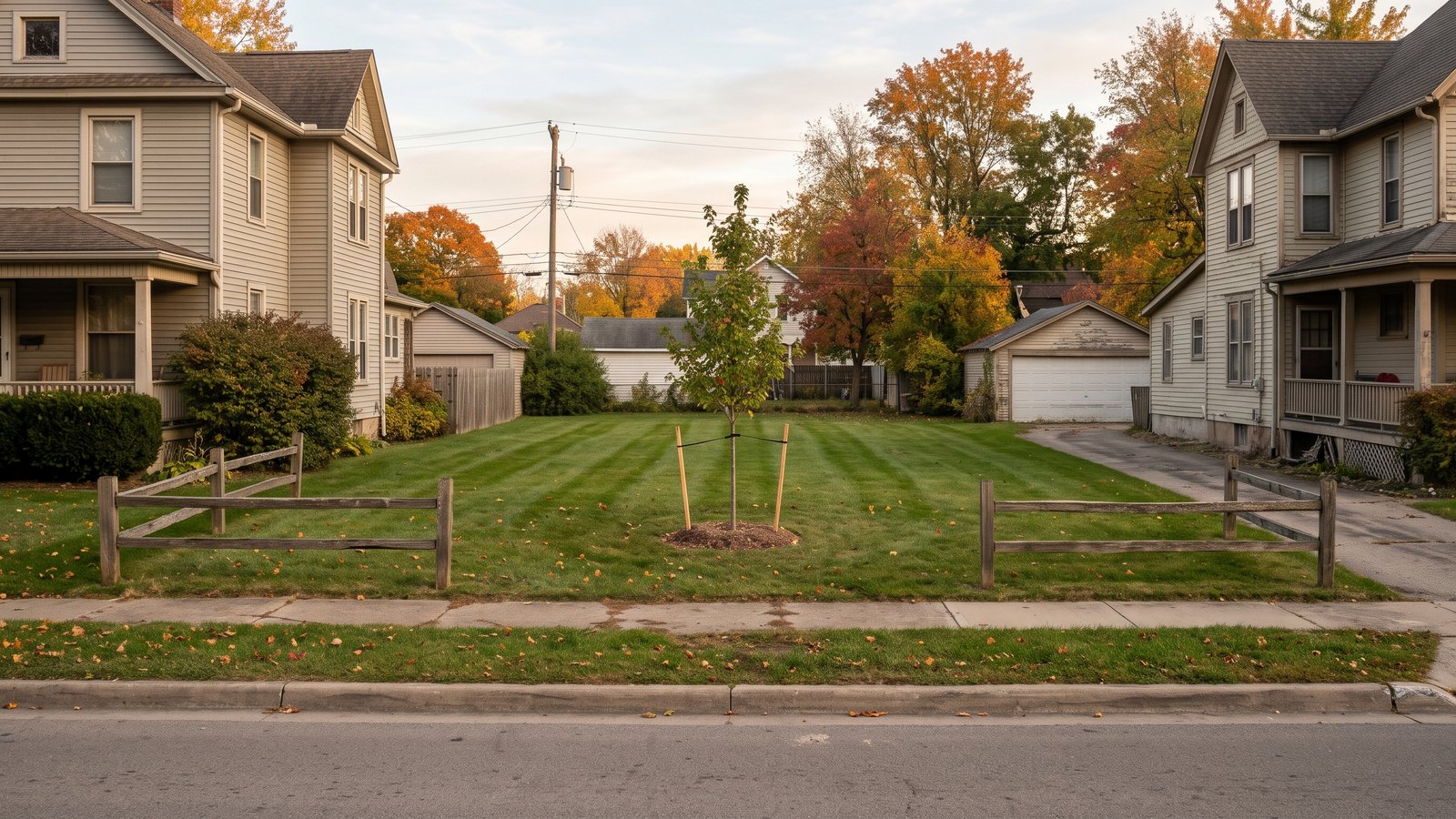
A vacant older two-story wood house with plywood over the windows and an overgrown autumn yard on a quiet residential street
Sometimes. Under ORC 5722.10, a county land bank or a local government that runs a land reutilization program may accept a tax-delinquent property in place of foreclosure, with the county auditor's consent. You must deliver good title, usually free of other liens, and may have to pay foreclosure costs already incurred. The law does not promise you any payment. If the house has equity, selling may leave you more.
Who can accept the property
The law uses the term "electing subdivision." Under ORC 5722.01, that is a city, township or county that has adopted Ohio's land reutilization program. When a county organizes a county land reutilization corporation, often called a land bank, and designates it, the land bank is treated as the electing subdivision for the county. Only places that have adopted the program, or a designated land bank, use these procedures. Ask your county treasurer or land bank whether that applies where your house is.
In Cuyahoga County, the Cuyahoga Land Bank says it was formed in 2009 after Ohio Senate Bill 353. Its website lists the main sources of its properties as tax foreclosures, the state forfeiture list, lender-owned homes, Housing Court referrals and "occasional donations."
Behind on taxes and weighing your choices?
Send us the address. A written cash offer shows you what the house could bring before you decide to give it away.
What ORC 5722.10 requires
| Requirement | What the law says |
|---|---|
| Delinquent land | The property must be delinquent land, behind on taxes |
| Auditor consent | Required. The auditor must consent if the land is certified as abandoned land |
| Good title | The owner shows the land bank it will get fee simple title |
| Free of liens | Unless agreed otherwise, free and clear of liens, except earlier easements, covenants and the taxes themselves |
| Costs | Owners pay county expenses of any tax foreclosure already filed; a county or land bank may require it |
Summarized from ORC 5722.10 as we read it. The land bank decides whether to accept. The statute does not say the owner is paid.
Why "abandoned land" matters
The auditor's role changes with one certification. If the land bank or local government certifies in writing that the property is "abandoned land" as defined in ORC 323.65, the auditor shall consent to the conveyance. Without that certification, the auditor may still consent, but only for reasons the chapter allows. Our post on Ohio's abandoned land foreclosure explains what that term covers.
What happens after the transfer
- Property acquired this way is not subject to tax foreclosure or forfeiture under Chapters 5721 or 5723.
- Certain city liens for demolition, water and similar charges incurred before the transfer are extinguished as against the land bank.
- When the land bank later sells it, the sale extinguishes the lien for the taxes that were delinquent at the time of the conveyance.
According to the Cuyahoga Land Bank's FAQs, it assesses each property it acquires. Homes that can be fixed may be renovated or offered through its Deed-in-Escrow Program, and others are scheduled for demolition. Either way, the property can move on with fewer old liens attached than it had before.
ORC 5722.10 asks for title free and clear of liens and encumbrances unless the land bank agrees otherwise. A mortgage, judgment or other lien usually has to be dealt with first. Talk to the land bank and an attorney before you count on this route.
Buying delinquent land free of the tax lien
A separate law, ORC 5722.21, lets a city, county, township or land bank declare that acquiring tax-delinquent property for redevelopment is in the public interest. Where that declaration is in effect, it may buy or otherwise acquire eligible delinquent land, other than by eminent domain, with title passing free of the delinquent-tax lien as the section provides. When a county has designated a land bank, consent from the other taxing authorities is deemed given on conveyance to the land bank.
Questions to ask before you call the land bank
Check what you owe
Estimate the value
Look at payment plans
Ask the land bank
Get advice
Questions to ask the land bank
- Would you consider accepting this property in lieu of tax foreclosure?
- Will you certify it as abandoned land, or ask the auditor to consent another way?
- What title evidence do you need from me?
- Which liens must be cleared first, and would you agree to take it subject to any?
- Are there county foreclosure costs I would have to pay?
Common situations
An inherited house nobody can afford to fix
If the house is behind on taxes, a conveyance in lieu is one path. Whoever owns it must be able to deliver title. If the owner has died, ask a probate attorney who can sign. Bring a copy of the deed and the latest tax bill. Compare it with selling as-is, which may still return some money.
You still owe on a mortgage
Unless the land bank agrees otherwise, the title has to be free of the mortgage. That usually means paying it off or working out something with the lender first. Ask the lender early, since its answer shapes every other choice. Our post on owing more than the house is worth covers short sales and related options.
The city has demolition or water liens on it
Some city liens for charges incurred before the transfer are extinguished as against the land bank. Our post on Ohio demolition liens explains those liens in more detail.
Know your net proceeds
A conveyance in lieu usually means walking away. A sale pays off taxes and liens at closing and gives you whatever is left. With made-up numbers, a $90,000 house with $15,000 in back taxes, listed with a 6% commission, pays $5,400 in commission, plus closing and holding costs. A direct sale has no commission, but the offer is often lower than a top listing price. Compare the full net each way. A cash sale does not always net more.
Your six options
| Option | When it may fit | What to weigh |
|---|---|---|
| Keep it | You can catch up or use a payment plan | Taxes keep coming due |
| Repair it | Repairs would add real value | Cash while already behind |
| Rent it out | Rent could cover taxes and upkeep | Landlord duties |
| List with an agent | There is equity and time | Commissions often run 5.5% to 6% |
| Sell it yourself (FSBO) | You can manage the sale | Taxes are paid at closing |
| Sell direct for cash | You want as-is and a set date | As fast as 7 days, typically around 21. The price is often lower |
A conveyance to a land bank is a seventh path for some owners. It depends on the land bank and the auditor agreeing.
See what the house could bring first
We buy houses across Cleveland and Northeast Ohio as-is, back taxes and all. Get a written number before you give anything away.
This article summarizes Ohio Revised Code 5722.01, 5722.10 and 5722.21 as we read them in November 2026, and the Cuyahoga Land Bank's public FAQs. It is general information, not legal or tax advice. We did not cover any land bank's acceptance rules, mortgage payoffs or tax effects. Talk to the land bank and an Ohio attorney about your property.
Not sure which path fits your house?
Call or send us the address. We will walk through a direct sale with you, and the choice stays yours.
Frequently asked questions
Ohio law allows an electing subdivision, which can be a county land reutilization corporation, to accept a conveyance in lieu of foreclosure of delinquent land from its owners. It needs the county auditor's consent, and the land bank decides whether to accept.
Yes. The conveyance may only be accepted with the auditor's consent. The auditor must consent if the land bank or subdivision certifies in writing that the land is abandoned land, and otherwise may consent for reasons the law allows.
Unless the land bank agrees otherwise, the title must be free and clear of liens and encumbrances, except earlier recorded easements and covenants and the delinquent and current taxes and assessments. You must show the land bank it will get fee simple title.
The owners pay county expenses of any tax foreclosure proceeding already filed on the land. When the county or land bank is accepting, it may require the owner to pay them.
Certain liens under ORC 715.261, 743.04 and 6119.06, for charges incurred before the transfer and not by the land bank, are extinguished as against the land bank when it acquires the property this way.
Its website lists "occasional donations" among the sources of its properties, along with tax foreclosures, the state forfeiture list, lender-owned homes and Housing Court referrals. Contact the land bank about a specific property.
Find out what we would pay
Free, no obligation, and no pressure. If our number does not work for you, that is a perfectly fine answer.
Keep reading

Liens, Taxes & Title
Can I Sell a House With Back Property Taxes in Cleveland?
Yes — unpaid taxes are a lien, and liens get paid at closing. The more useful question is whether you still qualify for the payment plan Ohio law entitles you to.
Liens, Taxes & Title
Cuyahoga Sold a Tax Lien on Your House? How to Pay It Off and Sell
When Cuyahoga County sells a tax lien certificate, a private company holds the right to collect your back taxes. You can still sell. Here is who to call, what the payoff includes, and how the clock works.
Liens, Taxes & Title
When an Unpaid Water Bill Becomes a Lien
Ohio gives anyone selling a house the right to demand a meter reading and a final water bill within ten days. It also limits when an unpaid bill can be put on your tax duplicate at all — and gives you a way to get a wrong one removed.