Forfeited to the State for Back Taxes: Can You Still Get It Back?
Sometimes a house goes through a tax foreclosure and nobody bids. Then it is offered again, and still nobody bids. Ohio law has a next step for that: forfeiture to the state. If this has happened to your family's property, or you think it might, here is what Ohio Revised Code Chapter 5723 says, and what it means for getting the property back or selling it.
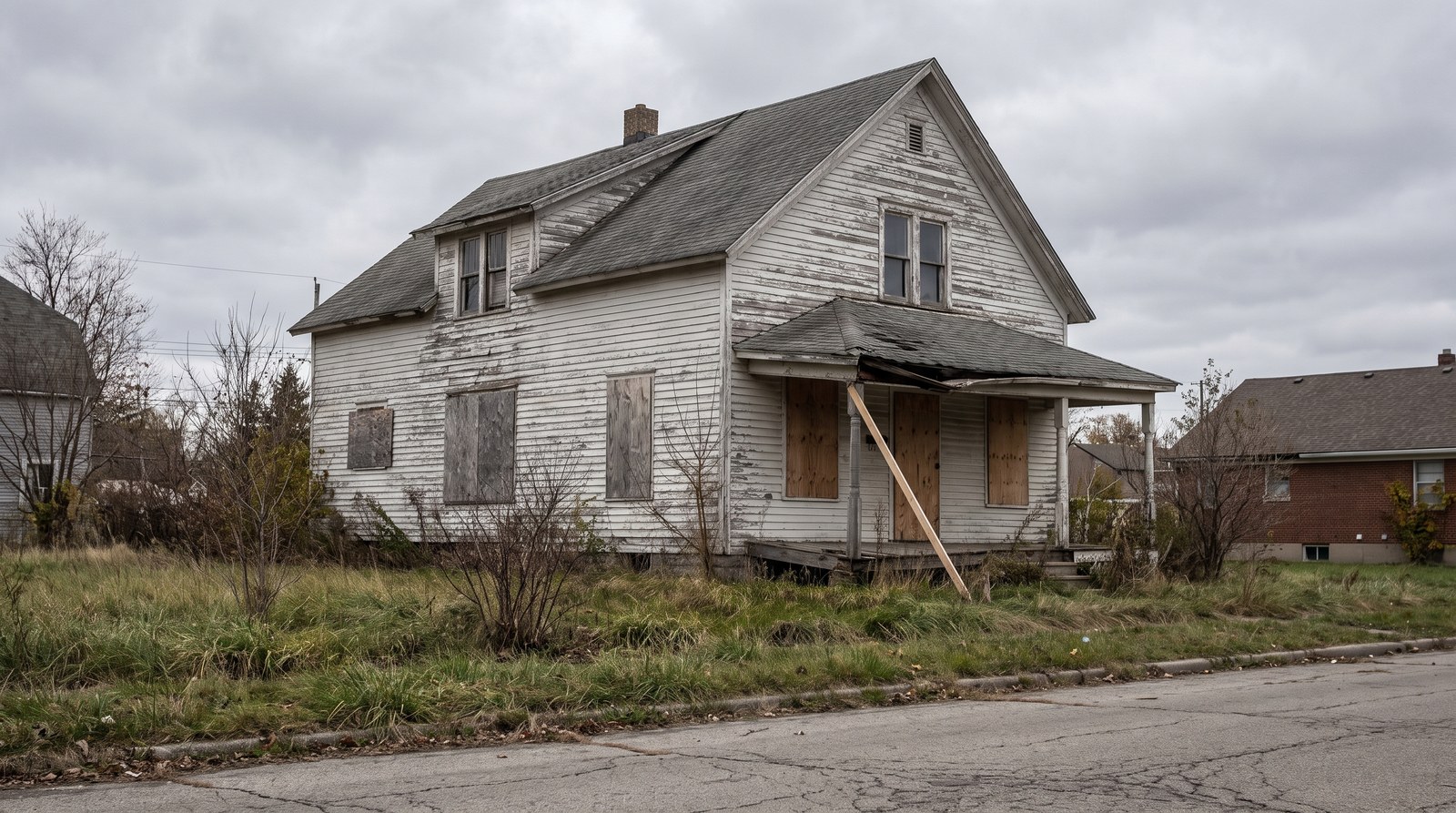
A small long-vacant frame house with faded paint, closed curtains and an overgrown front yard on a quiet street under an overcast autumn sky
Under ORC 5723.03, a former owner can get forfeited land back by paying all the taxes, assessments, penalties, interest and costs charged against it, but only before the state disposes of the property. Once it is sold or transferred under Chapter 5723, that chance is gone.
How land ends up forfeited
Forfeiture comes at the end of a tax foreclosure that did not find a buyer. Under ORC 5723.01, land is forfeited when it has been advertised and offered for sale on two separate occasions, at least two weeks apart, and not sold because no one bid.
Two sales, no bidders
The prosecutor certifies it
Local bodies get first chance
The court forfeits it
Is your property close to this point?
Tell us about the house. We can walk through where things stand and what choices may be left, with no pressure.
Why a city or land bank may take it first
Before forfeiting to the state, ORC 5723.01(A)(3) has the court notify the political subdivision and school district where the property sits, and any county land bank. The court offers to forfeit the property to one of them, or to an "electing subdivision," if it files a petition. If none files within ten days, the property goes to the state. In practice, that means the property may end up with a local body or land bank rather than the state. Our land bank guide explains what land banks do.
The right to redeem
If the former owner of real property that has been forfeited, at any time before the state has disposed of such property, pays into the treasury of the county in which the property is situated, all the taxes, assessments, penalties, interest, and costs ... the state shall relinquish to such former owner all claim to such property.
After that payment, the county auditor puts the property back on the tax list under the owner's name. The key limit is time. The right lasts only "before the state has disposed of such property."

How forfeited land is sold
Under ORC 5723.04, the county auditor keeps a list of forfeited lands and offers them for sale at least once a year. ORC 5723.06 sets the rules for the auction:
- Each tract is offered separately at public auction, to the highest bidder, for an amount set by reference to another statute, ORC 5721.16.
- If no bid reaches that amount, the auditor may offer the tract again and sell it for the best price obtainable.
- The land may not be sold to anyone who is delinquent on real property taxes in Ohio.
- The prior owner of record, or certain related people and businesses, cannot buy it for less than the full taxes, assessments, penalties, interest and costs charged against it.
The buyer gets a certificate of sale and then an auditor's deed. Under ORC 5723.12, with some exceptions, that deed extinguishes all previous title and gives the buyer new title free from liens and encumbrances, except items the statute lists, such as taxes and special assessments not yet due.
What the auditor's deed does not clear
The new title is broad, but not unlimited. The statute keeps some items in place, including taxes and installments of special assessments and reassessments not yet due at the time of the sale, and certain federal tax liens. It also has exceptions for some foreclosures where an alternative redemption period has run. A buyer at a forfeited land sale should still get a title review.
Your possible paths
| Stage | What the law says | Source |
|---|---|---|
| Before forfeiture, during the tax foreclosure | Different rules apply; see our back taxes and abandoned land guides | ORC Chapters 323 and 5721 |
| Forfeited, not yet disposed of | Former owner may redeem by paying all charges | ORC 5723.03 |
| Transferred to a land bank on request | Auditor's deed to the land bank; subordinate liens treated as satisfied | ORC 5723.04(B) |
| Sold at the forfeited land sale | Buyer gets an auditor's deed and new title, with listed exceptions | ORC 5723.12 |
Our plain reading of ORC 5723.01 to 5723.12. Timing and amounts depend on your case. Ask the county auditor and treasurer for exact figures, and talk to an attorney.
Once forfeiture takes effect, the statute says the former owner's title passes to the state. That generally means you cannot sell the house in a normal sale until you redeem it. Ask an attorney before you sign anything with a buyer.
If you want to redeem and then sell
Confirm the status
Get the full payoff
Plan the money
Redeem and confirm
Then sell
Know your net proceeds
If you redeem and then sell, the redemption payment is part of your cost. Here is a simple example with made-up numbers. It is for teaching only.
| Line item | Listing (example) | Direct cash sale (example) |
|---|---|---|
| Sale price | $95,000 | $77,000 |
| Agent commission (6%) | -$5,700 | $0 |
| Repairs before listing | -$9,000 | $0 (sold as-is) |
| Holding costs while on the market | -$2,500 | -$600 |
| Seller closing costs (estimate) | -$1,500 | -$800 |
| Estimated net before the redemption payment | $76,300 | $75,600 |
Made-up numbers. In this example the listing nets a little more, but the two come out close because a long-vacant house may need costly repairs to list. Every house is different. Your redemption amount comes out of either column. A cash sale does not always net more.
Your six options
| Option | After forfeiture | What to weigh |
|---|---|---|
| Keep it | Redeem first, then keep paying taxes | Full payoff up front |
| Repair it | Only after redeeming | Cash and time on top of the payoff |
| Rent it out | Only after redeeming | Landlord duties |
| List with an agent | Redeem first, then list | Commissions often run 5.5% to 6% |
| Sell it yourself (FSBO) | Redeem first, then sell | More work, no commission |
| Sell direct for cash | Redemption still has to happen before closing | As fast as 7 days, typically around 21, once title is back. The price is often lower |
Every path runs through redemption under ORC 5723.03, and only while the state still holds the land.
Compare a written offer
We buy houses across Cleveland and Northeast Ohio as-is. Ask for a written number and see whether redeeming and selling makes sense for you.
This article summarizes Ohio Revised Code 5723.01, 5723.03, 5723.04, 5723.06 and 5723.12 as we read them in November 2026. It is general information, not legal or tax advice. We did not cover surplus proceeds, the dollar amounts in ORC 5721.16, or any county's sale schedule. Talk to an Ohio attorney and your county auditor and treasurer.
Questions about a forfeited property?
Call or send us the address. We will explain how our offers work, and the decision stays yours.
Frequently asked questions
When land in a tax foreclosure has been advertised and offered for sale on two separate occasions, at least two weeks apart, and not sold for want of bidders. The forfeiture takes effect when the court orders it.
After the court's entry is certified to the county auditor, all the right, title, claim and interest of the former owner is transferred to and vested in the state, to be handled under Chapter 5723.
Yes, if you act before the state has disposed of it. Ohio law says that if the former owner pays into the county treasury all taxes, assessments, penalties, interest and costs then charged, the state relinquishes its claim and the auditor puts the property back on the tax list in the owner's name.
The county auditor keeps a list of forfeited lands and offers them for sale annually, or more often if the auditor decides that is needed.
No. Ohio law says forfeited land may not be sold to the owner of record before the foreclosure judgment, or certain related people and businesses, for less than the full taxes, assessments, penalties, interest and costs charged against it.
Yes. On a county land reutilization corporation's request, the auditor transfers the parcel by auditor's deed, free of taxes and charges, and subordinate liens are treated as satisfied.
A certificate of sale, and then an auditor's deed. With some exceptions, the conveyance extinguishes all previous title and gives the buyer new title free from liens and encumbrances, except items the statute lists.
Find out what we would pay
Free, no obligation, and no pressure. If our number does not work for you, that is a perfectly fine answer.
Keep reading
Foreclosure & Hardship
The Faster Tax Foreclosure Route for Vacant Ohio Property
A county board of revision — not a judge — can foreclose tax-delinquent vacant land. Whether your property counts as "unoccupied" is something you can contest.

Liens, Taxes & Title
Can I Sell a House With Back Property Taxes in Cleveland?
Yes — unpaid taxes are a lien, and liens get paid at closing. The more useful question is whether you still qualify for the payment plan Ohio law entitles you to.

Foreclosure & Hardship
What Happens to Your Equity When Your House Goes Into Foreclosure?
Anything above what you owe is still yours after a sheriff sale. Ohio has to try to tell you — usually by writing to the house you just lost.