Selling an Ohio House From Abroad: FIRPTA Withholding Explained
An heir who lives overseas, a former resident who moved home, a family member who never became a U.S. citizen: all of them may own a house in Cleveland. When a foreign person sells U.S. real estate, a federal law known as FIRPTA changes how the money moves at closing. Knowing the rules early keeps the closing from stalling and helps the seller plan for the cash they will actually receive.
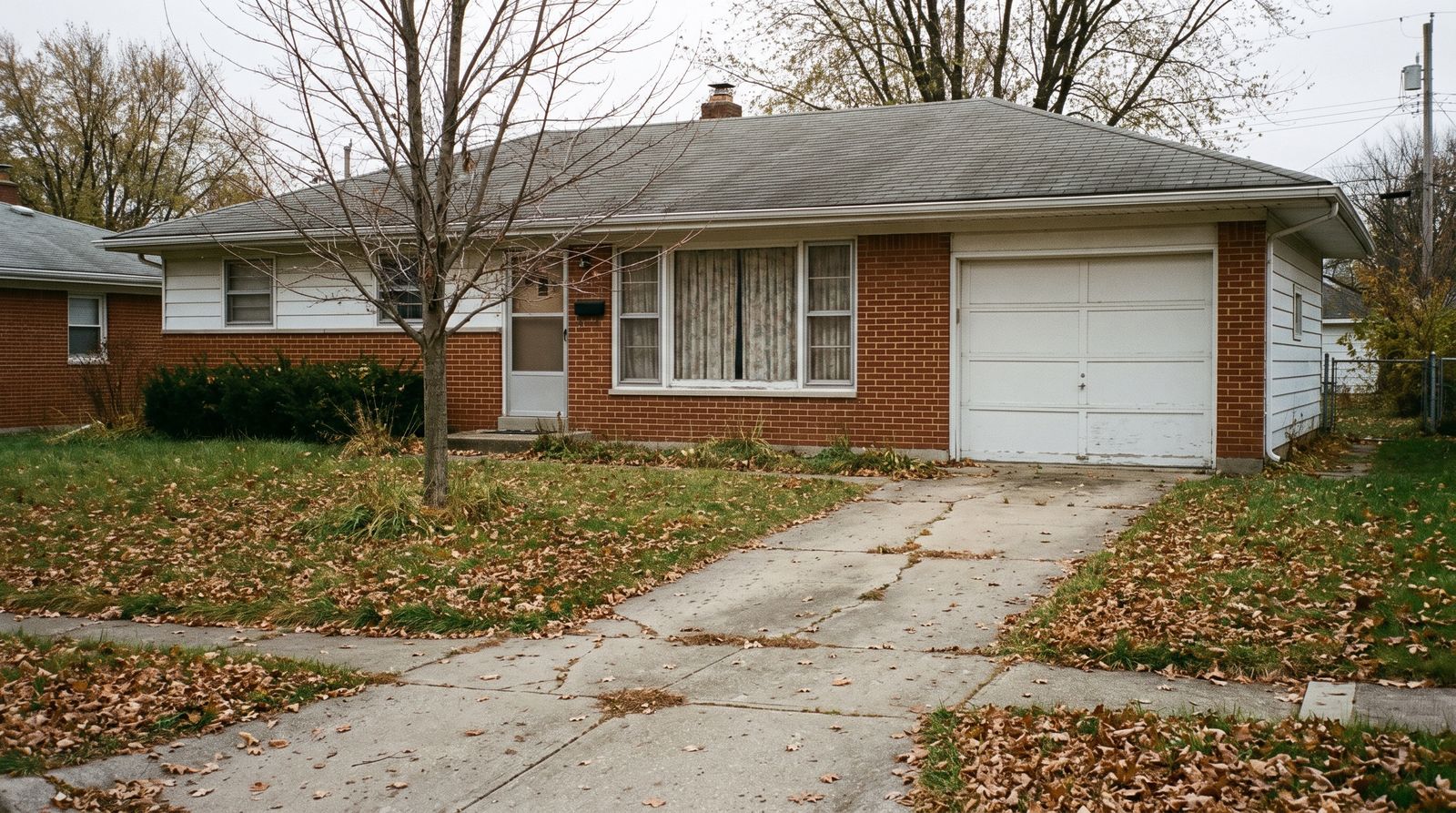
An older Tudor-style house with a steep gabled roof and a stucco and brick front on a quiet tree-lined street in autumn
If the seller is a foreign person, the buyer must withhold 15% of the amount realized and send it to the IRS. It drops to 10% if the buyer will live in the house and the price is $1,000,000 or less, and to nothing if the buyer will live there and the price is $300,000 or less. The IRS can approve a lower amount on request. U.S. sellers avoid withholding by signing a nonforeign affidavit with their taxpayer number.
Who this applies to
The withholding rule applies when the seller is a foreign person, which the statute defines as any person other than a United States person, plus some entities. Whether someone counts as a U.S. person for tax purposes is not always obvious, especially for people who have lived in more than one country. If you are not a U.S. citizen, ask a tax adviser before you list.
In Cleveland, this often comes up with inherited houses. One of the heirs lives overseas, or a parent who owned the house had moved back to their home country. If more than one person owns the house, each seller's status matters, so check for everyone on the deed.
In the case of any disposition of a United States real property interest … by a foreign person, the transferee shall be required to deduct and withhold a tax equal to 15 percent of the amount realized on the disposition.
Selling a Cleveland house from out of the country?
Tell us the address and where the owners live. We will give you a no-obligation cash offer and explain how a remote closing through a title company would work.
How much is withheld
| Situation | Withholding | Source |
|---|---|---|
| Seller signs a nonforeign affidavit with a U.S. taxpayer number | None | 26 U.S.C. 1445(b)(2) |
| Foreign seller; buyer will use it as a residence; price $300,000 or less | None | 26 U.S.C. 1445(b)(5) |
| Foreign seller; buyer will use it as a residence; price over $300,000 up to $1,000,000 | 10% of the amount realized | 26 U.S.C. 1445 (reduced rate) |
| Foreign seller; any other case, including investor buyers | 15% of the amount realized | 26 U.S.C. 1445(a) |
| IRS has approved a lower amount | The amount the IRS sets | 26 U.S.C. 1445(c) |
The amount withheld is figured on the amount realized, not on the profit, so it can be more than the tax the seller actually owes. That is why the reduction and refund rules matter. The statute has other exemptions we have not listed here. Your title company and tax adviser can tell you which line fits your sale.
Both the $300,000 exemption and the 10% rate require the buyer to acquire the house for use as a residence. An investor or cash buyer who plans to rent or resell does not meet that test. If you are a foreign seller comparing offers, the withholding may be higher on an investor sale, unless the IRS approves a lower amount. Factor that into your timing, not just your price.

Reducing the withholding
Because the withholding is based on the price and not the profit, it can be larger than the tax. Federal law gives two ways to bring it down:
- Maximum tax liability. At the request of the seller or buyer, the IRS determines the seller's maximum tax liability on the sale. The amount withheld cannot be more than that.
- A reduced amount. The IRS may approve a lower amount if it decides doing so will not put collection of the tax at risk.
- A refund of the excess. If more was withheld than the seller's maximum tax liability, the seller can seek a refund under the IRS's rules.
Timing matters. Under the regulation, if a request for a withholding certificate is submitted to the IRS on or before the day of the transfer, the buyer still withholds the full amount at closing, but does not have to pay it over until the 20th day after the IRS makes its final decision. Start the request early, with a tax adviser, so it is in before closing.
What happens at and after closing
Status is confirmed before closing
The right amount is withheld
The buyer pays the IRS
The seller receives a stamped Form 8288-A
The seller files a U.S. return
Get a U.S. taxpayer number early
A foreign seller often does not have a U.S. taxpayer identification number. That matters more than it seems. Under the regulation, if the seller's identifying number is not provided, the buyer must still withhold and pay the IRS, but the seller cannot get credit or a refund based on a Form 8288-A that does not include the number. In other words, the money still goes to the IRS, and the seller then has to sort out getting a number before they can use it.
If you are a foreign seller, ask a tax adviser about getting a U.S. taxpayer number well before closing. Give it to the title company so it appears on the forms. It is one of the simplest ways to avoid a long delay in getting back any excess.
Do not sign a false affidavit
The nonforeign affidavit is signed under penalty of perjury. The statute also puts a duty on the agents in the deal: if the seller's agent or the buyer's agent knows the affidavit is false, they must tell the buyer. And if the buyer knows or is told it is false, the affidavit no longer excuses the withholding. If you are unsure whether you are a foreign person for tax purposes, get advice instead of guessing.
Which line are you on?
Your six options
- Keep the house. No sale, no withholding. You still owe property taxes and upkeep from afar, which can be hard to manage.
- Repair it, then sell. Repairs from overseas need someone local you trust. A higher price raises the amount withheld too, since it is figured on the price.
- Rent it out. Renting from abroad means managing tenants and taxes from a distance. Get tax advice before you sign a lease.
- List it with an agent. An owner-occupant buyer may qualify you for the $300,000 exemption or the 10% rate. Ohio commissions usually run 5.5% to 6%, and listing can take longer from abroad.
- Sell it yourself. Hard to manage from another country. You would handle showings, the buyer and the paperwork remotely.
- Sell direct. No commission, no repairs and no showings, and closings can often be arranged remotely through a title company. Closings can happen as fast as 7 days and typically take around 21. An investor buyer generally means the 15% rate unless the IRS approves less. The price will be below full retail.
For a foreign seller, compare three numbers on each offer: the price, the costs of sale, and the amount withheld at closing. The withheld money is not lost, since it counts toward your U.S. tax and any excess can be refunded, but it changes how much cash you get at closing and when. Run the numbers with a tax adviser before choosing.
Get a number you can plan around
We buy houses across Cleveland and Northeast Ohio and close through a title company that handles the withholding paperwork. Ask for an offer and compare it with listing. If listing nets you more, we will say so.
This article summarizes 26 U.S.C. § 1445 and 26 C.F.R. § 1.1445-1 as we read them. It is general information, not tax or legal advice. We did not cover the definition of a U.S. person, entity sellers, or the tax on the gain itself, and IRS forms and processing times change. A foreign seller should work with a U.S. tax adviser before signing a purchase contract.
Questions about selling from abroad?
Call or send us the address. We will walk you through a remote closing and leave the decision with you.
Frequently asked questions
When a foreign person sells U.S. real estate, federal law requires the buyer to deduct and withhold a tax equal to 15 percent of the amount realized and send it to the IRS. It is a prepayment toward the seller's U.S. tax, not an extra fee.
Because the buyer needs to know whether to withhold. The law excuses withholding when the seller gives the buyer an affidavit, under penalty of perjury, stating the seller's U.S. taxpayer identification number and that the seller is not a foreign person. That is the form most U.S. sellers sign.
Yes. No withholding is required if the buyer acquires the property to use as a residence and the amount realized is not more than $300,000. There are other exemptions in the statute too, such as a qualifying statement from the IRS.
When the buyer acquires the property to use as a residence, the amount realized is not more than $1,000,000, and the $300,000 exemption does not apply. Then the statute substitutes 10 percent for 15 percent.
It can. Both the $300,000 exemption and the 10 percent rate depend on the buyer acquiring the house to use as a residence. A buyer who plans to rent or resell the house does not meet that test, so the standard 15 percent generally applies unless the IRS approves a lower amount.
Yes. At the request of the seller or buyer, the IRS can determine the seller's maximum tax liability, and the withholding cannot be more than that. The IRS can also approve a reduced amount if it will not put collection of the tax at risk. Any amount withheld above the maximum tax liability can be refunded.
The buyer must report and pay it to the IRS by the 20th day after the transfer, using Forms 8288 and 8288-A. The IRS stamps Form 8288-A and mails a copy to the seller, who uses it when filing a U.S. return to claim credit for the tax withheld.
Find out what we would pay
Free, no obligation, and no pressure. If our number does not work for you, that is a perfectly fine answer.
Keep reading
Inherited Property & Probate
They Lived Out of State and Owned a House Here
An Ohio house in an out-of-state estate needs something done here, but not always a full ancillary case. Whether you can handle it yourself turns on one thing most articles get flatly wrong.

Liens, Taxes & Title
Do You Pay Tax When You Sell Your House?
Most sellers owe nothing. The federal rule excludes up to $250,000 of gain — $500,000 for many couples — and inherited houses usually show almost no gain at all.

Why Sell As-Is
Inherited a Property in Cleveland? Selling a Probate or Inherited Home
How probate works in Ohio, what you can and cannot do before it completes, and how to handle a house full of a lifetime of belongings when you live somewhere else.