Selling Farmland in Ohio? What CAUV Recoupment Means for You
If you own farmland or a rural property in the counties around Cleveland, you may be paying taxes under Ohio's Current Agricultural Use Value program, known as CAUV. It can lower the tax bill. But the savings come with a string attached: when the land stops qualifying, Ohio charges some of them back. A sale is when that string most often gets pulled.
An older white farmhouse and a weathered red barn beside a harvested cornfield with stubble rows and a tree line in fall colors
Selling land enrolled in CAUV does not, by itself, trigger a charge. Conversion does. That includes the new owner not filing an initial CAUV application without good cause, or the land no longer qualifying. When land is converted, the county charges back the tax savings from the prior three tax years, as a lien on the converted land. Only the converted part is charged. Who pays between a private buyer and seller is settled in the purchase contract.
How CAUV works
Ohio lets qualifying farmland be taxed on its value for farming, not on what it would sell for. That can lower the tax bill. The owner files an application with the county auditor each year, between the first Monday in January and the first Monday in March. The first year is an initial application, and later years are renewals.
| Land | How it can qualify | Source |
|---|---|---|
| Ten acres or more | Devoted exclusively to listed agricultural uses during the three calendar years before the application year | ORC 5713.30(A)(1) |
| Under ten acres | The same uses, with average yearly gross income of at least $2,500 over that period, or evidence of anticipated income of that amount | ORC 5713.30(A)(2) |
The statute lists the qualifying uses in detail, from crops and livestock to timber and certain energy production, with conditions. This table is a summary. Your county auditor decides whether a specific parcel qualifies.
Thinking about selling rural land or a farmhouse?
Tell us the address and acreage. We will give you a no-obligation cash offer and talk through how CAUV could affect the closing.
What counts as conversion
The recoupment charge is triggered by conversion, and the statute defines that word broadly. It includes:
- The owner failing to file a renewal application without good cause, as decided by the board of revision.
- A new owner failing to file an initial application without good cause.
- The land, or part of it, not qualifying as agricultural use for the current year.
That second item is why a sale matters. If the buyer plans to keep farming and files the initial application, the land can stay in the program. If the buyer plans to build, subdivide, or simply does not file, the land is converted and the charge follows.
… a portion of the tax savings upon such converted land shall be recouped … by levying a charge on such land in an amount equal to the amount of the tax savings on the converted land during the three tax years immediately preceding the year in which the conversion occurs.
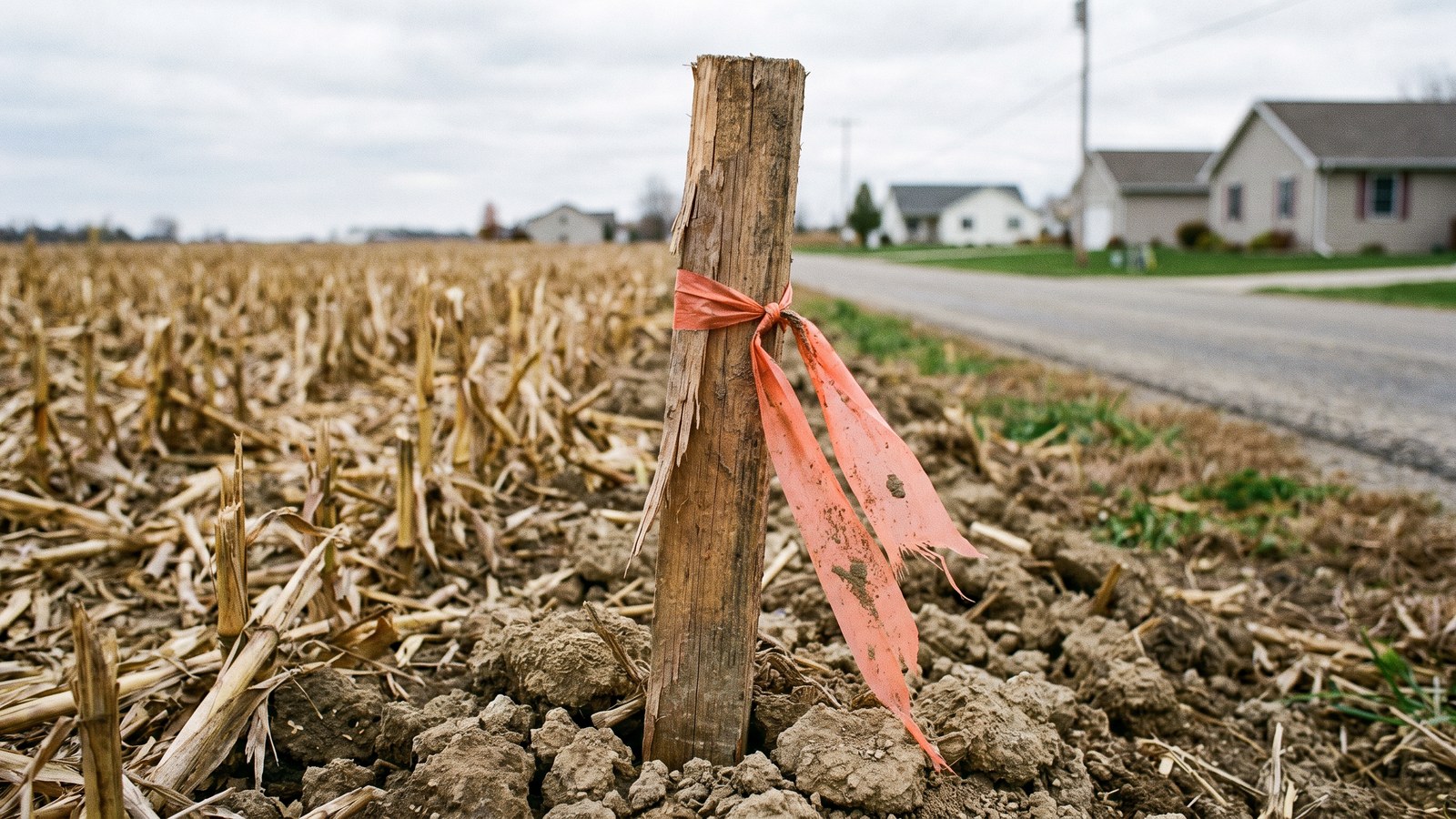
The charge, step by step
Conversion happens
The auditor figures the savings
Only the converted part is charged
The charge becomes a lien
Some conversions are excused
The statute puts the lien on the land, not on a particular person. Between a private buyer and seller, the purchase contract should say who pays any recoupment, and whether the buyer will file an initial CAUV application. If the buyer is a government body or a company with eminent domain power that converts the land, the statute says that buyer pays and cannot pass it back to you, with some exceptions.
If the buyer is a government body or utility
Some rural land is bought by a public entity, such as a park district or a road authority, or by a private company that has the power of eminent domain. Ohio law treats those buyers differently. If such a buyer acquires CAUV land and converts it, the statute says the buyer must pay the recoupment charge and may not pass it back to the person it bought from, directly or indirectly. A person harmed by a violation can sue for damages.
There are exceptions. For example, if a public entity buys land other than by eminent domain and uses it only for a public purpose that leaves it mostly undeveloped, such as a park district keeping land open within its own boundaries, the charge may not apply at all. If that land is developed later, the charge can be levied then.
Timing matters
CAUV applications are filed with the county auditor only between the first Monday in January and the first Monday in March. So the date you close affects when the new owner can file. A buyer who closes in the fall will usually be looking at the next filing window. Make sure the buyer knows the window, and put their plan for the land in writing.
The charge itself is a lien on the converted land as of January 1 of the tax year in which it is levied. If your closing falls near the turn of the year, ask the title company and the auditor how a possible charge would be handled at closing, and how the contract should split it.
Will your sale trigger it?
Questions to settle before you list
- Is the land currently in CAUV? Your tax bill or the county auditor can confirm it.
- What are the savings for the last three years? Ask the auditor how a recoupment would be figured for your parcel.
- What does the buyer plan to do? Keep farming, build, or split the land? The answer drives whether there will be a charge.
- Is the house on a separate parcel? A farmhouse on its own lot may be treated differently from the farmed acreage.
- Who will pay any charge? Write it into the purchase contract, along with whether the buyer will file the initial application.
Your six options
- Keep the land. Keep filing renewal applications on time, and the savings continue.
- Lease it to a farmer. Renting the land for farming may keep it in agricultural use. Ask the auditor how a lease affects your application.
- Sell to a buyer who will farm it. If they file the initial application, the land can stay in the program.
- List it with an agent. The open market reaches farm buyers and builders alike. Ohio commissions usually run 5.5% to 6%. Make sure the listing discloses CAUV status.
- Sell it yourself. No commission, but you handle the CAUV terms and the title work.
- Sell direct. No commission, no repairs and no showings. Closings can happen as fast as 7 days and typically take around 21. A direct buyer may not keep the land in farm use, so plan for the recoupment in your net. The price will be below full retail.
With CAUV land, compare each offer after the costs of sale and after any recoupment charge, depending on who the contract says pays it. A higher offer from a builder may come with a charge. A lower offer from a farmer may not. Work out the real net on each path before you choose.
Get a number to compare
We buy houses across Cleveland and Northeast Ohio, including rural properties. Ask for an offer and set it next to a farm buyer's offer or a listing, with the recoupment counted in. If another path nets you more, we will tell you.
This article summarizes Ohio Revised Code §§ 5713.30, 5713.31 and 5713.34 as we read them. It is general information, not tax or legal advice. We did not cover the conservation-practice rules, the board of revision's good-cause standard or the valuation formula, and we do not quote any dollar amounts. Talk to your county auditor and an Ohio real estate attorney before selling CAUV land.
Questions about selling rural property?
Call or send us the address. We will walk through how a sale could work with your land's tax status, and leave the decision with you.
Frequently asked questions
Current Agricultural Use Value is an Ohio program that lets qualifying farmland be valued for property tax at its value for agricultural use instead of its market value. The owner files an application with the county auditor.
Land of at least ten acres devoted exclusively to listed agricultural uses during the three calendar years before the application year. Land under ten acres can qualify if those uses produced an average yearly gross income of at least $2,500 over that period, or there is evidence of anticipated income of that amount.
When land is converted out of agricultural use, Ohio charges back the tax savings on the converted land for the three tax years immediately before the year of conversion. The charge is a lien of the state on the converted land as of January 1 of the tax year in which it is levied.
The statute ties the charge to conversion, not to the sale. But conversion includes a new owner failing to file an initial CAUV application without good cause. So if the buyer does not keep the land in the program, the charge can follow.
The auditor divides the parcel into economic units, values each one, and levies the charge only against the converted portion.
The statute makes the charge a lien on the land. Between a private buyer and seller, who pays is something to settle in the purchase contract. If the buyer is a public entity or a company with eminent domain power that converts the land, the statute says that buyer must pay the charge and cannot pass it back to the seller, with some exceptions.
If a public entity or a private company with eminent domain power acquires and converts the land, the statute says that buyer must pay the recoupment charge and may not pass it back to the seller. There are exceptions, such as a public entity that keeps the land principally undeveloped for a public purpose within its boundaries.
Between the first Monday in January and the first Monday in March, with the county auditor. The first filing is an initial application; later years are renewals.
Find out what we would pay
Free, no obligation, and no pressure. If our number does not work for you, that is a perfectly fine answer.
Keep reading

Liens, Taxes & Title
Ohio Has Two Homestead Exemptions. This Is the Tax One
The property tax reduction for owners 65 and over follows the person, not the house — so a buyer does not inherit it, and the tax bill changes hands upward.
Liens, Taxes & Title
Old Mineral Rights Under Your Ohio House
A title search turns up a mineral reservation from 1912 and the closing stalls. Ohio has a statute that can deem a long-dormant mineral interest abandoned and vest it back in the surface owner — with a notice, a twenty-year test and a tight filing window.

The Cash Offer Process
The Ohio Conveyance Fee: Who Pays It, and When There Is None
It is two levies, not one. The state sets the auditor’s fee, the county may add a transfer tax, and a list of twenty-five exemptions can reduce the whole thing to nothing.