Old Deed Restrictions in Ohio: The 40-Year Marketable Title Act
Many Cleveland-area homes come with decades of paperwork. Somewhere in the chain there may be an old restriction, a right-of-way nobody uses, or a claim from a family long gone. Ohio has a law built to clear out a lot of that old history. It is called the Marketable Title Act, and it turns on one number: forty years.
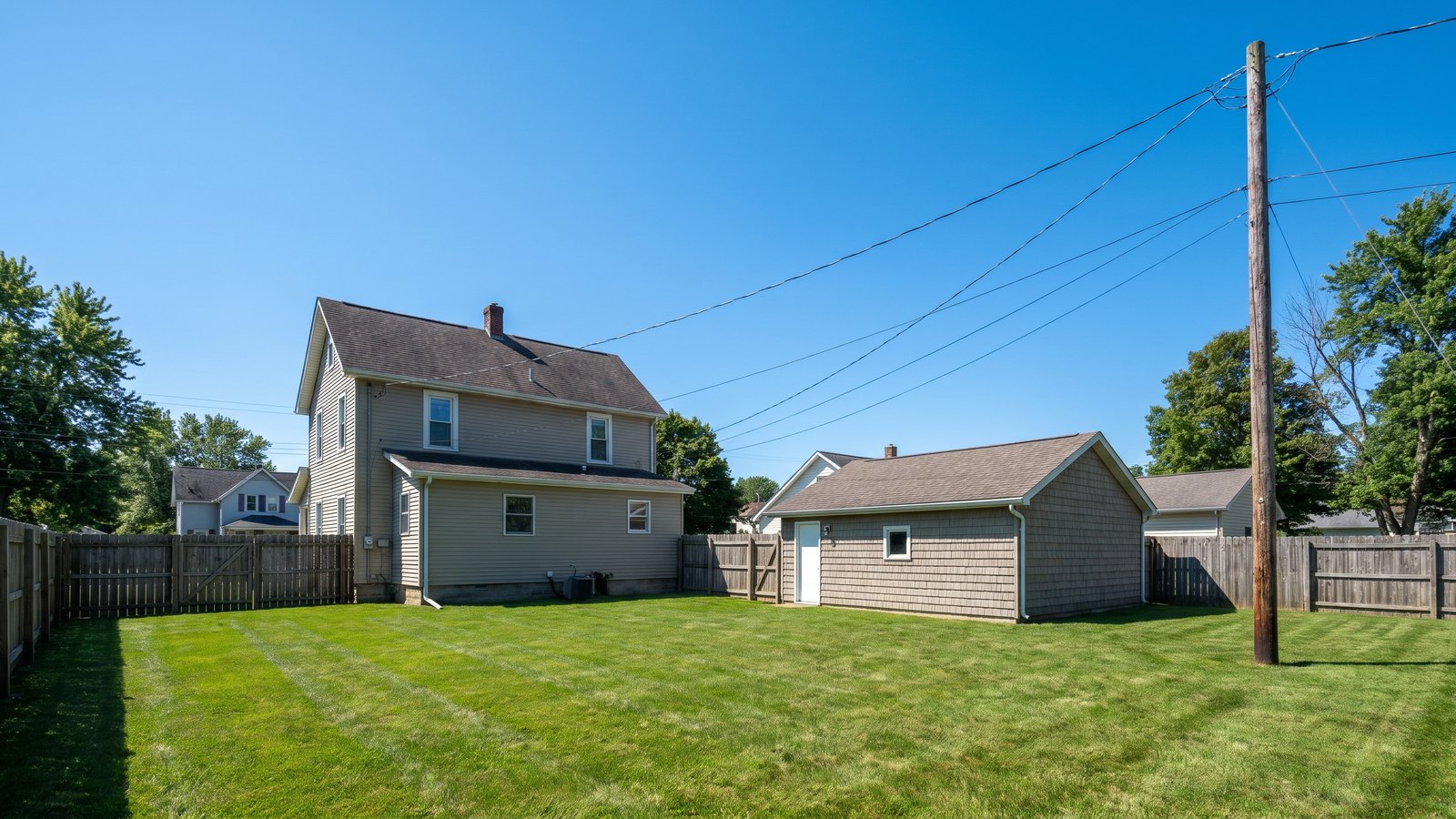
Two neighboring backyards divided by a weathered picket fence with a worn dirt footpath running along the fence line under mature trees
If your chain of recorded title goes back 40 years or more without a break, Ohio's Marketable Title Act generally clears claims that depend on events before your "root of title," unless someone preserved them by recording a notice. The Act never clears utility and visible easements, coal rights, or government interests.
The 40-year idea in plain words
ORC 5301.48 says a person with an unbroken chain of recorded title for 40 years or more has a "marketable record title." The starting point is your "root of title," which ORC 5301.47 defines as the most recent deed or other title transaction recorded as of a date 40 years before today's check.
Then ORC 5301.50 does the clearing. It says that title is held free and clear of claims that depend on anything that happened before the root of title, and it declares those claims null and void. That covers claims by people inside or outside Ohio, private or governmental, subject to the exceptions below.
| Old item in your title history | Generally cleared after 40 years? | Why |
|---|---|---|
| Use restriction mentioned only as "restrictions of record" | Usually yes | A general reference does not preserve it (5301.49(A)) |
| Restriction specifically identified by its recorded document | Can survive | Specific identification preserves it (5301.49(A)) |
| Claim someone preserved with a recorded notice | No | Preserved by notice (5301.51) |
| Utility or railroad easement | No | Exception (5301.53(B)) |
| Easement you can see being used, or shown by a pipe, wire or pole | No | Exception (5301.53(C)-(D)) |
| Coal rights; government interests | No | Exceptions (5301.53(E), (G)) |
A simplified summary of ORC 5301.47 to 5301.53. Applying the Act to a real deed is a job for a title company or an Ohio real estate attorney.
Is an old title issue holding up your sale?
Send us the address. We will give you a written cash offer and work with a title company to sort out what the old records actually mean.
Finding your root of title: an example
Here is how the definition works with made-up dates. Say marketability is checked on November 11, 2026. Count back 40 years, which lands exactly on November 11, 1986. Now look for the most recent deed or other title transaction recorded on or before that date.
If your grandparents' deed was recorded in 1979 and the next deed was not recorded until 1994, the 1979 deed is the root of title. Claims that depend on events before 1979 are the ones the Act can clear, unless an exception applies or someone preserved them.
Who the Act protects
ORC 5301.47(D) defines a "person dealing with land" broadly: a buyer, a mortgage lender, a land contract buyer, a creditor placing a lien, or anyone else trying to acquire an interest. Under ORC 5301.50, all of them take the title free of the cleared claims. Documents recorded after the root still count, but ORC 5301.49(D) says recording something later does not bring a cleared claim back to life.
What a "title transaction" includes
The root of title does not have to be a warranty deed. ORC 5301.47(F) lists many kinds of title transactions: title by will or inheritance, a tax deed, a sheriff's deed, a court decree, an executor's or guardian's deed, a quitclaim deed and even a mortgage. So a house that passed through probate or a sheriff sale still has a chain the Act can work with.
What the Act never clears
ORC 5301.53 lists interests the Act cannot bar or extinguish, no matter how old:
- A landlord's or tenant's rights under a lease (with a narrow mineral exception).
- Easements for any railroad or public utility purpose.
- Easements you can clearly see by physical evidence of use, like a worn driveway.
- Easements shown by a pipe, valve, road, wire, cable, conduit, duct, sewer, track, pole, tower or similar facility, whether or not you can see it.
- Rights in coal and related mining rights.
- Certain corporate mortgages recorded under ORC 1701.66.
- Interests of the United States, Ohio, or any local government or agency.
Under ORC 5301.51(B), if the same record owner has continuously possessed the land for 40 years or more, that possession counts the same as filing a notice. And adverse possession or use after the root of title is also preserved under ORC 5301.49(C).
How an old claim gets preserved
Someone who wants to keep an old interest alive must record a notice during the 40 years after the root of title. ORC 5301.51(A) says no disability or lack of knowledge stops the clock. ORC 5301.52 sets what the notice needs:
An affidavit
The claim and who it helps
A full land description
The record owners
Recorded with the county
What about old oil, gas or mineral claims?
Mineral interests have their own Ohio rule, the Dormant Mineral Act in ORC 5301.56. Our post on severed mineral rights covers it. Coal rights are a separate exception that the Marketable Title Act does not clear.
Common situations
Your deed says "subject to restrictions of record"
That kind of general wording does not, by itself, preserve a restriction created before your root of title. A title search can show whether any restriction was specifically identified in your chain of deeds or preserved by a recorded notice.
An old deed has a racial restriction
Ohio law makes it unlawful to include such a covenant in a transfer or to honor it. Our post on fair housing for Ohio sellers covers this. Never copy it into a new deed.
A neighbor has walked a path across the back of your yard for years
An easement you can clearly see being used is an exception the Act does not clear. That needs a closer look from a title company or attorney before you promise a buyer the yard is free of it.
Know your net proceeds
Title questions can add time and legal costs. Here is a simple example with made-up numbers for a $150,000 house with a $60,000 mortgage.
- Listing: a 6% commission is $9,000, leaving $81,000 after the payoff, before any title work, holding costs and closing costs.
- Direct cash sale: no commission. The offer minus the payoff, closing costs and any title work is your net.
- Compare the two nets, not the two prices. A cash offer is often lower than a top listing price.
Your six options
| Option | Old title items matter? | What to weigh |
|---|---|---|
| Keep it | Only when you sell or refinance | Time can clear more claims |
| Repair it | No effect on title | Cash and time up front |
| Rent it out | Easements still apply | Landlord duties |
| List with an agent | Buyer's title search will find them | Commissions often run 5.5% to 6% |
| Sell it yourself (FSBO) | Same title search | You handle the questions |
| Sell direct for cash | Title still searched at closing | We can close as fast as 7 days, typically around 21 |
Every sale needs clear title. How you sell changes your price, costs and timing.
Get an offer while the title gets sorted
We buy houses across Cleveland and Northeast Ohio as-is. Ask for a written offer and compare your net with a listing.
This article summarizes Ohio Revised Code 5301.47 to 5301.53 and 4112.02(H)(9) as we read them in November 2026. It is general information, not legal advice. We did not cover how courts apply the Act to particular deeds or title insurance practice. Talk to an Ohio real estate attorney or title company about your property.
Questions about something old in your deed?
Call or send us the address. We will walk you through the sale side, and you decide what comes next.
Frequently asked questions
It is a set of laws, ORC 5301.47 to 5301.56, that gives an owner with a 40-year unbroken chain of recorded title a "marketable record title." Many older claims that depend on events before the root of title become null and void.
It is the most recent deed or other title transaction that was recorded as of a date 40 years before the date marketability is being decided. Its effective date is the date it was recorded.
No. A general reference to easements, use restrictions or other interests created before the root is not enough. The deed must specifically identify the recorded document that created it.
By recording a notice, in affidavit form, during the 40 years after the root of title. Not knowing about the deadline does not stop the clock. Forty years of continuous possession by the same owner also counts.
No. It does not bar railroad or public utility easements, easements you can see being used, or easements shown by a pipe, wire, sewer, pole or other facility, whether or not you can see it.
No. The Act does not bar interests of the United States, Ohio or local governments and agencies, or rights in coal.
Ohio law makes it unlawful to include such a restrictive covenant in a transfer, or to honor or enforce one. Do not copy it into a new deed.
Find out what we would pay
Free, no obligation, and no pressure. If our number does not work for you, that is a perfectly fine answer.
Keep reading
Liens, Taxes & Title
A Problem With the Title: Affidavit or Lawsuit?
Ohio has a cheap recorded affidavit for gaps in the record and a court action for genuine adverse claims. Using the wrong one wastes months.

Liens, Taxes & Title
Old Mineral Rights Under Your Ohio House
A title search turns up a mineral reservation from 1912 and the closing stalls. Ohio has a statute that can deem a long-dormant mineral interest abandoned and vest it back in the surface owner — with a notice, a twenty-year test and a tight filing window.

Liens, Taxes & Title
Which Deed Do You Sign When You Sell an Ohio House?
All four Ohio deed forms hand over the same thing. What changes is what you promise — and an executor's deed promises something different again.