A Contractor Put a Lien on Your House. You Can Force the Issue
A contractor dispute that ends in a lien feels like a dead end. The work is unfinished or disputed, you are not paying, and now there is something recorded against your house that will stop a sale. Ohio law is more even-handed than that position suggests. It puts a short deadline on the contractor for filing in the first place — shorter for a house than most articles say — and it gives you a way to force them either to sue you or to lose the lien altogether.
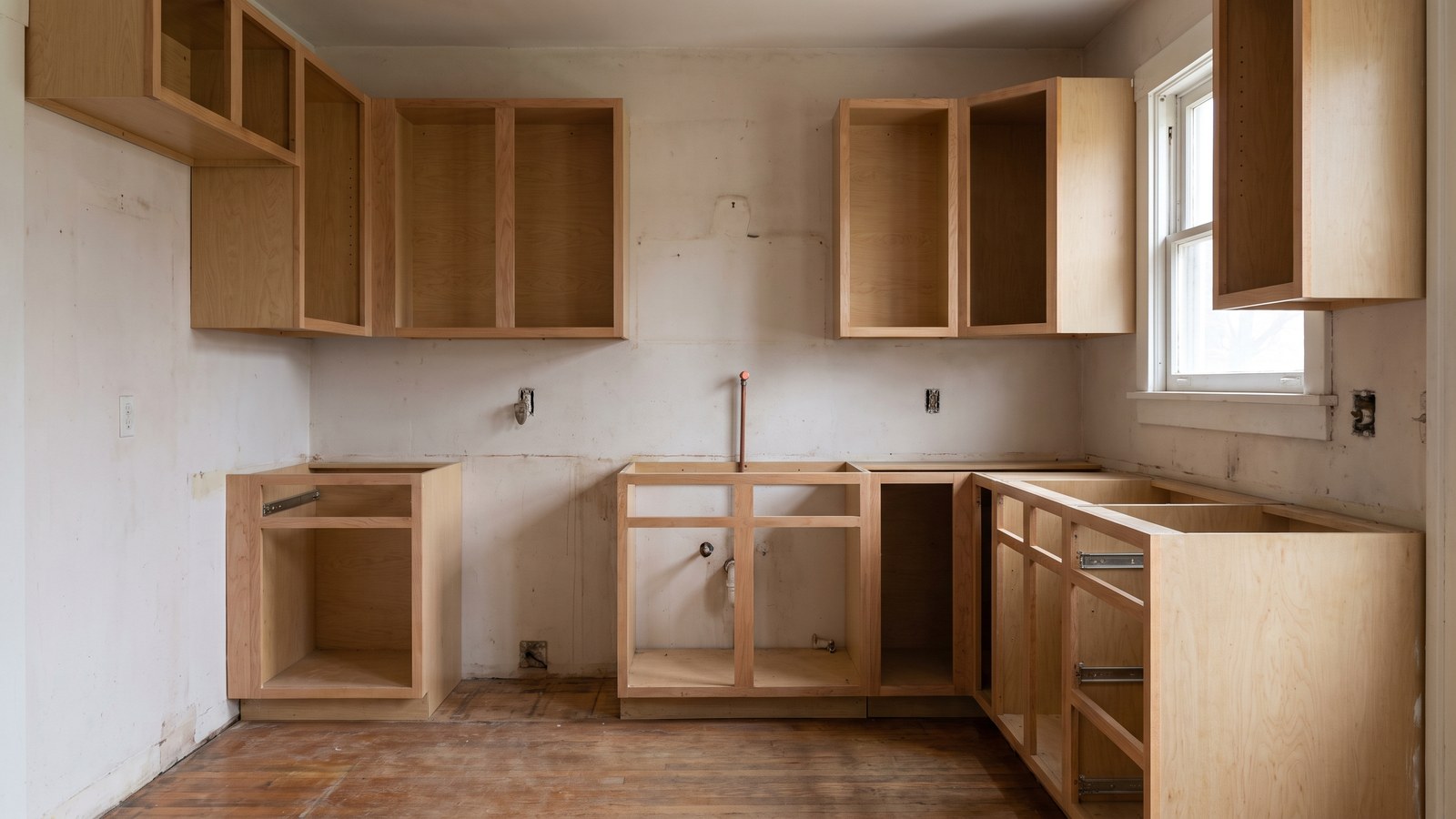
A half-finished renovation in an empty room with bare drywall partly installed, a folded step ladder against the wall and a crumpled dust sheet on the subfloor
For a one- or two-family dwelling, an Ohio mechanics' lien must be filed within sixty days of the last work or material — not the seventy-five days most articles quote, which applies to other projects. And once a lien is on your house, you can serve a notice to commence suit: if the lienholder does not sue within sixty days of service being completed, the lien is void and the property wholly discharged. The debt survives. The hold on your house does not.
The deadline for a house is shorter than you have been told
Search this subject and you will be told a contractor has seventy-five days to file. That number is real, but it is the residual category — the one that applies when nothing more specific does. Ohio sets out three windows, and a house has its own.
Filing deadlines for the lien affidavit, ORC 1311.06(B)
| Where the lien arises | Deadline from the last labour, work or material |
|---|---|
| A one- or two-family dwelling, or a residential unit of condominium property | 60 days |
| A lien arising under ORC 1311.021 | 120 days |
| Anything not in the two rows above | 75 days |
We have not read 1311.021 and so are not describing what falls under it — we list it because the statute does. For an ordinary Greater Cleveland house, the row that matters is the first one.
The clock runs from the date on which the last labour or work was performed, or the last material furnished, by the person claiming the lien. That is why the affidavit has to state the first and last dates of the claimant's work — those dates are what make the filing timely or not.
We are not going to tell you that a lien filed on day sixty-one is automatically void, because whether a particular filing was timely turns on facts — when the work actually stopped, whether later visits counted as work, what the affidavit says. But if you are looking at a lien on your house and the dates on it are stale, that is the first thing to take to an attorney.
A lien does not have to stop your sale
It is a claim to be resolved, not a bar to selling. We buy houses with liens recorded against them and would rather hear about it on the first call. Tell us what happened and we will be straight about what it changes.
What is actually recorded against you
The lien is created by an affidavit filed with the recorder of the county where the property sits. The statute sets out what it has to contain, and it is worth reading your copy against this list:
- The amount due over and above all legal setoffs — not simply the amount invoiced.
- A description of the property to be charged with the lien.
- The name and address of the person to or for whom the labour or work was performed or material furnished.
- The name of the owner, part owner or lessee, if known.
- The name and address of the lien claimant.
- The first and last dates the claimant performed any labour or work, or furnished any material, to the improvement.
One point of fairness to the contractor: the statute says that if the affidavit is recorded, the omission or inaccuracy of any address does not affect its validity. A wrong address is not the technicality that undoes a lien.
The move most owners never hear about
Here is the part that changes the balance. You do not have to wait for the contractor to decide what happens next. Ohio lets an owner — or a part owner, lessee, mortgagee, or any other person with an interest in the property — serve a written notice to commence suit on the lienholder.
It is a formal process rather than a letter you post yourself. The notice is served by the sheriff of the county where the land is, on payment of the same mileage and fees as apply to serving a summons. Where the lienholder's address is elsewhere in Ohio, the sheriff forwards it to the sheriff of that county. At your request the sheriff may send it by certified mail, return receipt requested — and must do so where the address is outside the state.
Service is complete when the return receipt comes back showing delivery. Where delivery fails or is refused, service is deemed complete after the sheriff sends a second copy by ordinary mail, provided that envelope is not returned by the postal authorities within fourteen days.
Within thirty days after service is completed, the person who sought service has to execute an affidavit setting out how service was accomplished, attach a copy of the notice bearing the sheriff's return or the certified mail receipt, and file those with the county recorder. Skip that and you have gone to the trouble of serving a notice without putting the proof where it counts. This is a large part of why the exercise is usually run by an attorney rather than attempted alone.
And then the clock runs against the lienholder:
If the lienholder fails to commence suit upon the lien within sixty days after completion of service upon him of the notice to commence suit, or if the action is commenced but dismissed with prejudice before adjudication, the lien is void and the property wholly discharged from the lien.
Void. The property wholly discharged. That is a considerably stronger outcome than most owners imagine is available to them, and it puts the decision back where it belongs — with the person who chose to record a claim against your house.
The catch, stated plainly
It would be easy to read the above as a way of making a contractor's bill disappear. It is not, and the statute says so in the very next sentence.
When a lien is void by reason of failure to commence suit within sixty days after service of the notice to commence suit, the claim upon which the lien was founded is not prejudiced by the failure, except for the loss of the lien as security for the claim.
So the debt is untouched. What the contractor loses is the security — the hold on your house — not the right to come after you for the money by ordinary means. If you genuinely owe for work properly done, this route clears your title and leaves the bill exactly where it was.
Which is the honest way to think about it. The notice to commence suit is not a way to avoid paying a contractor. It is a way to stop an unresolved dispute from sitting indefinitely on your property while nobody does anything about it.
The other route: post security and move on
If you need the title clear on a timetable that a sixty-day standoff will not fit, there is a second path. Before or after suit is commenced — and whether or not a notice to commence suit has been served — security may be provided to release the lien.
The statute lists what qualifies, including a bond, a cash deposit, or a general obligation of a state or the United States government. The amount is double the claim secured by the lien, or, where the claim exceeds five thousand dollars, one and one-half times the amount.
That is not cheap, and it does not resolve the underlying argument. What it does is separate the dispute from the property, which is occasionally exactly what a seller needs.
On a timetable that a standoff will not fit?
Sometimes the cleanest answer is to sell the house and let the money be argued about at closing instead. We can close as fast as 7 days once the position is clear. No obligation to find out.
How it clears if you simply sell
None of the above is compulsory. A mechanics' lien, like any other lien, is a claim against the proceeds rather than a bar to selling, and the ordinary route is that the title company finds it, obtains a payoff, and settles it from the sale money at closing. We have set that sequence out in detail in our article on judgment liens and will not repeat it here — the mechanics are the same once you are at the closing table.
The reason to consider the notice to commence suit instead is where you dispute the debt. Paying a lien you believe is wrong, purely to get a sale closed, is a real cost. Forcing the lienholder to prove it — or lose the lien — is the alternative the statute gives you, and it is worth knowing it exists before you decide to simply pay.
Where this leaves your options
- Keep it. The lien stays recorded. It does not force a sale by itself, but it will surface the moment you try to sell or refinance.
- Repair, then list. Consider carefully who you engage next, and keep records. A second dispute on the same property is a genuinely bad outcome.
- Rent it out. The lien remains against the property throughout, and still has to be dealt with whenever you sell.
- List it with an agent. Expect 5.5%–6% commission plus closing costs and a market timeline. A recorded lien is something buyers' lenders will want resolved before closing.
- Sell it yourself. Same requirement, and you will be managing the payoff or release correspondence.
- Sell direct to a cash buyer. No repairs and no cleanout, closing as fast as 7 days and typically around 21 days. Useful where the house is half-finished and you have no appetite to finish it.
We will not claim a cash sale nets more — on a house where the work was nearly done, finishing it and listing often wins. Work out the net on each route, including the lien payoff and what it would cost to complete the job properly, and compare those numbers. Where the dispute itself is the obstacle rather than the money, deal with the dispute first.
The filing deadline provision, in full
(B) The affidavit shall be filed within one of the following periods: (1) If the lien arises in connection with a one- or two-family dwelling or in connection with a residential unit of condominium property as defined in Chapter 5311. of the Revised Code, within sixty days from the date on which the last labor or work was performed or material was furnished by the person claiming the lien …
This article summarises ORC 1311.06 and 1311.11 as we read them and is provided for general information. It is not legal advice. We have not covered who is entitled to a lien in the first place, priority against mortgages or tax liens, or the procedure once suit is commenced — those sit in other sections we did not read. Serving a notice to commence suit is a formal process with a step that must be completed within thirty days; it is not something to attempt from an article. Talk to an Ohio construction or real estate attorney.
Half-finished house and a lien you dispute?
That combination is more common than you would think, and it is not a reason we would walk away. Call or text 216-899-CASH and tell us where the work stopped and what is recorded — we will tell you honestly whether selling helps or whether you should fight it first.
Frequently asked questions
Sixty days from the date the last labour or work was performed or material was furnished, where the lien arises in connection with a one- or two-family dwelling or a residential condominium unit. That is shorter than the seventy-five days that applies to the residual category of projects, which is the figure most articles quote.
The amount due over and above all legal setoffs, a description of the property, the name and address of the person for whom the work was done, the owner's name if known, the claimant's name and address, and the first and last dates on which labour or work was performed or material furnished. It is filed with the recorder of the county where the property is.
Yes. An owner — or a part owner, lessee, mortgagee or any other person with an interest in the property — may serve a written notice to commence suit on the lienholder. If the lienholder does not commence suit within sixty days after service is completed, the lien is void and the property is wholly discharged from it.
By the sheriff of the county where the land is, on payment of the same mileage and fees as for serving a summons. Where the address is elsewhere in Ohio the notice is forwarded to that county's sheriff. At your request the sheriff may instead send it by certified mail with return receipt requested, and must do so if the address is out of state.
Yes, and missing it would waste the whole exercise. Within thirty days after service is completed you must execute an affidavit setting out how service was accomplished, attach the notice with the sheriff's return or the certified mail receipt, and file those with the county recorder.
No, and this is the catch worth understanding before you celebrate. The statute says that where a lien is void for failure to commence suit, the claim on which the lien was founded is not prejudiced by that failure — except for the loss of the lien as security. The contractor can still pursue the money. They have simply lost their hold on the house.
There is a security route. Before or after suit is commenced, and whether or not a notice to commence suit has been served, a bond, cash deposit or other listed security may be provided in double the amount of the claim — or, where the claim exceeds five thousand dollars, one and one-half times the amount.
The statute addresses that too. If the action is commenced but dismissed with prejudice before adjudication, the lien is void and the property wholly discharged, in the same way as if suit had never been brought.
Find out what we would pay
Free, no obligation, and no pressure. If our number does not work for you, that is a perfectly fine answer.
Keep reading

Liens, Taxes & Title
There Is a Judgment Lien on Your Ohio House. Can You Still Sell?
Yes — a lien is a claim on the proceeds, not a padlock on the deed. But the "judgment liens expire after five years" you have read is wrong, and it matters.

The Cash Offer Process
Why We Use a Title Company — Protecting Both Buyer and Seller
What a title company actually does, why every deal goes through one, and why a buyer who suggests skipping it is telling you something important about themselves.

Why Sell As-Is
Expensive Repairs Homeowners Face When Listing — And Why You Rarely Get That Money Back
What a buyer’s inspection typically demands, what those repairs cost in the Cleveland area, and why spending $20,000 to list rarely returns $20,000 in price.