You Inherited a House That Still Has a Mortgage
When a parent or spouse dies, the mortgage statements keep coming. Many families worry the bank will demand the whole balance at once. Federal law answers that worry for most family heirs. What it does not do is pay the loan, so the real question is what you want to do with the house.
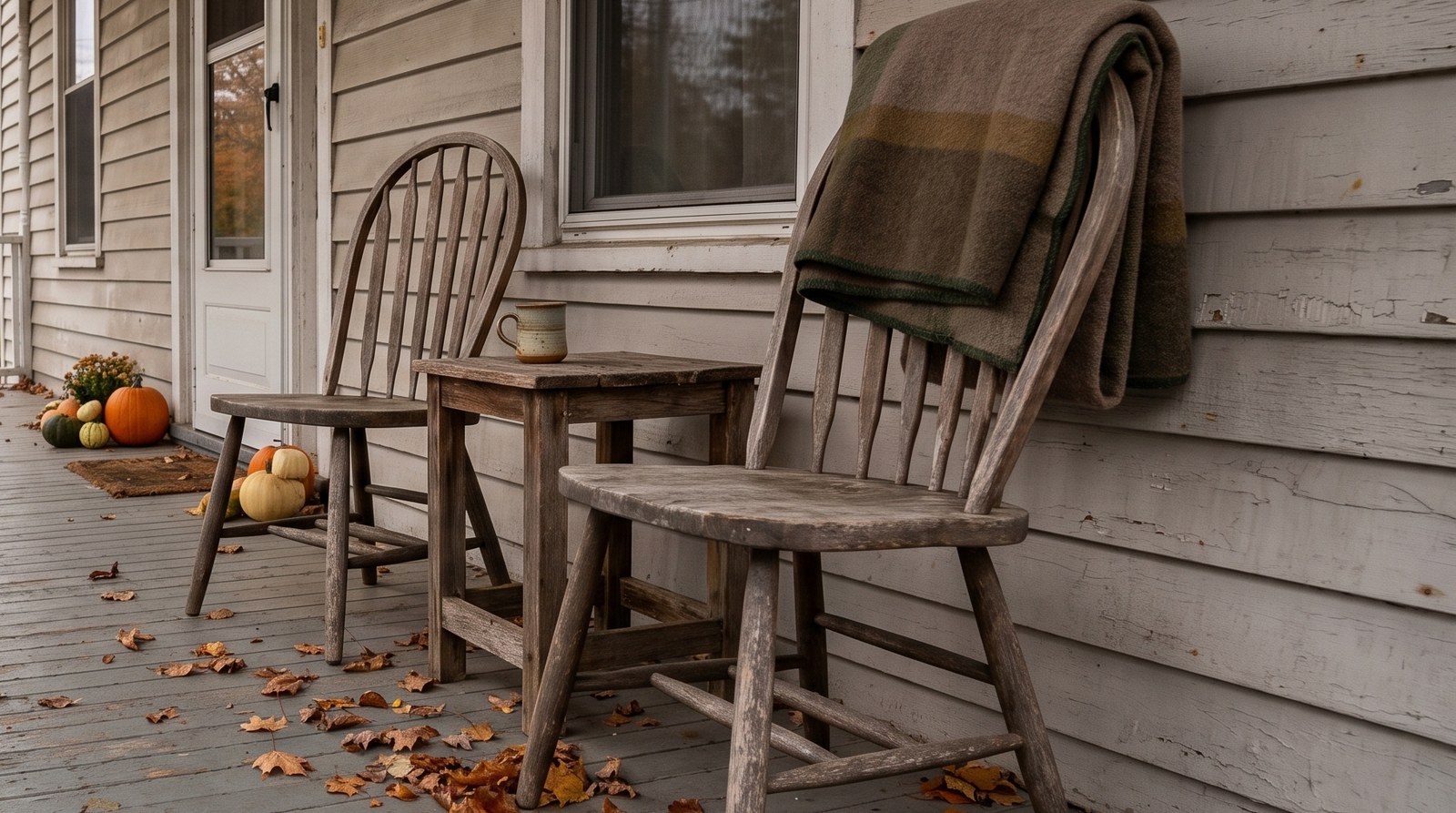
The front porch of an older grey clapboard house in autumn, with a wall-mounted metal mailbox holding envelopes, a lit porch lamp, potted mums and fallen leaves on the steps
If the house passed to a relative when the borrower died, or the borrower's spouse or children became owners, federal law says the lender may not call the loan due under its due-on-sale clause because of that transfer. The loan is not erased. Someone still has to pay it, or it gets paid off when the house is sold. Write to the servicer, ask what documents it needs, and then decide whether to keep, rent or sell.
The fear, and what the law actually says
Most mortgages have a due-on-sale clause. It lets the lender demand the full balance if the house is transferred. So when a parent dies and the house passes to the children, it is natural to fear a letter demanding everything at once.
A federal law, often called the Garn-St Germain Act, limits that clause for home loans. For a loan on residential property with fewer than five dwelling units, it lists transfers where the lender may not use the due-on-sale clause. Three of them matter most after a death:
(3) a transfer by devise, descent, or operation of law on the death of a joint tenant or tenant by the entirety; … (5) a transfer to a relative resulting from the death of a borrower; (6) a transfer where the spouse or children of the borrower become an owner of the property
That covers the most common family situations: a house left to a son or daughter, a spouse who becomes the owner, or a co-owner who takes the house when the other owner dies. It does not clearly cover every case. If the house went to a friend or a non-relative, ask an attorney how the rule applies.
This rule only stops the lender from calling the loan due because of the transfer. The balance is still owed and the mortgage stays on the house. If payments stop, the loan can still go into default like any other. Keep track of the monthly payment while the family decides what to do.
Want to know what the house would net after the payoff?
Send us the address and a rough idea of the loan balance. We will give you a no-obligation cash offer so you can see what would be left after the mortgage is paid at closing.
Getting the servicer to talk to you
A common first problem is simple: the servicer will not discuss the loan with someone whose name is not on it. Federal servicing rules give heirs a way in. They call an heir who received the house through one of these transfers a successor in interest.
If you send a written request that names the borrower who died and includes information to identify the loan, the servicer must answer with a written list of the documents it reasonably needs to confirm who you are and that you own an interest in the house. It must also give you contact information, including a phone number. Once the servicer confirms you, the rules treat you as a borrower for most servicing purposes.
Find the latest statement
Write a short letter
Gather the documents
Keep copies
Ask for the numbers

Which transfers the rule covers
| How the house passed | Lender may not call the loan due for this transfer? | Source |
|---|---|---|
| To a relative, because the borrower died | Yes, it is on the list | 12 U.S.C. 1701j-3(d)(5) |
| Spouse or children of the borrower became owners | Yes, it is on the list | 12 U.S.C. 1701j-3(d)(6) |
| Co-owner took it when a joint tenant or tenant by the entirety died | Yes, it is on the list | 12 U.S.C. 1701j-3(d)(3) |
| To a friend or other non-relative under a will | Not clearly on the list | Ask an attorney |
| Heirs sell the house to a buyer | Not protected. The loan is paid off at closing | Ordinary sale |
The rule applies to loans on residential property with fewer than five dwelling units. Reverse mortgages work differently after a death, and we cover them in a separate post.
Where Ohio probate fits in
The federal rules deal with the loan. Ohio law decides who owns the house and who can sell it. If the house passes through probate, the will is filed in the county where the person lived at death, so for a Cuyahoga County resident that is the Cuyahoga County Probate Court. The executor or administrator must file an inventory of the person's real property within three months of being appointed, unless the court grants more time.
If the will gives the executor a power to sell real property, Ohio law says no probate court order is needed to go ahead with the sale. Without that power, the sale usually needs court approval. Some houses skip probate altogether, such as one held with a survivorship deed or passed by a transfer-on-death affidavit. Either way, whoever has the right to sell signs the deed, and the mortgage is paid off from the sale proceeds at closing.
Knowing the real payoff number
The balance on a monthly statement is not the same as the amount it takes to pay the loan off. Interest keeps adding up day by day, and there may be fees or missed payments since the death. Before you compare options, ask for a payoff statement.
Federal rules say that for a loan secured by a home, the servicer must send an accurate statement of the total amount needed to pay the loan in full as of a specified date. It must arrive within a reasonable time, and no more than seven business days after a written request from the borrower or someone acting for them. There are exceptions, for example when the loan is in bankruptcy or foreclosure. If you sell, the title company will order its own payoff before closing, but having the number early helps the family plan.
With the payoff in hand, you can do simple math. Take a fair estimate of what the house would sell for, subtract the payoff and the costs of selling, and you have a rough idea of the equity. If that number is small or below zero, that is important to know before anyone spends money on repairs.
Keeping it: questions to ask first
- Who will make the payment? If several heirs own the house together, agree in writing who pays what, and what happens if someone stops.
- Can that person carry it every month? Add the mortgage payment, property taxes, insurance, utilities and upkeep.
- Does anyone want to live there? A house nobody uses still costs money every month.
- What does the estate need? The executor may need the house sold to pay debts or divide the estate fairly. Ask the estate attorney before deciding.
Deciding what to do
Your six options
- Keep the house. Keep up the payments, and confirm your successor status so the servicer will work with you. This only works if someone can carry the payment, taxes and insurance.
- Repair it, then sell. Repairs may raise the price, but you keep paying the mortgage while the work is done. Get written quotes before you decide.
- Rent it out. Rent may cover the payment, or it may not. You also take on the work and risk of being a landlord.
- List it with an agent. The open market often brings the highest price for a house in good shape. Ohio commissions usually run 5.5% to 6%, and the mortgage keeps running until closing.
- Sell it yourself. You save the commission, but you handle the marketing, showings and paperwork during an already hard time.
- Sell direct. No commission, no repairs and no showings. Closings can happen as fast as 7 days and typically take around 21, which means fewer mortgage payments while you wait. The price will be below full retail.
For each option, start with the price. Subtract the mortgage payoff, commission, closing costs, repairs, and every month of payments, taxes, insurance and utilities until closing. What is left is what the family keeps. A listed sale often brings a higher price. Whether it nets more depends on those costs and how long it takes.
Put a real number next to your options
We buy inherited houses across Cleveland and Northeast Ohio, with the mortgage paid off through the title company at closing. Ask for an offer and compare it with keeping or listing. If another option leaves you more, we will say so.
What we could not confirm
Some websites say heirs are never personally responsible for a shortfall, or that lenders always require heirs to formally take over the loan. We could not confirm either claim from a primary source, so we are not repeating them. Those questions depend on the loan papers, the estate and the facts. Ask an Ohio probate attorney about your situation. We would rather tell you we do not know than give you a rule that turns out to be wrong for your family.
This article summarizes 12 U.S.C. § 1701j-3(d), 12 C.F.R. §§ 1024.30, 1024.31, 1024.36 and 1024.38, and Ohio Revised Code §§ 2107.11, 2113.39 and 2115.02 as we read them. It is general information, not legal advice. Your loan documents, the estate and your servicer's own procedures all matter. Talk to an Ohio probate attorney before you make decisions about an inherited house.
Questions about an inherited house?
Call or send us the address. We will walk you through how a sale with a mortgage payoff works, and leave the decision with your family.
Frequently asked questions
Not just because the house passed to you. For a home loan on a property with fewer than five units, federal law says a lender may not use a due-on-sale clause because of a transfer to a relative resulting from the borrower's death, or a transfer where the borrower's spouse or children become owners. The loan itself still has to be paid.
No. The federal rule only limits when a lender can call the loan due because of the transfer. The mortgage stays on the house, and if it is not paid, the lender's other rights under the loan remain. If you sell, the loan is paid off out of the sale.
Send a written request that names the borrower who died and gives information to identify the loan, such as the account number. Federal rules say the servicer must respond with a written description of the documents it needs to confirm your identity and ownership, plus contact information including a phone number.
It is someone who received an ownership interest in the house through one of the listed transfers, such as a transfer to a relative at the borrower's death, and whose identity and ownership the servicer has confirmed. Once confirmed, that person is treated as a borrower under the federal servicing rules.
Not all of them in the same way. The federal rules exempt small servicers from some of the servicing policy requirements, including the one about communicating with successors after a death. The written-request rule for potential successors sits in a different section. Ask the servicer which rules it follows.
Under Ohio law, if the will gives the executor a power to sell real property, no probate court order is needed for the sale. Without that power, the sale usually goes through the court. In either case, the mortgage is paid off from the proceeds at closing.
Ask for a payoff statement in writing. Federal rules say the servicer must send an accurate statement of the full amount needed to pay off the loan as of a set date within a reasonable time, and no more than seven business days after a written request, with some exceptions such as a loan in bankruptcy or foreclosure.
A will is admitted to probate in the county where the person lived at the time of death. For someone who lived in Cuyahoga County, that is the Cuyahoga County Probate Court.
Find out what we would pay
Free, no obligation, and no pressure. If our number does not work for you, that is a perfectly fine answer.
Keep reading

Inherited Property & Probate
A Reverse Mortgage Came Due When the Owner Died. Now What?
The federal rules give heirs 30 days from the lender's notice — and the "six months" everyone repeats is the lender's foreclosure deadline, not your extension.

Why Sell As-Is
Inherited a Property in Cleveland? Selling a Probate or Inherited Home
How probate works in Ohio, what you can and cannot do before it completes, and how to handle a house full of a lifetime of belongings when you live somewhere else.
Divorce & Life Changes
Selling an Ohio House After a Co-Owner Dies
If the deed says survivorship, the house did not go into your spouse’s estate — it became yours when they died. Here is the short filing that proves it, and the three things that still catch people out.