You Inherited a House. Does Your Spouse Get Half?
An inheritance received during a marriage is separate property in Ohio, by name, in the statute. That is a good starting point. What decides real cases is two other sentences in the same section: one about who did the work on the house, and one about whether the money can still be traced.
An older grey clapboard two-storey house with a covered front porch, a flowering lilac and a large mature tree beside the front walk
Ohio names an inheritance by one spouse during the marriage as separate property, and a divorce court shall disburse a spouse’s separate property to that spouse, or explain in written findings of fact why it has not. Two things move that line, and the name on the deed is not one of them: appreciation due to either spouse’s labor, money or in-kind contribution is marital, and commingling costs you the protection only when the separate property is not traceable.
This matters for anyone who inherited a house while married and is now facing a divorce, and it matters just as much for anyone still married who wants to know where they stand. The answer decides whether the house is yours to keep or sell, or whether its value goes into the pool the court divides.
We buy houses; we are not a law firm. Everything below is quoted or closely paraphrased from Ohio Revised Code 3105.171 so you can check each division yourself. How a court applies it to your house depends on the evidence, and that is a question for a family-law attorney.
What the statute calls separate
Ohio’s property-division section defines separate property as anything the court finds to be one of seven things. The first is the one that matters here:
An inheritance by one spouse by bequest, devise, or descent during the course of the marriage.
“Bequest, devise, or descent” covers inheriting by a will and inheriting without one. So it doesn’t matter whether a parent left you the house in a will or it came to you through the intestacy rules; either way it is an inheritance. The other limbs include property acquired before the marriage, property excluded by a valid prenuptial or postnuptial agreement, and a gift made to only one spouse, which has to be proven by clear and convincing evidence.
The statute also says what happens to separate property at the end. It does not go into the pot:
Except as otherwise provided in division (E) of this section or by another provision of this section, the court shall disburse a spouse’s separate property to that spouse. If a court does not disburse a spouse’s separate property to that spouse, the court shall make written findings of fact that explain the factors that it considered in making its determination that the spouse’s separate property should not be disbursed to that spouse.
That is strong language, and it is a good place to start. The rest of this article covers the provisions that decide how much of the house is actually still separate by the time a court looks at it.
Need a value before the lawyers do?
Whether the house is separate, marital or partly both, someone is going to need to know what it is worth. We can give you a no-obligation number from the public record and a walk-through, and you can hand it to your attorney or ignore it.
The line that decides most cases: why the value changed
A house you inherited ten years ago is almost certainly not worth what it was worth then. The statute splits the increase in two, and the split depends entirely on the cause.
On the separate side, it lists “passive income and appreciation acquired from separate property by one spouse during the marriage.” It defines passive income as income acquired other than as a result of the labor, monetary, or in-kind contribution of either spouse.
On the marital side, it lists this:
Except as otherwise provided in this section, all income and appreciation on separate property, due to the labor, monetary, or in-kind contribution of either or both of the spouses that occurred during the marriage.
So the question is not whether the house went up in value. It is why it went up. A rising market lifting an inherited house is passive, and passive appreciation stays separate. A kitchen the two of you paid for, a roof one of you put on at weekends, a rental unit one of you managed: those are labor, monetary or in-kind contributions, and the appreciation they caused counts as marital property.
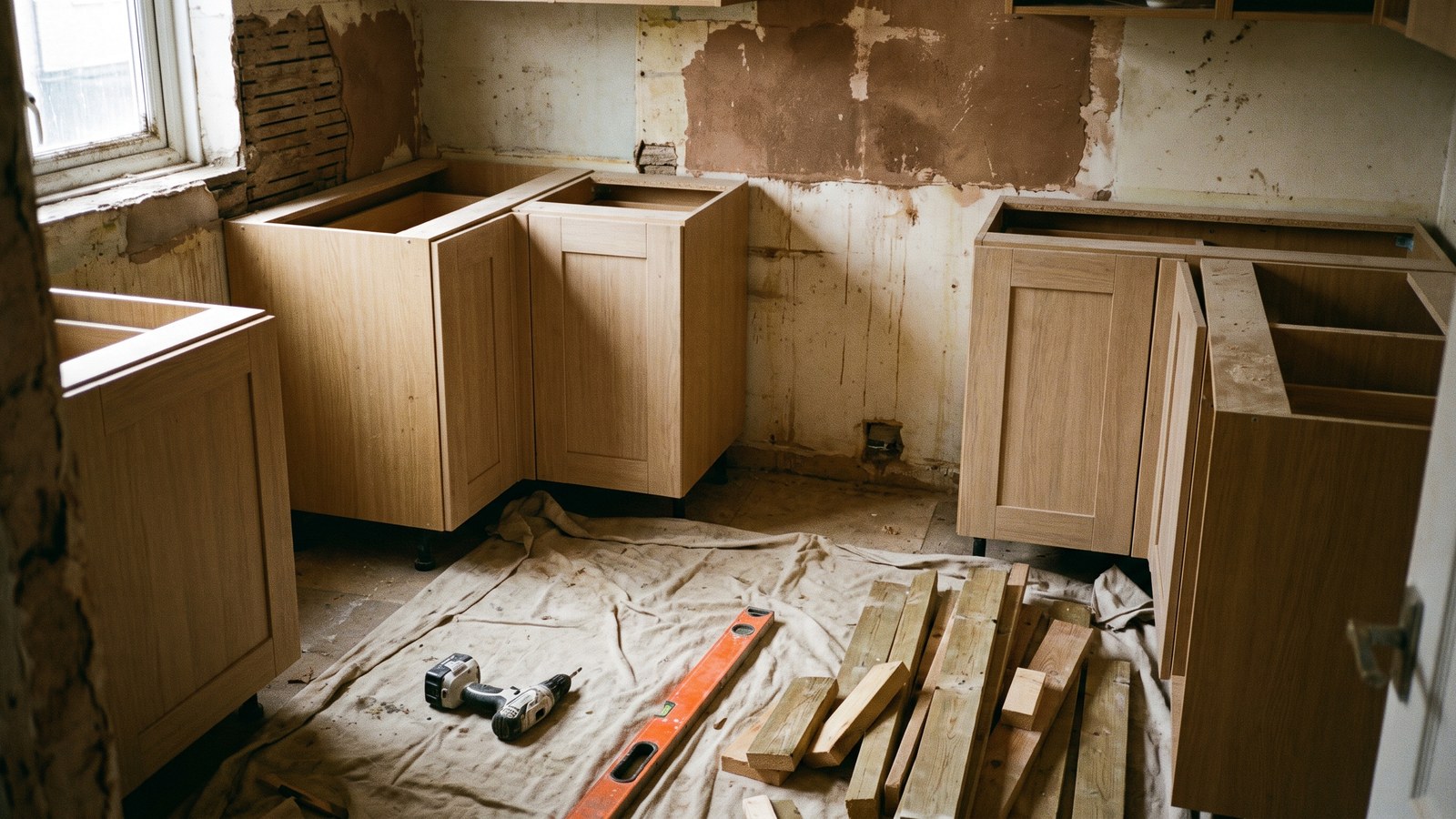
Notice the words “either or both.” The contribution does not have to come from the spouse who did not inherit. If the inheriting spouse spent marital money on the house, or put in their own labor during the marriage, the appreciation that work produced is marital too.
The second line: whether you can still trace it
Inherited property rarely stays in a sealed box. A house gets sold and the money lands in a joint account; a mortgage gets taken out on it to pay for something else; rents from it pay the family’s bills. The statute deals with that in one sentence:
The commingling of separate property with other property of any type does not destroy the identity of the separate property as separate property, except when the separate property is not traceable.
Read it carefully, because it works in the inheriting spouse’s favor more than people expect. Mixing is not fatal on its own. What costs you the protection is losing the trail. The practical consequence is about paperwork: the probate or transfer records showing how the house came to you, the closing statement if it was sold, and the bank statements showing where that money went.
The statute does not say how much tracing is enough, and we are not going to guess. What it makes plain is that traceability is the test. If you inherited a house and are still married, the cheapest protection available to you is a folder with the documents that show where it came from and where its value went.
What does not decide it: the name on the deed
The most common worry we hear is “I put my husband on the deed” or “it’s only in my name, so it must be mine.” The statute addresses both directly:
Except as otherwise provided in this section, the holding of title to property by one spouse individually or by both spouses in a form of co-ownership does not determine whether the property is marital property or separate property.
Title is not the test, in either direction. A house titled only to you can still have a marital share in it through contribution-driven appreciation. A house you retitled into both names is not automatically marital because of the deed. That does not mean a retitling is irrelevant; how and why it happened may be evidence. But the deed alone does not answer the question.
| Usually stays separate | Can become marital | |
|---|---|---|
| The house itself | Inherited by one spouse during the marriage — (A)(6)(a)(i) | Only to the extent the separate part can no longer be traced — (A)(6)(b) |
| Increase in value | Passive appreciation, such as a rising market — (A)(6)(a)(iii) | Appreciation due to either spouse’s labor, money or in-kind contribution — (A)(3)(a)(iii) |
| Rent or other income | Passive income from the separate property — (A)(6)(a)(iii), (A)(4) | Income due to either spouse’s labor, money or in-kind contribution — (A)(3)(a)(iii) |
| Whose name is on the deed | Does not decide it — (H) | Does not decide it — (H) |
| Sale proceeds mixed into joint money | Still separate if traceable — (A)(6)(b) | Separate character lost if not traceable — (A)(6)(b) |
Summarised from ORC 3105.171. Each row is a rule, not an outcome. Which side of a row any part of your house falls on is a finding the court makes on the evidence.
What the court can do with the house itself
Separating the categories is half the job; the other half is what happens to the property. The court must first determine what is marital and what is separate. Each spouse has to disclose everything, and that expressly includes separate property, so an inherited house goes on the disclosure even if you are sure it is yours.
Among the factors the court considers when it divides marital property are the desirability of awarding the family home, or the right to live in it for a reasonable period, to the spouse with custody of the children, and the costs of sale if an asset has to be sold to make the division work. And the court may make orders including:
- An order granting a spouse the right to use the marital dwelling or any other marital or separate property for a reasonable period of time.
- An order requiring the sale or encumbrancing of real or personal property, with the proceeds applied as the court determines.
Note the words “or separate property” in the first one. Even a house that is entirely yours can be the subject of a use order. And if part of the value is marital, a sale can be the simplest way to split it, which is where the sale itself starts to matter.
Want a number your attorney can use?
If a sale is on the table, a written offer gives everyone a figure to work from. Ours comes with the arithmetic laid out, so your attorney can compare it with what a listed sale would net.
Your options, honestly
- Keep it. If the house is separate and the court disburses it to you, keeping it is the default outcome. Any marital share from contribution-driven appreciation may have to be balanced some other way.
- Repair it first. Usually the wrong move during a divorce. Repairs paid with marital money during the marriage are exactly the kind of contribution the statute treats as producing marital appreciation. Talk to your attorney before spending on the house.
- Rent it. Income from a rental you manage is a labor contribution, which the statute can treat as marital while the marriage lasts. Worth knowing before you sign a lease.
- List it. The open market usually produces the highest gross price for a house in good order. Ohio commissions generally run 5.5% to 6%, and a listing takes time, which in a divorce can be the scarcer resource.
- Sell it yourself. No commission, but the work of marketing and negotiating falls on you, while you are in the middle of a divorce.
- Sell direct. No commission, no repairs, no showings, closing as fast as 7 days and typically around 21, at a price below retail. Useful when speed, certainty or the condition of the house matters more than the top figure.
A listed sale carries commission, concessions, repairs and carrying costs. A direct sale carries a lower price and none of those. Neither always nets more. Run both through the same arithmetic, and in a divorce, ask your attorney first whether the proceeds will be treated as separate, marital or split.
Where this leaves you
Three things. An inherited house starts out as separate property in Ohio, and the court shall give it back to you or explain in writing why not. The value it gained splits by cause: market growth stays yours, while growth from either spouse’s work or money is marital. And mixing the house’s value into joint money costs you the protection only if it can no longer be traced, which makes records the most practical protection you have.
None of that tells you how a particular judge will see a particular house. The statute gives the framework; the evidence decides the result.
When the house is yours and you are ready
We buy houses across Cleveland, Cuyahoga County and the surrounding counties, in any condition, and we close through a title company. If keeping it or listing it would serve you better, we will say so.
Frequently asked questions
Not by default. The statute lists an inheritance by one spouse by bequest, devise, or descent during the course of the marriage as separate property. Two things can change how much of it stays separate: increases in value caused by the spouses’ labor, money or in-kind contributions, and commingling that leaves the property no longer traceable.
The court shall disburse a spouse’s separate property to that spouse, except as otherwise provided in the section. If it does not, it shall make written findings of fact explaining the factors it considered in deciding not to.
It depends on why it went up. Passive income and appreciation from separate property stays separate. Income and appreciation due to the labor, monetary, or in-kind contribution of either or both spouses during the marriage is marital property. A rising market is passive; a renovation the two of you paid for is not.
Not by itself. The statute says that holding title individually or in a form of co-ownership does not determine whether property is marital or separate. Retitling can still matter as evidence of what happened, but the name on the deed is not the test.
Not necessarily. Commingling separate property with other property does not destroy its identity as separate property, except when the separate property is not traceable. Whether it can still be traced is a question of records, which is why keeping them matters.
Yes. The court shall require each spouse to disclose in a full and complete manner all marital property, separate property, and other assets, debts, income and expenses. Calling something separate does not take it off the disclosure.
The court may issue orders it determines equitable, including an order granting a spouse the right to use the marital dwelling or any other marital or separate property for a reasonable period, and an order requiring the sale or encumbrancing of real or personal property.
Yes. The separate-property limb for inheritances covers an inheritance received during the course of the marriage. Property acquired before the marriage is a separate limb of its own. Either way, the statute treats it as separate unless something else in the section changes that.
Find out what we would pay
Free, no obligation, and no pressure. If our number does not work for you, that is a perfectly fine answer.
Keep reading

Divorce & Life Changes
Selling a House During Divorce in Ohio: What Actually Has to Happen
Whose signature the sale needs, whether Ohio really splits everything down the middle, and why the spouse who is not on the deed still has to sign.

Divorce & Life Changes
Should You Sell the House Before or After an Ohio Divorce Is Final?
Ohio measures the marriage to the final hearing, not to the day someone moved out — and once the decree divides the house, changing it takes both signatures.

Inherited Property & Probate
What Happens to a House When Someone Dies Without a Will in Ohio?
Ohio law decides who inherits, and it is not always the spouse. Here is the order it follows, and what it actually takes before anyone can sell the house.